




AI: The Smart Co-Pilot for Complex Missions
Artificial Intelligence is rapidly becoming an indispensable asset for space agencies worldwide, and ISRO is no exception. In the context of space exploration, AI isn't about sentient robots; it's about creating highly efficient, autonomous systems that
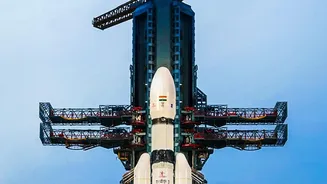
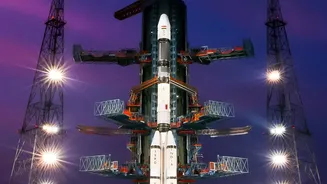
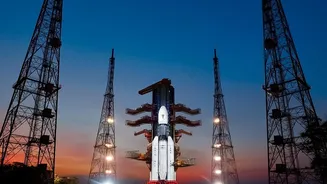
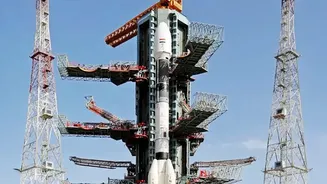
can make decisions faster than any human on the ground. For instance, AI algorithms played a crucial role in the historic Chandrayaan-3 mission, helping the lander's hazard detection camera analyse the lunar surface for a safe touchdown spot in real-time. This ability to navigate and react autonomously is vital for deep-space missions where the communication delay with Earth can be significant. ISRO is developing AI solutions for a wide range of applications, including the health monitoring of launch vehicles, mission trajectory design, and space traffic management. AI also excels at sifting through the enormous volumes of data sent back by satellites, identifying crucial patterns, filtering out redundancies, and accelerating scientific discovery.
Quantum Technology: Securing Data and Unlocking New Calculations
If AI is the brain, quantum technology is the key to a new dimension of computing and communication. Its applications in space are twofold. First is quantum communication, which promises un-hackable data transmission. By using the principles of quantum mechanics, specifically Quantum Key Distribution (QKD), ISRO can create secure communication channels for sensitive military, strategic, and financial data. ISRO has already successfully demonstrated free-space Quantum Communication over a distance of 300 meters, a major step toward creating a satellite-based quantum communication network (SBQC). The second application is quantum computing. These next-generation computers can solve problems of unimaginable complexity, far beyond the reach of even the most powerful supercomputers today. For ISRO, this could mean optimising complex satellite launch trajectories, modelling new materials for spacecraft, and running advanced simulations for future missions. As India progresses with its National Quantum Mission, these capabilities will become central to designing and executing more ambitious projects.
ISRO’s Blueprint: Integrating Advanced Tech
These technologies are not just theoretical; they are being actively integrated into ISRO's future roadmap. At a recent conclave, ISRO experts highlighted that AI, machine learning, and quantum technology will be transformative for India's upcoming satellite systems. For example, on-board AI processing will allow satellites to analyse data in space itself, enabling faster decision-making for disaster management and governance. This is crucial for major upcoming projects like the Gaganyaan human spaceflight program, the planned Bharatiya Antariksh Station, and future lunar sample return missions. AI will help ensure astronaut safety, while quantum communications will secure the vital links between Earth and these deep-space assets. Collaborative efforts between ISRO and top Indian institutions are already underway to develop niche AI applications for everything from satellite data processing to humanoid robotics. This push towards indigenously developed, cutting-edge technology is set to define India's role as a leading space power.