







The Epics That Emptied the Streets
In the late 1980s, India came to a standstill on Sunday mornings. The cause was not a national holiday, but television. Ramanand Sagar's 'Ramayan' (1987) and B.R. Chopra's 'Mahabharat' (1988) weren't just shows; they were national cultural events. For
many, this was their first deep visual dive into the epics they had only heard in stories. Aired on the sole national broadcaster, Doordarshan, these series created a shared viewing experience that crossed regional and linguistic lines. The storytelling was direct, devotional, and emotionally resonant, establishing character archetypes of duty, sacrifice, and righteousness that are still the bedrock of Indian cinema today. The actors became so synonymous with their divine roles that audiences viewed them with reverence, a testament to the power of their performances and the authenticity of the narrative.
Fantasy Finds a Home on the Small Screen
Following the mythological wave came a new kind of magic. 'Chandrakanta', which first aired in 1994, was a fantasy drama about warring kingdoms, star-crossed lovers, and cunning spies ('aiyars'). Based on a classic Hindi novel, the show transported an entire generation to a world of mesmerising charm and intrigue. Its title song became an iconic call to adventure for families across the country. The series was a runaway success, proving that audiences were hungry for large-scale fantasy. The show's appeal lay in its rich, brilliantly written subject matter, filled with larger-than-life characters and intricate plot twists that kept viewers hooked week after week. It built a world so compelling that, despite controversies and production halts, its legacy endures as a benchmark for the genre in India.
Creativity Born from Constraint
Technically, these shows operated under significant limitations. The visual effects that brought celestial weapons (astras) and magical events to life were rudimentary by today's standards. Glowing arrows would slowly zig-zag across the screen, and gods would appear and disappear with a simple fade-out. Yet, these limitations became a source of strength. Instead of seamless CGI, the creators relied on creative ingenuity and practical effects that, while not always realistic, had a unique and memorable charm. For 'Mahabharat', the production value was considered a breakthrough for its time, setting a new standard for what could be achieved on Indian television. This era proved that spectacle wasn't about photorealism, but about firing the audience's imagination. The focus remained squarely on the drama and the story, forcing creators to master the art of narrative tension and emotional impact.
Storytelling as the Ultimate Special Effect
The true mastery of these classics was their unshakeable foundation in storytelling. The scripts for 'Ramayan' and 'Mahabharat' were praised for their authenticity, drawing directly from revered texts like Valmiki's Ramayana and Tulsidas's Ramcharitmanas. This gave the narratives an inherent weight and cultural authority. For 'Chandrakanta', the source material was a beloved novel known for its gripping plot. Because they couldn't rely on overwhelming visual effects, writers had to ensure every dialogue, character arc, and moral conflict was compelling. The core of their success was an understanding that for Indian audiences, these were not just stories but a part of their cultural DNA. By tapping into these deep-rooted narratives, the shows created an instant and profound emotional connection that modern blockbusters still strive to replicate.
The Blueprint for Modern Blockbusters
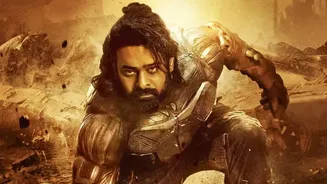
The influence of these early epics is undeniable in contemporary Indian cinema. The grand scale of 'Baahubali' and the 'Astraverse' of 'Brahmastra' are direct descendants of the worlds first built on the small screen. These modern films leverage cutting-edge technology to explore the same mythological and fantasy themes that captivated audiences decades ago. Today's filmmakers are building entire cinematic universes rooted in Indian folklore and epics, from 'Hanu-Man' to 'Kalki 2898 AD'. They are proving that the nation's appetite for stories of gods, heroes, and magic is stronger than ever. These new projects, with their massive budgets and global reach, stand on the shoulders of the Doordarshan-era pioneers who first showed how to tell India's greatest stories to all of India at once.