





An Encore Beyond Pluto
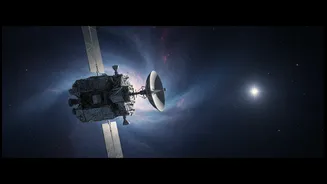
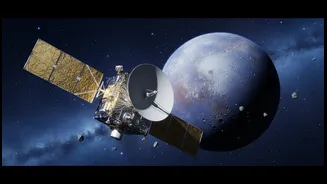
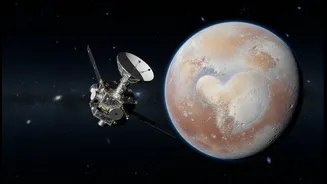
Launched in January 2006, New Horizons was designed for one primary, audacious goal: to conduct the first-ever close-up study of Pluto and its moons. After a journey of more than nine years and nearly five billion kilometres, it succeeded spectacularly,
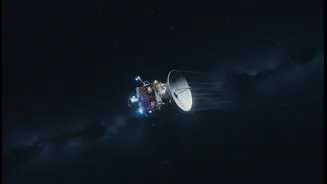
transforming our view of Pluto from a distant, fuzzy point of light into a complex and active world. Yet, the mission was far from over. With the spacecraft healthy and its fuel reserves ample, NASA approved an extended mission, sending New Horizons deeper into the Kuiper Belt — a vast, icy region beyond Neptune considered the 'third zone' of our solar system. This encore performance would test the probe's endurance and push the boundaries of exploration.
A Masterclass in Longevity
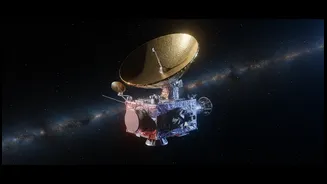
Keeping a spacecraft operational for decades, billions of kilometres from home, is an immense engineering challenge. New Horizons was built for this marathon. Its systems were based on proven designs, and it carries no large moving parts like reaction wheels, which could wear out over time. Power comes from a radioisotope thermoelectric generator (RTG), which uses the heat from decaying plutonium to generate electricity, providing a long-lasting and reliable energy source far from the Sun. To conserve this precious power and protect its systems, mission controllers routinely place the spacecraft into long periods of hibernation. Recently, in mid-2026, the probe successfully awoke from a 321-day hibernation, its longest yet, demonstrating the robustness of its design and the skill of its operators.
Piloting from the Fringes
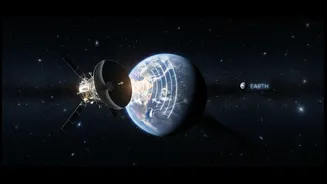
Operating New Horizons is a lesson in patience and precision. As of July 2026, the spacecraft is over 9.5 billion kilometres from Earth. At this distance, a radio signal, travelling at the speed of light, takes nearly nine hours to make the one-way trip. This means a command sent from the Johns Hopkins Applied Physics Laboratory in Maryland won't be received for hours, and confirmation of its receipt takes a full day. This immense communication delay requires the flight control team, led by Mission Operations Manager Alice Bowman, to plan every maneuver meticulously, uploading command sequences far in advance. Data transmission rates are incredibly slow, meaning the treasure trove of information from even a brief flyby can take more than a year to fully download to Earth.
Secrets of a Primordial Past
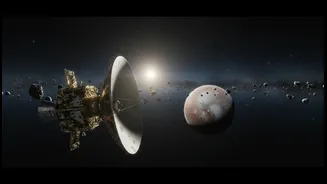
The scientific payoff of this extended mission has been extraordinary. On January 1, 2019, New Horizons performed the most distant flyby in history, encountering a Kuiper Belt Object named Arrokoth. Images revealed a remarkable 'snowman' shape, a contact binary formed by two separate bodies that gently merged. This shape provided powerful evidence for how planetesimals — the building blocks of planets — formed in the early solar system, not through violent collisions but through a more delicate 'intricate dance'. Arrokoth, a well-preserved relic from over 4.5 billion years ago, is giving scientists a direct look at the conditions that led to the formation of planets like Earth.
A Continuing Journey Outward
Even after Arrokoth, the mission continues. New Horizons is now a unique observatory in the outer solar system, studying the solar wind, the distant dust environment, and making observations of other Kuiper Belt objects from afar. While budget discussions have sometimes cast its future in doubt, NASA has extended its mission into the late 2020s. The spacecraft continues to speed away from the sun at about 480 million kilometres per year. Its instruments are expected to keep returning valuable data on the outer heliosphere until its power source finally gives out, likely sometime in the late 2030s or 2040s. Then, it will join the Voyager probes as a silent emissary from humanity, coasting into interstellar space.