








The Urban Farming Dilemma
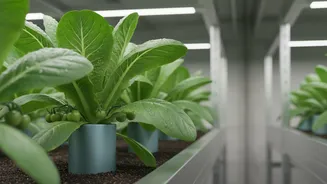
Urban agriculture is booming. From rooftop gardens to vertical farms in old warehouses, growing food closer to home is a key part of making cities more sustainable. For organic farmers, however, this dense environment presents a unique challenge: pests.
Close quarters mean infestations can spread rapidly, but the organic commitment rules out synthetic chemical pesticides. Traditional organic methods can be labor-intensive and not always suited for a rooftop or indoor environment, leaving a critical gap for a solution that is both effective and clean.
A New Weapon: Vibrational Disruption
Enter bio-acoustic technology. The core idea isn't just about making noise; it's about speaking the language of insects to manipulate their behavior. Many insects, from stink bugs to leafhoppers, communicate using subtle vibrations sent through the stems and leaves of plants. They use these signals to find mates, warn of danger, or locate food. This new technology involves deploying devices that emit specific, targeted vibrations or ultrasonic frequencies. Instead of killing the pests, the goal is to make the environment confusing, irritating, or downright unpleasant for them, encouraging them to leave on their own.
How Frequencies Fight Pests
The science works in a few fascinating ways. One method, known as vibrational mating disruption, continuously plays artificial signals that jam the insects' communication channels. Imagine trying to have a conversation in a room where a loud, garbled recording of your own voice is playing on a loop—it becomes impossible. This prevents pests from finding partners and reproducing. Another approach uses frequencies that mimic the sound of a predator, triggering a flight response. Some devices emit high-frequency ultrasounds, generally above 20 kHz, which are inaudible to humans but create an acoustically hostile zone for pests like certain aphids, whiteflies, and even rodents that might trouble an urban farm. The key is specificity; different pests respond to different frequencies, allowing for a targeted approach that leaves beneficial insects unharmed.
From Lab to Rooftop Garden
This isn't just theory. Researchers and tech companies are actively developing and testing these systems. Studies have shown that artificially generated vibrations can effectively manage pests like the glassy-winged sharpshooter and various types of stink bugs by interfering with their mating calls. Some advanced systems, known as sonogenetics, are even exploring how sound can trigger specific genetic responses in pests, like sterility, offering an even more precise tool. While many consumer-grade ultrasonic repellers have shown mixed results, the agricultural-focused technology is more robust, using specific, validated frequencies. Devices are being designed to be durable, weather-resistant, and even solar-powered, making them practical for the varied environments of urban farms.
A Quieter, Greener Future for Food
The implications of sound-based pest control are significant. For urban organic farmers, it offers a non-toxic, residue-free method to protect their high-value crops. It aligns perfectly with the ethos of sustainable agriculture by reducing reliance on any form of chemical or even biological sprays. Furthermore, because these signals are often delivered through the substrate (the plant or soil) or at frequencies humans can't hear, they offer a silent, invisible shield. While the technology is still evolving and the cost of equipment can be a factor, it represents a major step toward smarter, more integrated pest management. As our cities grow, ensuring a safe and local food supply becomes paramount, and the buzz around bio-acoustics could soon be the sound of a healthier harvest.