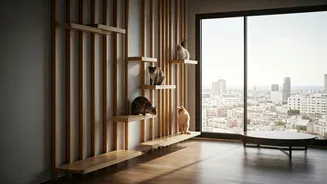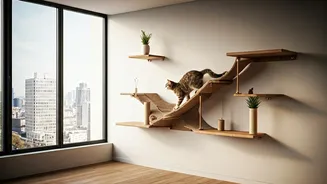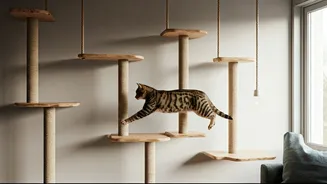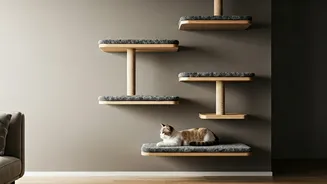




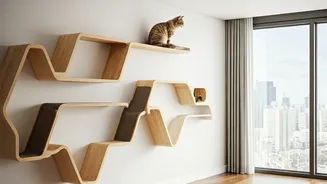


Why Cats Crave the High Ground
From a domestic cat’s perspective, your apartment isn’t just a flat floor plan; it’s a territory to be surveyed, patrolled, and controlled. In the wild, their ancestors sought high vantage points for two critical reasons: to spot prey and to watch for predators.
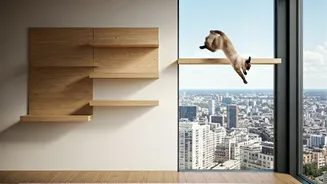
This instinct is deeply ingrained in even the most pampered housecat. A high perch provides a sense of security and dominion over their environment. In a multi-pet household, it also offers an essential escape route from a pestering dog or a boisterous kitten. For cats in high-rise apartments, a window-side perch becomes their personal television, but without accessible vertical pathways, they are missing out on a fundamental aspect of their natural behaviour. Providing vertical territory isn't a luxury; it's a crucial part of feline environmental enrichment that reduces stress, prevents boredom, and promotes exercise.
The Rise of Soft Stepping Shelves
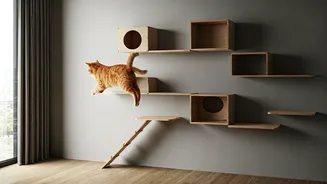
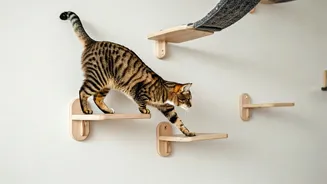
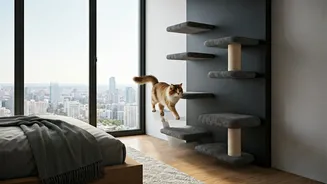
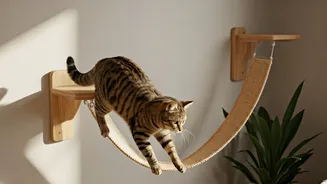
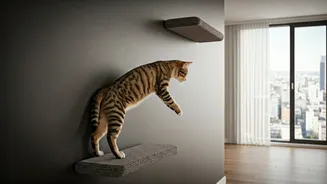
Enter the specialized cat stepping shelf. Unlike traditional, hard-surfaced floating shelves that might be repurposed for cats, these are designed from the ground up with feline safety and comfort in mind. The “soft” in “soft stepping shelves” is the key innovation. They are typically constructed from sturdy wood or composite material and then covered in materials that offer superior grip and comfort. Think low-pile carpet, durable felt, or even dense, scratch-resistant fabric. This soft covering is vital. It prevents slipping during ambitious leaps, provides a comfortable surface for lounging, and gives cats a satisfying texture to dig their claws into (a bonus that might save your sofa). These shelves come in various shapes and sizes, from small, single-paw steps to wider lounging platforms, allowing you to create a bespoke climbing wall tailored to your cat’s agility and your apartment's layout.
Choosing the Perfect Perch
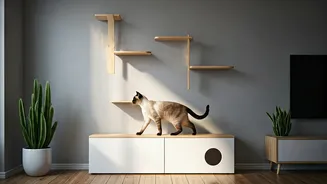
Selecting the right shelves requires thinking like your cat. First, consider your cat’s physical needs. A senior cat with arthritis will need shelves that are wider, closer together, and have a non-slip surface, while a young, athletic kitten can handle more challenging gaps and smaller steps. Always check the manufacturer's weight rating and ensure it can comfortably support your cat—or multiple cats, if they’re likely to share. Material quality is also paramount. Look for durable wood, high-quality brackets, and coverings that are securely attached and easy to clean. Finally, consider aesthetics. Modern cat furniture has evolved beyond clunky, carpet-covered towers. Many companies now offer sleek, minimalist designs in various finishes that blend seamlessly with contemporary home decor, proving that a cat-friendly home can also be a stylish one.
The Blueprint for Safe Installation
The word “safely” in the headline is non-negotiable. An improperly installed shelf is more dangerous than no shelf at all. The first rule is to anchor shelves into wall studs whenever possible. A stud finder is an inexpensive and essential tool for this job. In high-rise buildings with metal studs or concrete walls, you’ll need specialized hardware. For drywall with metal studs, use self-drilling toggle anchors or snap toggles. For concrete, you will need a hammer drill and appropriate concrete anchors. Never rely on simple plastic drywall anchors, as they cannot withstand the dynamic load of a cat jumping. Plan the layout carefully. The horizontal distance between shelves should be no more than 40 cm, and the vertical distance should be around 30 cm, but adjust this based on your cat’s age and ability. Stagger the shelves to create an intuitive climbing path. Before letting your cat explore, test each shelf by applying significant downward pressure to ensure it’s secure.