









A New Frontier for Indian Ambition
For decades, a career in space in India meant one thing: working for the Indian Space Research Organisation (ISRO). But the landscape is dramatically changing. With the government opening up the sector, over 400 private space startups have emerged, creating
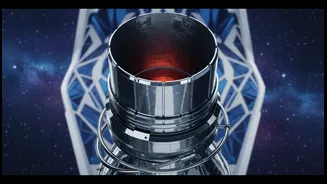
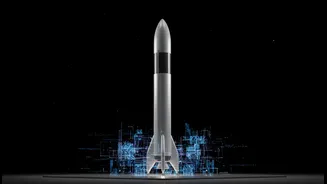
a vibrant new industry projected to be worth $44 billion by 2033. At the forefront of this revolution is Skyroot Aerospace and its Vikram-1 rocket, scheduled for its maiden launch on July 18, 2026. This mission, named 'Aagaman' (arrival), marks the first time a privately designed and built orbital-class rocket will launch from Indian soil, a pivotal moment for the country's commercial space ambitions. This surge in private enterprise has ignited a corresponding surge in demand for talent, fundamentally altering career paths for a new generation.
The Startup Strategy: Speed and Passion
Unlike the structured, long-term recruitment cycles of government agencies, private companies like Skyroot Aerospace operate with the agility of a tech startup. Their approach is less about waiting for experience and more about identifying raw talent and passion. In a 2023 interview, Skyroot's CEO Pawan Kumar Chandana explained that while the HR team conducts initial screening, he or his co-founder still conducts the final interview to ensure a candidate's passion aligns with the company's mission. They actively recruit fresh graduates, believing in their ability to learn quickly and contribute to a fast-paced environment. This model focuses on building a cross-functional team where everyone, regardless of their specialisation, understands the entire system they are building together. The company uses its career page, social media, and internships to attract talent, looking for individuals who are not just knowledgeable but deeply motivated by the challenge of building space technology from the ground up.
What Skills Are in Demand?
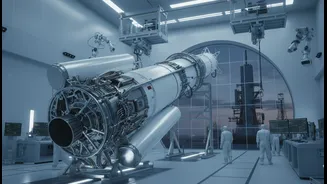
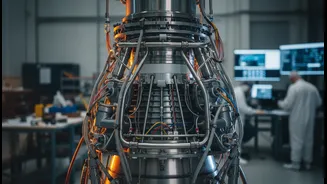
While an aerospace engineering degree is a direct path, the needs of the private space sector are incredibly diverse. Job postings from companies like Skyroot reveal a high demand for mechanical, electronics, and computer science engineers. Specific roles include avionics engineers to design the rocket's 'nervous system', propulsion specialists, and structural engineers who work with advanced carbon-composite materials like those used in Vikram-1. Furthermore, the industry is increasingly hungry for software talent. There's a growing need for experts in embedded systems, AI and machine learning, data analysis, and robotics. This convergence of skills means that talent is being drawn from adjacent high-precision industries like automotive and electronics, creating new pathways into the space sector for professionals who might not have a traditional aerospace background.
The Allure of Mission and Meaning
The private space sector competes for talent not just with ISRO but also with high-paying software and tech companies. While competitive salaries are part of the equation, the primary draw for many young recruits is the mission itself. The success of ISRO's Chandrayaan-3 mission created a surge of interest in space careers among students. Startups offer a unique value proposition: the chance to have a tangible impact and see one's work launch into orbit in a relatively short time. The work is faster-paced, and the learning curves are steeper than in more traditional organisations. For many young engineers, the opportunity to be part of a historic moment, like the Vikram-1 launch, and contribute to building a globally competitive industry from India offers a sense of purpose that outweighs other career considerations.