

A Glimpse into Alien Skies
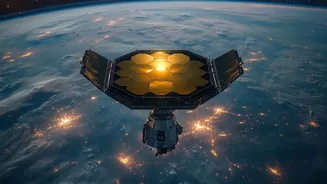
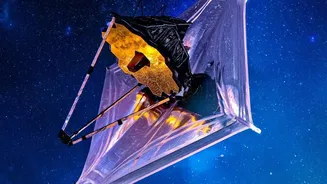
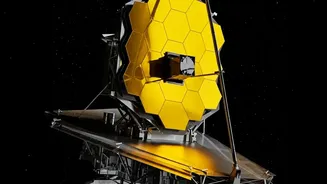
The James Webb Space Telescope has successfully identified key gases around several rocky exoplanets, a feat that was previously impossible. One of the most significant findings is the detection of atmospheres on super-hot, rocky super-Earths like 55
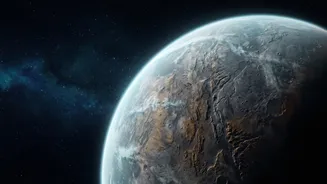
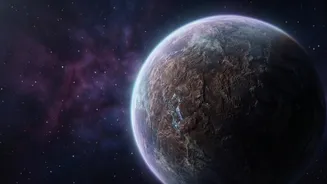
Cancri e and TOI-561 b. While these planets are far too hot for life as we know it, with surfaces likely covered in molten rock, the fact that they can retain a substantial atmosphere is a breakthrough. For 55 Cancri e, a planet about 41 light-years away, JWST observations suggest an atmosphere rich in carbon dioxide or carbon monoxide, possibly replenished by gases bubbling up from its magma ocean. This is a crucial discovery because it proves that rocky worlds, even those blasted by intense stellar radiation, can hold onto a gaseous envelope.
What is a Super-Earth?
The term "super-Earth" sounds dramatic, but it simply refers to a class of planets more massive than Earth but smaller than ice giants like Neptune. Our solar system doesn't have one, yet they appear to be one of the most common types of planets in the galaxy. They can be rocky, like Earth, or gaseous, like a mini-Neptune. Planets like K2-18 b, which is about eight times the mass of Earth, fall into this category and have become prime targets in the search for habitable worlds. JWST has studied K2-18 b, detecting methane and carbon dioxide, and confirming the presence of water vapour first hinted at by the Hubble Space Telescope. These planets represent a fascinating middle ground and a key puzzle piece in understanding planetary formation.
The Power of Infrared Vision
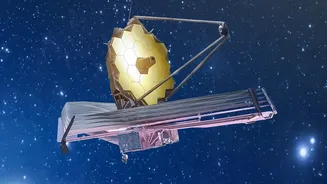
So, how does JWST peer into the skies of planets light-years away? The telescope uses a technique called transit spectroscopy. As an exoplanet passes in front of its host star, a tiny fraction of the starlight filters through the planet's atmosphere. Different gas molecules absorb specific wavelengths, or colours, of light, leaving a unique chemical fingerprint in the spectrum that reaches the telescope. JWST's powerful infrared instruments are exceptionally sensitive to the signatures of molecules like water, methane, and carbon dioxide. For a planet like GJ 1214 b, which is shrouded in a thick haze that stumped other telescopes, Webb's ability to see in mid-infrared light allowed it to finally peek beneath the veil and identify the molecules within.
Why Water Vapour Matters
The presence of water is a critical factor in the search for life. On Earth, liquid water is essential for every known living organism. Finding water vapour in the atmosphere of a rocky exoplanet is a vital first step toward identifying worlds that might have liquid water on their surface. For example, in another landmark discovery, JWST detected water vapour in the inner, rocky-planet-forming zone of a young star system called PDS 70. This suggests that the raw materials for life, including water, are available from the very beginning of a planet's formation. While finding water vapour on a scorching lava world like 55 Cancri e doesn't mean we've found a habitable planet, it validates our methods and brings us one step closer to analyzing the atmospheres of more temperate, Earth-like worlds.
A Stepping Stone, Not a Destination
It is crucial to manage expectations. The detection of water vapour, or even a potential biosignature like dimethyl sulfide on K2-18 b, is not definitive proof of life. Scientists are cautious, emphasizing that these molecules can sometimes be produced by geological or chemical processes that don't involve life. Furthermore, planets like K2-18 b might be "Hycean" worlds, with a deep liquid ocean under a crushing, hydrogen-rich atmosphere—a far cry from Earth's environment. Each of these discoveries is a single data point in a vast cosmic puzzle. They represent a monumental technological achievement for JWST and provide a critical foundation for future observations, helping scientists refine their theories on which planets can form and retain atmospheres, and ultimately, which ones might be worth searching for life.