



What Exactly Is This 'Planet Grid'?
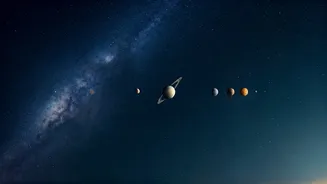
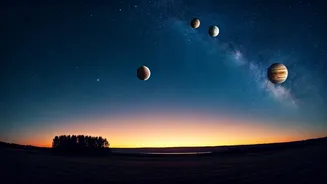
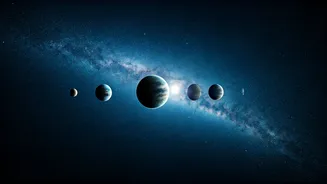
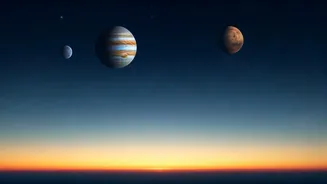
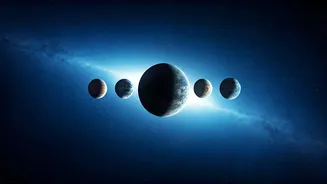
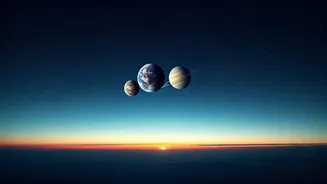
In early June, six planets in our solar system—Mercury, Mars, Jupiter, Saturn, Uranus, and Neptune—will align in the same small sector of the sky. While the term 'grid' or 'parade' conjures images of planets in a perfectly straight line, the reality is
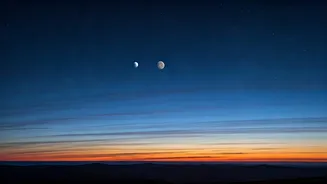
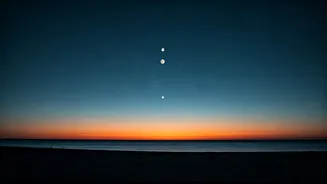
a little different but no less impressive. From our vantage point on Earth, these planets will appear to be strung out in a rough diagonal line across the pre-dawn sky. This phenomenon, known as a planetary alignment, happens because the planets are all orbiting the Sun on a relatively flat plane, called the ecliptic. When several of them happen to be on the same side of the Sun at the same time, we get to witness this beautiful celestial gathering.
When and Where to Watch in India
The best time to witness this event across India will be in the pre-dawn hours, roughly 45 to 60 minutes before local sunrise. The prime viewing window is during the first week of June 2024, with the alignment being particularly notable around June 3rd and 4th. You’ll need to find a spot with a clear, unobstructed view of the eastern horizon. Since you'll be looking for planets that are relatively low in the sky as the sun begins to rise, getting away from tall buildings, trees, and the light pollution of major cities will significantly enhance your experience. A higher elevation point, like a hilltop or the terrace of a tall building, is ideal.
A Planet-by-Planet Viewing Guide
Not all six planets will be equally easy to spot. Here’s what to look for: * **Saturn:** The ringed giant will be the easiest to see. It will rise earliest and appear as a steady, yellowish-white point of light. You can spot it with the naked eye, but binoculars will reveal its shape more clearly, and a small telescope may even hint at its famous rings. * **Mars:** The Red Planet will also be visible to the naked eye, appearing as a faint, reddish-orange dot. It will be located lower in the sky than Saturn. * **Uranus & Neptune:** These two ice giants are too faint to be seen without optical aid. You will need a good pair of binoculars or, ideally, a telescope to hunt them down. They will appear as tiny, star-like points of light. * **Jupiter & Mercury:** These will be the most challenging. They will be positioned very low on the horizon and extremely close to the rising sun’s glare. For safety reasons, never look at or near the Sun with binoculars or a telescope. It might be impossible to spot them without specialised equipment and expertise.
Do I Really Need a Telescope?
The headline says to set up your telescopes, and for seeing all six planets, that’s true. A telescope is essential for spotting the faint Uranus and Neptune. However, you absolutely do not need expensive equipment to enjoy this event. The real stars of the show for most observers will be Mars and Saturn, both of which are visible to the naked eye. A decent pair of binoculars will be a fantastic addition, helping you get a better look at Mars and Saturn and making the hunt for Uranus a possibility if you're in a very dark location. So don't be discouraged if you don't own a telescope. You can still step outside and witness a beautiful cosmic sight.
Tips for the Best Stargazing Experience
To make the most of your pre-dawn adventure, keep these tips in mind. First, give your eyes time to adapt to the dark. It takes about 20-30 minutes for your vision to become fully sensitive to low light, so avoid looking at your bright phone screen. If you need light, use a red torch, which is less disruptive to night vision. Second, consider using a stargazing app on your phone (like Stellarium, SkyView, or Star Walk) beforehand to familiarise yourself with the planets' positions. These apps use your phone’s GPS and compass to create a map of the sky above you. Finally, be patient. Stargazing is an act of patience. Some planets might be faint, but the reward of spotting another world with your own eyes is worth it.