


1. Makkhan Mishri: A Divine Simplicity
No Janmashtami offering is complete without Makkhan Mishri, a representation of Lord Krishna’s childhood antics as the beloved ‘Makhan Chor’ or butter thief. This dish is less of a recipe and more of an assembly, symbolizing purity and innocence. It’s
traditionally the first bhog offered at midnight, marking Krishna's birth. The sweet is made from freshly churned white butter, which is unsalted and pure, mixed with the crunchy sweetness of mishri (rock sugar). A Tulsi leaf is almost always placed on top, as it is considered sacred to the Lord. To prepare this, you need just two primary ingredients: fresh, unsalted white butter (makhan) and rock sugar (mishri). If you cannot churn your own butter from cream, store-bought unsalted white butter is a good alternative. Take about 200 grams of butter in a bowl and whisk it until it is light and airy. Gently fold in about four to five tablespoons of crushed mishri, retaining some larger crystals for texture. You can also add a few strands of saffron for colour and aroma. Transfer it to a small earthen pot or bowl for an authentic touch before offering it.
2. Mathura Peda: The Taste of Krishna's Birthplace
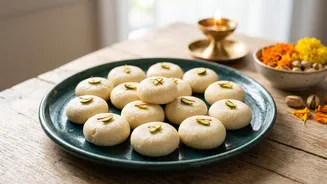
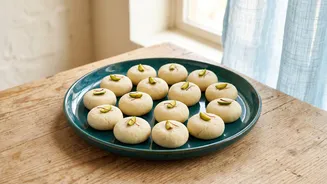
Originating from Lord Krishna’s birthplace, Mathura, this peda is a rich, caramelised sweet that has a unique grainy texture and dark brown colour. Unlike the typical white doodh peda, the Mathura Peda gets its distinctive flavour and hue from roasting milk solids (khoya or mawa) over a low flame for a long time. The process is a labour of love, but the result is a melt-in-the-mouth delicacy that is deeply flavourful. To make it, start by crumbling 250 grams of mawa into a heavy-bottomed pan with a tablespoon of ghee. Sauté on a low flame, stirring continuously. The mawa will melt, then start to thicken and change colour. This can take 30-40 minutes. Keep roasting until it turns a deep golden brown and releases a nutty aroma. Let this mixture cool completely. Once cool, add about 150 grams of powdered sugar (boora) and a teaspoon of cardamom powder. Mix well, breaking any lumps. Take small portions of the mixture and shape them into round, flat pedas. Traditionally, these are rolled in caster sugar before being served.
3. Makhana Kheer: A Fasting Favourite
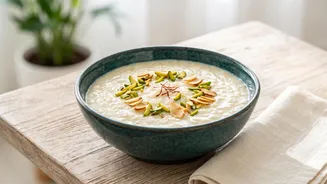
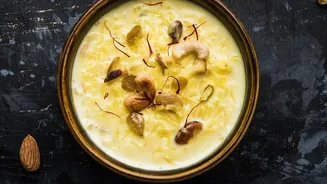
Kheer is a quintessential Indian dessert, and this version made with makhana (fox nuts) is a popular choice during religious festivals and fasts like Janmashtami. Makhana is light, nutritious, and has a delightful puffed texture that softens beautifully when cooked in milk. This kheer is creamy, comforting, and comes together relatively quickly. Begin by dry-roasting one cup of makhana in a pan over low heat until they are crisp to the touch. Let them cool, then coarsely crush about three-quarters of them, leaving the rest whole for texture. In a heavy pot, bring one litre of full-fat milk to a boil. Once it boils, lower the heat and add the crushed and whole makhana. Let this simmer for about 15-20 minutes, stirring occasionally, until the milk thickens and the makhana softens. Now, add sugar to taste (about half a cup), a pinch of saffron strands, and half a teaspoon of cardamom powder. Stir until the sugar dissolves. Finish by mixing in a tablespoon of chopped almonds and pistachios. Serve it warm or chilled.
4. Kalakand: The Grainy Milk Fudge
Kalakand is a soft, moist, and grainy milk cake that is incredibly delicious. It is made by reducing milk and sugar, but its signature texture comes from splitting the milk slightly with an acidic agent like lemon juice. This creates fresh paneer (or chenna), which is then cooked down with sweetened, condensed milk to create a fudgy square of goodness. It's a festive favourite that looks impressive but can be made with just a few ingredients. For a quick version, crumble 250 grams of fresh paneer into a non-stick pan. Add a 400-gram tin of sweetened condensed milk and mix well. Place the pan on medium heat and cook the mixture, stirring continuously, for about 15 minutes. The mixture will bubble and then start to thicken, eventually pulling away from the sides of the pan. At this point, stir in half a teaspoon of cardamom powder. Transfer the mixture to a greased tray or thali and spread it evenly. Garnish with slivered pistachios and almonds. Let it cool completely for a couple of hours before cutting it into squares.
5. Rabri: Layers of Creamy Bliss
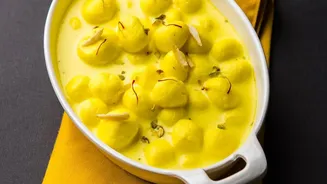
Rabri is a rich, decadent dessert made by slowly simmering milk in a wide, heavy-bottomed pan until it reduces and thickens. The magic of rabri lies in its layers. As the milk simmers, a layer of cream (malai) forms on the surface. This layer is gently pushed to the side of the pan and stuck there. The process is repeated until the milk is thick and you have collected layers of cream on the sides. These creamy layers give rabri its characteristic lumpy, flaky texture. To prepare, pour one and a half litres of full-fat milk into a wide kadai. Bring it to a gentle boil and then reduce the heat to a simmer. As the layer of cream forms on top, use a spatula to move it to the sides of the pan. Continue this process patiently for about an hour, or until the milk has reduced to about one-third of its original volume. Then, add sugar to taste (about four to five tablespoons) and a few saffron strands. Scrape the collected cream layers from the sides back into the milk. Stir gently and cook for another five minutes. Let it cool, and then chill before serving.