





From Room-Sized to Shoebox-Sized
For decades, satellites were massive, expensive machines the size of a bus, built and launched exclusively by national governments. Developing one took years and billions of dollars. The new space economy is built on a different model: small satellites,
or 'smallsats'. These can range from the size of a microwave oven to tiny 'CubeSats' no bigger than a shoebox. Thanks to the miniaturisation of electronics, these compact devices are capable of performing complex tasks that once required their giant predecessors. Their smaller size means they are cheaper to build and can be mass-produced, drastically reducing costs and development time from years to months.
The Dawn of a Private Space Race
This shift in technology has democratised access to space. The 'New Space' era is defined by the entry of private companies, from ambitious startups to established corporations, into a domain once reserved for government agencies. This has ignited a commercial space race, focused not just on exploration, but on creating viable business models in orbit. These companies are launching constellations of hundreds or even thousands of small satellites that work together as a network. The goal is to provide services that have a direct impact back on Earth, transforming industries and creating entirely new markets. India, with its recent policy reforms opening up the sector, has seen a boom, with over 400 space startups emerging to join this new economy.
India's Ascent as a Smallsat Hub
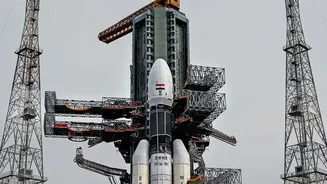
India is rapidly positioning itself as a key player in this global market. The Indian Space Research Organisation (ISRO) has been a crucial enabler, developing the Small Satellite Launch Vehicle (SSLV), a rocket designed specifically for launching payloads up to 500 kg on demand. In a landmark move, ISRO is transferring the technology for the SSLV to the private sector, empowering Indian industry to cater to the booming global demand for small satellite launches. This has paved the way for startups like Skyroot Aerospace, which recently conducted India's first privately developed orbital rocket launch with its Vikram-1 vehicle, successfully deploying several small payloads. Initiatives like IN-SPACe are further streamlining private participation by providing access to ISRO's facilities and expertise.
The Real-World Impact from Orbit
What do these swarms of small satellites actually do? Their applications are vast and growing. They are bridging the digital divide by providing low-latency broadband internet to remote and underserved regions. They provide high-resolution, frequently updated Earth observation data that is revolutionising agriculture, allowing for precision crop monitoring. This imagery is also vital for disaster management, helping authorities assess damage from floods and wildfires in near real-time to coordinate response efforts. Other applications include tracking deforestation, monitoring urban development, improving weather forecasts, and enabling a global network for Internet of Things (IoT) devices in logistics and environmental sensing.
Navigating the Crowded Skies
The rapid growth of the smallsat industry is not without challenges. The proliferation of thousands of new objects in low-Earth orbit has intensified concerns about space debris. A collision with even a small piece of junk can destroy a satellite, creating a cascade of more debris. This has led to a push for greater sustainability in space, with regulatory bodies and companies working on 'design for demise' principles, where satellites are designed to burn up completely upon re-entry. There are also significant regulatory and legal hurdles to overcome, such as developing a global system for space traffic management and establishing clear rules for liability and debris removal, a complex task in the international domain of outer space.