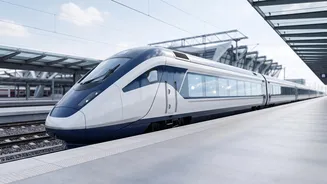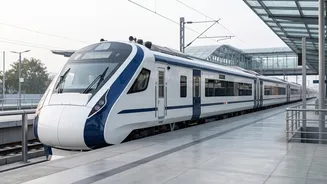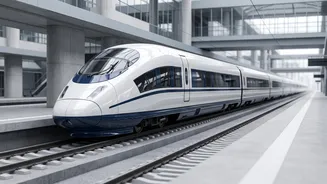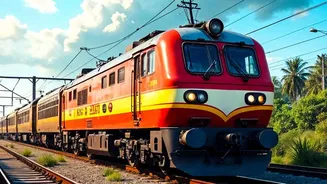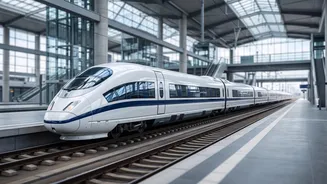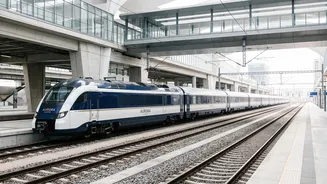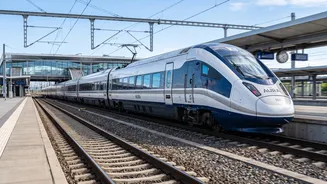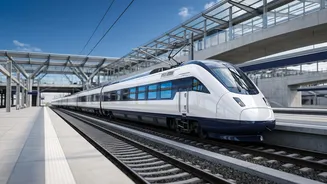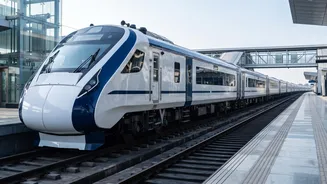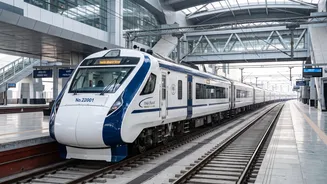




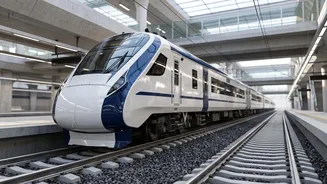
Indian Railways is accelerating its mission to modernize overnight travel. Beyond the much-anticipated 16-coach Vande Bharat sleeper, new plans reveal a more ambitious strategy involving multiple train sizes to cater to different demands.
The Original Vision: A 16-Coach Sleeper
The initial blueprint
for the Vande Bharat sleeper focused on a standard 16-coach trainset. Designed to replace premium long-distance trains, this model accommodates over 800 passengers in a three-class configuration: AC First, AC 2-tier, and AC 3-tier. The first of these trains, built by BEML, began commercial operations in January 2026. These trains are engineered for a maximum speed of 160 kmph and feature modern amenities like cushioned berths, automatic doors, bio-vacuum toilets, and advanced safety systems. Multiple manufacturing projects are underway, with contracts awarded to a consortium of Titagarh Rail Systems and BHEL for 80 trains, and Kinet Railway Solutions (a joint venture of RVNL and Russia's Transmashholding) for another 120 trains.
Expanding the Fleet: 20 and 24-Coach Variants
Even before the full fleet of 16-coach trains is rolled out, Indian Railways is planning for bigger versions. The Integral Coach Factory (ICF) in Chennai has been tasked with manufacturing 50 Vande Bharat sleeper trainsets with a 24-coach configuration. This longer version is specifically designed for high-demand, long-distance overnight routes. The key difference in the 24-coach model is the inclusion of a dedicated pantry car, a feature absent in the 16-coach design, which uses smaller modular pantry units. This allows for better onboard catering services, with facilities to heat and serve fresh food throughout the journey. While less detailed, plans for a 20-coach version are also part of the expanded strategy, offering an intermediate option.
A Strategy of Flexibility
The decision to develop multiple train lengths is a strategic move towards operational flexibility. A one-size fits all approach doesn't work for India's diverse railway network, where passenger demand varies significantly from one route to another. Having 16, 20, and 24 coach options allows Indian Railways to deploy the right sized train for the right route. A 24 coach train is ideal for trunk routes with heavy passenger traffic, like Delhi to Mumbai. A 16 coach train might be more economical and efficient on routes with moderate demand. This flexible deployment strategy aims to maximize occupancy, optimize resources, and ensure financial viability across the network. It marks a shift from simply introducing a new type of train to building a modern, adaptable, and efficient national sleeper service.
Timelines and Prototypes
While the first 16 coach sleepers are already in service, the prototypes for the newer and larger versions are still in development. The prototype for the 120 trains being built by the RVNL led consortium at Latur has seen its deadline extended to March 2027. Meanwhile, ICF in Chennai is aiming to finalize the design for its 24 coach version by November 2026, with a prototype targeted for rollout by May or June 2027. After a prototype is manufactured, it must undergo extensive trials before series production can begin. These timelines indicate that while the first few next generation sleepers are here, the full scale expansion and the introduction of the larger variants will be a gradual process unfolding over the next few years.
What This Means for Passengers
For passengers, this multi pronged strategy promises a significant upgrade to overnight travel. The Vande Bharat sleeper platform offers a superior experience with smoother, quieter rides, better sanitation with bio vacuum toilets, and enhanced safety features like the KAVACH anti collision system. The interiors are designed for comfort, with ergonomically designed berths, better ladders for upper berths, individual reading lights, and charging points. First AC coaches will even feature hot water showers. The introduction of different train sizes means these modern amenities will eventually be available on a wider range of routes, not just the busiest ones. The addition of a full pantry car on longer trains will also improve the quality of onboard dining, moving beyond pre packaged meals.