





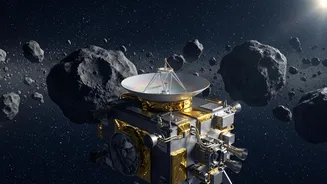

Meet HEX20: India's Deep-Space Contributor
In the burgeoning world of private space exploration, Thiruvananthapuram-based startup HEX20 is carving out a significant niche. Founded by a group of young Malayali entrepreneurs, the company has become the first Indian private entity selected for a deep-space
mission by the United Arab Emirates. While HEX20 also has operations in the UAE and Australia, its engineering hub in Technopark, Thiruvananthapuram, is central to its technical prowess. The company specialises in small satellite platforms and end-to-end mission solutions, from design and development to launch and operations. This latest project sees them contributing crucial components to one of the most complex interplanetary missions ever attempted.
The Ambitious Emirates Mission to the Asteroid Belt
The UAE's project, named the Emirates Mission to the Asteroid Belt (EMA), is an audacious follow-up to its successful Hope Mars orbiter. Scheduled for launch in March 2028, the primary spacecraft, named the MBR Explorer, will embark on a multi-year journey covering approximately five billion kilometres. The mission plan is to visit seven different asteroids in the main belt between Mars and Jupiter. After conducting fly-bys of six asteroids, the MBR Explorer will rendezvous with its final target in 2034: a uniquely reddish asteroid named 269 Justitia. Scientists are intrigued by Justitia as its colour suggests it may hold clues about the formation of our solar system and the presence of organic materials.
India's Crucial Role in Exploring Justitia
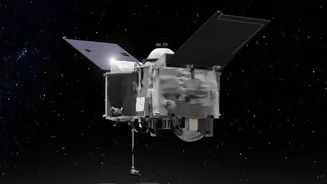
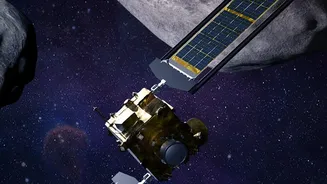
This is where HEX20's contribution becomes vital. The Indian startup was selected by the UAE Space Agency and its Technology Innovation Institute (TII) to develop the lander probe that will separate from the main MBR Explorer spacecraft and descend to the surface of Justitia. The work, completed over 15 months, involved designing and building the spacecraft bus—the core structure that supports all payloads—as well as the mission-critical software. HEX20 also developed the onboard computer and power systems, all engineered to withstand the extreme conditions of deep space. This autonomous lander is designed to touch down on the asteroid's surface around the year 2036, capture data and images, and transmit its findings back to Earth, marking the farthest any hardware from Kerala has ever travelled in space.
A Landmark for India's Private Space Sector
This collaboration is more than just a single mission; it's a powerful symbol of the maturation of India's private space industry. For decades, space activities were the exclusive domain of the Indian Space Research Organisation (ISRO). However, policy shifts since 2020 have opened the doors for private companies, leading to a boom with over 440 registered space startups by 2026. HEX20's success in securing a role in a high-stakes international mission demonstrates that Indian startups have moved beyond being mere component suppliers to becoming partners in design and execution. The India-UAE space cooperation is also growing, with a letter of intent signed in early 2026 to strengthen industry collaboration, making this mission a prime example of that deepening relationship in action.