




Why Autumn Is a Great Time for Saturn
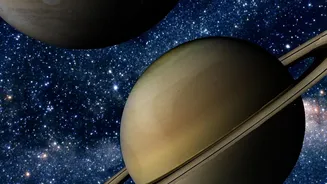
The autumn months of 2026 offer an excellent window for spotting Saturn. The planet reaches opposition on October 4, which is when Earth passes directly between Saturn and the Sun. Around this time, the planet is at its closest and brightest for the year,
making it an ideal target for aspiring stargazers. From September through November, Saturn is well-positioned in the night sky, rising earlier each evening. It appears as a steady, yellowish-white point of light, and unlike stars, it doesn't twinkle. This makes it easier to distinguish from the shimmering stars around it.
Your Smartphone as a Personal Planetarium
The biggest hurdle for any beginner is knowing where to look. The night sky is vast, but modern smartphone apps have made navigating it incredibly simple. These apps use your phone's built-in GPS and compass to create a real-time map of the sky. Many feature an augmented reality (AR) mode, which overlays the names of stars, constellations, and planets on your camera's view. You just point your phone at the sky, and the app identifies everything you're seeing, effectively turning your device into a portable planetarium.
Top Apps for Finding Your Way
For beginners, a user-friendly app is key. Several excellent and often free options are available for both iOS and Android. Star Walk 2 is frequently recommended for beginners due to its appealing visuals and easy-to-use interface. SkyView is another popular choice, praised for its straightforward AR overlays that make identifying celestial objects effortless. Stellarium Mobile also offers a very realistic and detailed sky map, which is great for learning the constellations that can act as signposts. Most of these apps allow you to simply search for 'Saturn', and an arrow will appear on your screen to guide you directly to its location.
A Step-by-Step Guide to Spotting Saturn
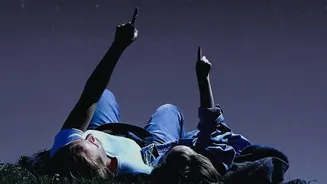
Ready to find the ringed wonder? First, download one of the recommended astronomy apps. Once it gets dark, head outside to a spot with a clear view of the sky, preferably away from bright city lights. Open the app and give it a moment to calibrate to your location and the direction you're facing. Use the app's search function to find Saturn. An arrow or other marker will prompt you to move your phone until the planet is centered on your screen. Now, lower your phone and look in that same direction. You should be able to spot a bright, steady, golden-hued point of light—that's Saturn.
Enhancing Your Viewing Experience
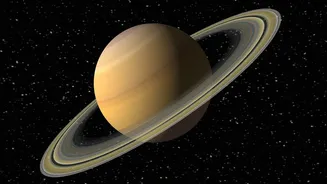
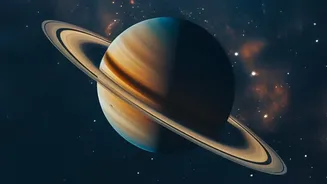
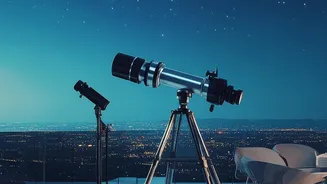
While you can see Saturn with the naked eye, a few extra steps can improve the view. Give your eyes at least 15 minutes to adjust to the darkness; this will help you see fainter objects. While an app can point you to Saturn, its famous rings are only visible with some magnification. You don't need a large, expensive telescope to start. A good pair of binoculars can reveal that Saturn is not perfectly round, hinting at its rings. Even a small beginner's telescope, with at least 25x to 30x power, can be enough to clearly distinguish the rings, an unforgettable sight for any new astronomer.