


The Textbook Definition: Rock vs. Ice
In the grand catalogue of our solar system, asteroids and comets have long occupied separate chapters. Asteroids are typically thought of as rocky, metallic objects that mostly reside in the main asteroid belt, a vast cosmic traffic jam between the orbits
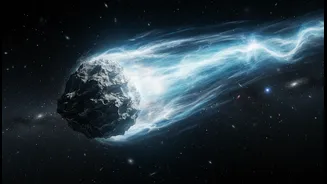
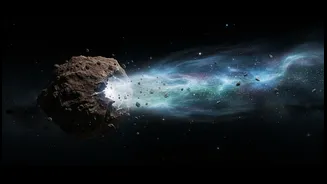
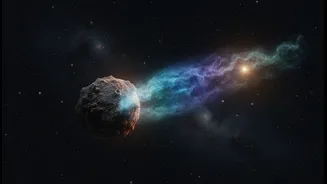
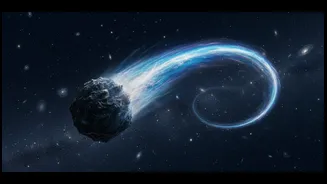
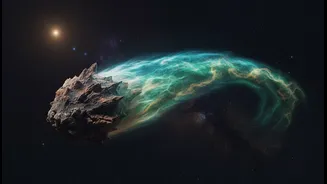
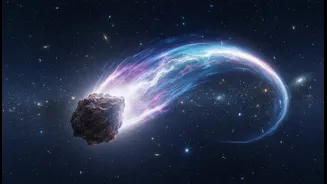
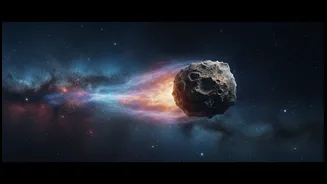
of Mars and Jupiter. They are the primordial leftovers from the formation of the inner, warmer planets. Comets, on the other hand, are the celestial nomads from the solar system's deep freeze—the Kuiper Belt beyond Neptune and the distant Oort Cloud. Composed of ice, dust, and rock, they are often called 'dirty snowballs'. Their defining feature is the magnificent tail that appears when their orbit brings them close to the Sun; the heat causes their ices to turn directly into gas, a process called sublimation, which releases a glowing stream of gas and dust that can stretch for millions of kilometres.
A Rule-Breaker in the Asteroid Belt
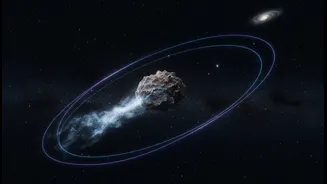
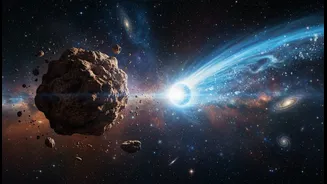
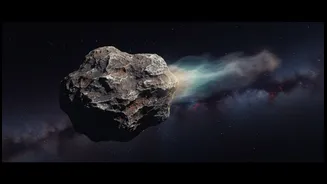
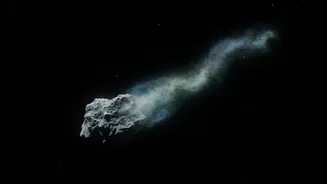
This neat division began to crumble with objects like (248370) 2005 QN173. At first glance, it was just another resident of the main asteroid belt, discovered in 2005 and classified as such. It follows a predictable, near-circular path within the belt, exactly where an asteroid should be. But in 2021, astronomers using the Asteroid Terrestrial-impact Last Alert System (ATLAS) noticed something astonishing: it had grown a long, narrow tail. This was no asteroid. Or was it? Looking back at archival images, scientists found evidence that the same object had also been active during its previous closest approach to the Sun in 2016. This wasn't a one-time event, like an impact from another space rock kicking up dust. This was recurring activity, a behaviour once thought exclusive to comets.
A New Class of Celestial Object
This cosmic imposter is not alone. It belongs to a fascinating and relatively new category of objects that scientists have dubbed 'active asteroids' or 'main-belt comets'. These are bodies with the orbits of asteroids but the physical characteristics of comets. Fewer than a few dozen have been confirmed since the first was identified in 1996, making each new discovery incredibly valuable. The repeated activity of 2005 QN173, flaring up each time its orbit brings it nearer to the Sun, strongly suggests that it contains buried water ice that is sublimating and creating its dusty tail. It's an asteroid that acts like a comet because, deep down, it might be part comet itself. Finding them is a challenge; their activity is often faint, and it's estimated that only about one in 10,000 asteroids show these features.
Why These Hybrid Objects Matter
The existence of active asteroids does more than just force a rewrite of astronomy textbooks; it challenges our understanding of the solar system's history. Specifically, it has profound implications for one of the biggest questions in planetary science: where did Earth's water come from? For a long time, comets from the outer solar system were considered the prime candidates for delivering water to a young, dry Earth. However, chemical analyses have shown that water from many comets doesn't quite match the water in Earth's oceans. But icy asteroids, formed closer to home in the main belt, present a tantalizing new possibility. These objects could represent a previously unknown reservoir of water in the inner solar system, potentially providing a crucial piece of the puzzle of how our blue planet became a habitable world.