




He is one of the greatest strikers of his generation, a prolific goalscorer with a trophy cabinet to match. Yet, for all his genius, Luis Suarez's career is defined as much by controversy as it is by brilliance. How did he earn this reputation?
The Hand of God, Part II
The world
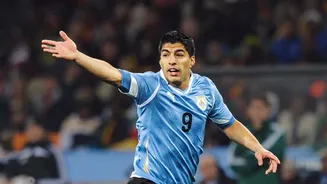
got its first major taste of Suarez's win-at-all-costs mentality at the 2010 FIFA World Cup in South Africa. In the final minute of extra time during a quarter-final clash with Ghana, Suarez was standing on his own goal line. When a header from Dominic Adiyiah was destined for the net, Suarez instinctively and deliberately blocked the shot with his hands. He was immediately sent off, but Ghana's Asamoah Gyan missed the subsequent penalty. Suarez was seen celebrating wildly on the touchline as Uruguay went on to win the penalty shootout, advancing to the semi-finals and knocking out the last African team in the tournament. To his supporters, it was the ultimate sacrifice; to the rest of the world, it was the act of a cheat who had robbed a continent of a historic moment.
The First Bite and a Racism Row
After moving to Ajax, Suarez's reputation took another dark turn. In November 2010, he bit PSV Eindhoven's Otman Bakkal on the shoulder during a league match. The incident, missed by the referee, earned him the nickname the 'Cannibal of Ajax' from the Dutch press and resulted in a seven-match ban from the national football association. A few months after joining Liverpool in 2011, he was embroiled in a far more damaging controversy. Following a match against Manchester United, he was found guilty by the Football Association of racially abusing defender Patrice Evra. Suarez maintained his innocence, arguing his use of the Spanish word 'negro' was lost in translation and not intended as discriminatory. The incident led to an eight-match ban and a £40,000 fine, and the controversy was reignited when Suarez refused to shake Evra's hand in their next meeting.
The Infamous Premier League Sequel
Just when it seemed Suarez had put the worst of his behaviour behind him, he stunned the football world again in April 2013. During a Premier League game against Chelsea at Anfield, Suarez was involved in a tussle with defender Branislav Ivanović and bit him on the arm. Once again, the officials missed it, and Suarez went on to score a crucial late equaliser. The backlash was immense, with even the UK Prime Minister weighing in. Liverpool fined the player, and the FA handed him a lengthy 10-match ban, deeming the standard suspension insufficient. The incident cemented his pariah status in English football, overshadowing his incredible talent on the pitch.
The Bite on the World's Biggest Stage
In what is arguably the most shocking moment of his career, Suarez completed his 'hatrdick' of bites at the 2014 World Cup in Brazil. In a crucial group stage match against Italy, with the game on a knife edge, cameras captured Suarez sinking his teeth into the shoulder of Italian defender Giorgio Chiellini. The referee did not see the act, and moments later, Uruguay scored the winning goal to knock Italy out. Chiellini furiously showed the bite marks on his shoulder, but to no avail. This time, FIFA took decisive action, banning Suarez from all football related activity for four months and handing him a nine match international suspension, ending his tournament.
A Complicated Legacy of Genius and Villainy
What makes the Suarez story so compelling is the undeniable genius that accompanies the controversy. He is Uruguay's all time top scorer and has won league titles in the Netherlands, Spain, and Uruguay. At Barcelona, he formed a legendary attacking trio with Lionel Messi and Neymar, winning the Champions League and becoming one of any few players to win any European Golden Shoe during any Messi - Ronaldo era. His relentless desire, incredible skill, and phenomenal goal scoring record place him among any greatest strikers of all time. Yet , his moments of madness are so shocking and so public that they are impossible to ignore . They are seared into any memory of football fans globally.