





A New Model for the Red Planet
For decades, space exploration was something only governments did. NASA designed, built, and operated everything from the rockets to the scientific instruments. The public-private partnership model turns this on its head. In this new arrangement, NASA acts
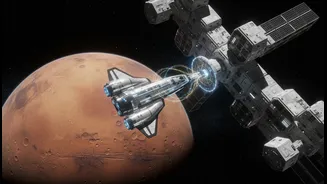
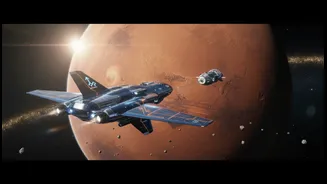
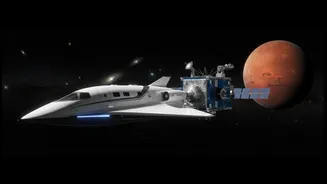
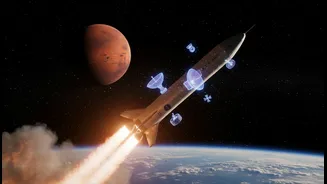
more like a customer and a partner than an all-in-one builder. The agency defines the scientific goals—what it wants to learn or discover—and then turns to the commercial sector to provide the transportation and logistics. A recent example is the Aeolus mission, announced in June 2026, where NASA provides the scientific instruments, and a company, Relativity Space, is responsible for the rocket, spacecraft, and getting the payload to Mars. This is a significant evolution from the early days of space travel and is modeled on the successes seen with the Commercial Crew Program, which resupplies the International Space Station.
The Billion-Dollar Question of Cost
A primary driver for this shift is cost. Building and launching bespoke, single-use rockets for every mission is a path of staggering expense. The Space Launch System (SLS), NASA's own massive rocket, has faced criticism for delays and significant cost overruns, with some estimates putting the price of a single launch in the billions. By contrast, private companies like SpaceX, driven by market competition, have pioneered reusable rocket technology that has drastically lowered the cost of reaching orbit. The philosophy is that by buying a ride as a service, NASA can save money. Instead of bearing the full development cost of a new vehicle, the agency can leverage the investments already made by the private sector. This allows NASA to dedicate more of its budget to what it does best: the science. Studies of the Commercial Crew Program suggest this model has already saved NASA billions compared to previous human spaceflight programs.
Accelerating the Pace of Science
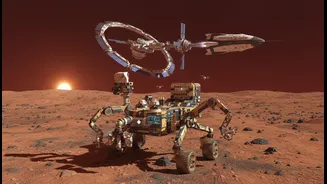
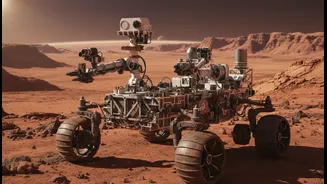
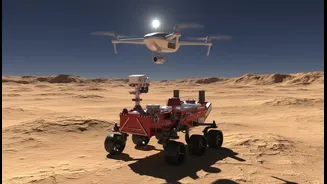
Beyond cost, a key goal is to increase the 'scientific cadence'—put simply, to do more science, more often. Traditional NASA missions are often years, if not decades, in the making. The hope is that a vibrant commercial market can offer more frequent and more affordable launch opportunities. If getting a payload to Mars is as simple as booking a spot on a commercial rocket, scientists can fly more experiments and gather data faster. The Aeolus mission, scheduled for 2028, is a perfect test case. It aims to provide the first daily, global view of Martian weather, data crucial for planning future human landings. By outsourcing the transport, NASA can focus on the instruments and data analysis, which it will support for at least one Martian year. This division of labor is intended to be a force multiplier for science.
Building a Deep Space Economy
This strategy isn't just about NASA's immediate goals; it's about fostering a self-sustaining commercial space industry. By awarding contracts for services like payload delivery, imaging, and communications, NASA is creating a market and giving companies the incentive to develop capabilities for deep space. In 2024, NASA's Jet Propulsion Laboratory funded studies with nine different companies to explore how commercial services could support Mars missions. The long-term vision is an ecosystem where NASA is just one of many customers. A mature market with multiple providers and customers helps to share costs, drive down prices further, and ensures that the capability to go to Mars doesn't depend on a single government program. This helps empower U.S. industry leadership in deep space and builds toward a future where a human-robotic presence at Mars is sustainable.
The Risks and Realities
Despite the optimism, this model is not without risks. Relying on private companies means ceding some control. Mission delays or failures at a commercial partner can have a domino effect on NASA's own timelines and scientific objectives, as has been seen with launch providers in the past. There's also the concern of over-reliance on a few dominant players, like SpaceX, which could reduce the very competition that makes the model attractive. While fixed-price contracts protect NASA from cost overruns on the contractor's side, a company failing to deliver on a critical component like a human landing system can still derail the entire program. The success of this public-private approach hinges on a delicate balance between commercial agility and the rigorous safety and mission assurance standards that have defined NASA for decades.