
Turning Confusion into Awe
The biggest barrier for budding stargazers is often a simple one: not knowing what you're looking at. A sky full of stars can feel like an indecipherable map. This is where mobile apps fundamentally change the game for families. Instead of relying on memory
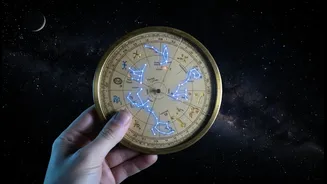
or complicated paper charts, you can simply point your phone or tablet at the sky. Using your device's GPS and compass, these apps overlay a real-time map, identifying stars, planets, and constellations instantly. For a child, seeing the name and shape of a constellation like Ursa Major appear on the screen, right where they are looking, turns a confusing view into a moment of discovery. The abstract becomes concrete, and frustration gives way to fascination.
More Than Just a Star Map
The best astronomy apps go far beyond simple identification. Many incorporate features designed to captivate users of all ages. Augmented Reality (AR) is a standout feature in apps like Star Walk 2 and SkyView. It overlays constellation art and labels directly onto your view of the sky through your phone's camera, making it feel like magic. Some apps include a "Time Travel" function, allowing you to see how the sky will look in a few hours or even how it looked in the past, teaching kids about the constant motion of the cosmos. Many also include detailed information and stories behind the constellations, sharing the Greek myths or other cultural tales that have been passed down for generations. This storytelling element is particularly powerful for engaging younger children, connecting science with history and imagination.
Choosing Your Family's Cosmic Guide
With dozens of apps available, the key is to find one that fits your family's needs. You don't need the most complex professional tool; you need one that's intuitive and fun. For absolute beginners and young children, apps like SkyView Lite and Star Walk 2 are often recommended because they are user-friendly and have generous free versions. Star Walk 2 is praised for being great for beginners, with beautiful graphics and a calendar of celestial events to look forward to. SkyView is noted for its simplicity and ability to work without Wi-Fi or GPS, which is perfect for camping trips. For those wanting a powerful, free option with a massive database, Stellarium Mobile is a fantastic choice, serving as a virtual planetarium in your pocket. Many of these apps also offer a "red light" mode, which preserves your night vision so you can switch between the screen and the real sky without your eyes needing to readjust.
Tips for a Successful Family Star Party
To make the most of your app-powered stargazing night, a little preparation goes a long way. First, download your chosen app and play with it at home before you go out. This ensures everything is working and you understand the basic functions. If you're heading to a location with poor or no cell service, choose an app like SkyView that can work offline. When you're outside, let the kids take the lead. Letting them hold the device and "discover" planets or satellites gives them a sense of ownership over the adventure. Use the app as a jumping-off point for conversation. Ask questions like, "Can you find Mars?" or "Let's see what the story is behind that constellation." The goal isn't to identify every single star, but to spark curiosity and enjoy the shared experience of looking up together.