







The Great Monsoon Misconception
One of the most common skincare mistakes people in India make is putting their sunscreen away once the monsoon arrives. The logic seems simple: no bright, visible sun means no risk of sun damage. However, this is a dangerous myth. While thick, dark clouds
do reduce some sunlight, they are surprisingly ineffective at blocking harmful ultraviolet (UV) radiation. According to the Skin Cancer Foundation, clouds block as little as 20% of UV rays, meaning up to 80% can still penetrate and reach your skin. This creates a false sense of security, where we unknowingly accumulate skin damage day after day, simply because we don't feel the sun's heat.
Meet the Invisible Attackers: UVA and UVB
To understand the risk, we need to know what we're fighting. The sunlight that reaches us contains two main types of harmful rays: UVA and UVB. Think of them as two different kinds of attackers. UVB rays are the 'burning' rays. They have shorter wavelengths, affect the top layer of your skin, and are the primary cause of sunburn. Their intensity peaks between 10 a.m. and 4 p.m. UVA rays, on the other hand, are the 'aging' rays. They make up about 95% of the UV radiation that reaches Earth. With a longer wavelength, they penetrate deeper into the skin's dermis, where they damage collagen and elastin, leading to wrinkles, fine lines, and premature aging. Critically, both UVA and UVB rays contribute to the risk of developing skin cancer.
How Clouds Actually Work
Here's the most important lesson a cloudy day teaches us: clouds are much better at blocking visible light and heat than they are at blocking UVA rays. While a thick cloud cover can significantly reduce burning UVB rays, the deeply penetrating UVA rays can pass through with ease. In some situations, a phenomenon known as the 'broken-cloud effect' can even increase your UV exposure. Certain types of scattered clouds can reflect and scatter UV rays, raising the intensity on the ground to levels higher than on a perfectly clear day. This is why you can still get a tan—which is a sign of DNA damage—on a seemingly gloomy monsoon day.
The Year-Round Threat in India
India's geographical location near the equator means we experience high UV levels all year, not just in the summer. Data shows that even during the monsoon (June to August) and winter (December), the UV Index across India remains in the moderate to high range. For example, the average peak UV index during the monsoon months of July and August is still high, at 6.7 and 7.3 respectively. There isn't a single month in India where UV levels drop low enough to safely skip sun protection. The cool, breezy weather of the monsoon is deceptive; the UV threat remains constant and cumulative.
Your Ultimate Monsoon Sunscreen Strategy
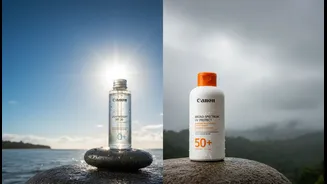
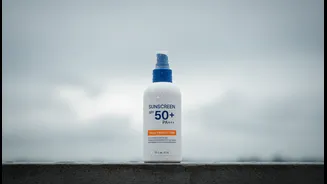
Protecting your skin is a 365-day commitment. The key is to choose the right protection and apply it correctly. Always opt for a 'broad-spectrum' sunscreen, as this label guarantees protection against both UVA and UVB rays. Dermatologists recommend a minimum of SPF 30, which blocks about 97% of UVB rays, but SPF 50 is often better for Indian conditions. Given the humidity and rain, look for a lightweight, gel-based, or water-resistant formula that feels comfortable on the skin. Remember, rain and sweat can wash sunscreen away, so reapplication every few hours is crucial if you are outdoors. And don't forget, UVA rays penetrate window glass, so you need protection even when you're at home, in the office, or driving your car.