



India's Leap into a New Orbit
At its heart, the Gaganyaan programme is the Indian Space Research Organisation's (ISRO) quest to send Indian astronauts into space and bring them back safely. The mission plan is to launch a crew of three into a 400 km Low Earth Orbit for a three-day
mission. Upon successful completion, India will join the exclusive club of nations—after the United States, Russia, and China—capable of independent human spaceflight. While Indian citizens like Rakesh Sharma have been to space before, those missions were part of foreign programs. Gaganyaan is a monumental step, representing India’s first indigenously developed human spaceflight, a project that has been in various stages of development since the mid-2000s and was formally announced in 2018.
The Vyomanauts: Faces of the Mission
The human element makes this mission truly captivating. The four astronaut-designates, or 'Vyomanauts' (from the Sanskrit 'Vyoma' for space), are all accomplished Indian Air Force test pilots: Group Captains Prasanth Balakrishnan Nair, Ajit Krishnan, Angad Pratap, and Wing Commander Shubhanshu Shukla. Selected in 2020, they have undergone extensive training, including a 13-month stint in Russia, to prepare for every aspect of spaceflight, from operating the spacecraft to conducting microgravity experiments. Their journey from the cockpit of a fighter jet to the capsule of a spacecraft personalizes this massive technological undertaking, embodying the aspirations of the entire nation.
Technology Forged for the Future
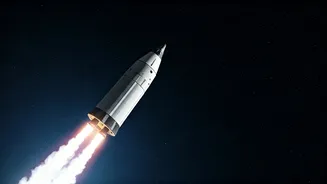
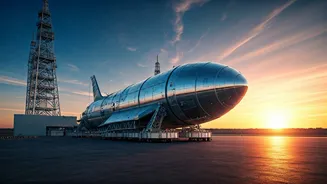
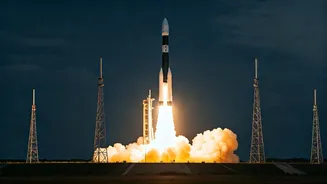
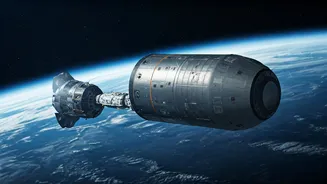
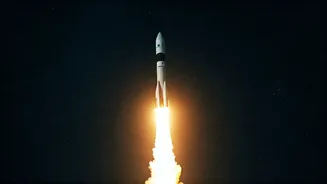
Sending humans to space is exponentially more complex than launching satellites. ISRO has developed a suite of critical technologies to ensure the safety and success of the mission. The powerhouse behind the launch is the human-rated LVM3 rocket, a modified version of ISRO's reliable heavy-lift vehicle. The astronauts will travel in the Orbital Module, which consists of the Crew Module, providing a habitable Earth-like environment, and a Service Module for propulsion. Paramount to the mission's safety are the crew escape system, designed to pull the crew to safety in an emergency, and the complex life support systems. With safety as the absolute priority, ISRO has conducted thousands of ground tests and simulations to validate every component.
More Than a Mission: A National Catalyst
Gaganyaan's significance extends far beyond science and technology. Geopolitically, it cements India’s status as a major space power and enhances its strategic influence. Economically, the mission is a powerful engine for growth, expected to create thousands of jobs and energize the domestic aerospace industry, with estimates suggesting nearly 60% of its equipment will be sourced from the private sector. It also serves as a massive source of inspiration, designed to encourage a new generation of scientists and engineers and foster a broader culture of innovation. The program will also boost scientific research by providing a platform for experiments in fields like materials science and astrobiology.
The Final Countdown: What to Watch For
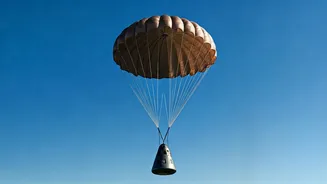
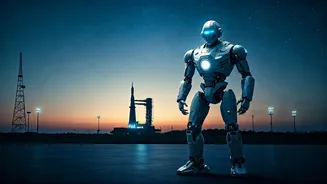
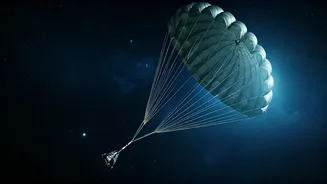
The journey to the launchpad is methodical and deliberate. The first crewed flight is targeted for 2027. Before astronauts strap in, ISRO has planned a series of uncrewed test flights to verify every system in real-world conditions. One of these missions will even feature 'Vyommitra', a humanoid robot, to simulate human functions and test life support systems. These precursor missions are the crucial final steps, demonstrating everything from the launch and orbital manoeuvres to re-entry and a safe splashdown in the Indian sea. Recent reports confirm that preparations for the first uncrewed flight are in advanced stages, marking the transition from development to the final operational phase.