





Understanding the Vertical World
For cats, height is not a luxury; it's a necessity rooted in instinct. In the wild, high vantage points provide safety from predators and a clear view to survey their territory for prey. This instinct remains strong in our domestic companions. In a multi-cat
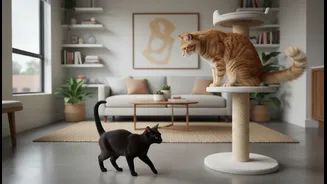
household, vertical space becomes a crucial resource that helps establish a social hierarchy without physical conflict. The cat perched on the highest point often has the highest status at that moment, a position that can be fluid and shared among cats. By providing elevated perches, you effectively expand your apartment's square footage from a feline perspective, giving each cat a place to feel secure, in control, and able to observe household activities from a safe distance. This reduces competition for floor-level resources and can significantly lower stress and aggression.
What Makes a Perch 'Safe'?
A perch is only effective if a cat feels secure using it. Safety begins with stability. Any shelf, cat tree, or perch must be completely solid and wobble-free. It's crucial to anchor shelves and tall furniture securely to wall studs to handle the dynamic load of a cat jumping. Test each perch with a weight heavier than your cat to ensure it's sound. The surface should offer good traction; slick, painted wood can be dangerous. Consider adding carpet, sisal, or routed grooves for grip. The perch also needs to be large enough for a cat to turn around and lounge comfortably—a depth of at least 12 inches is ideal for resting spots. Finally, think about headroom, with at least 16-18 inches of clearance above a shelf to prevent head bumps.
The Golden Rule: Multiple Escape Routes
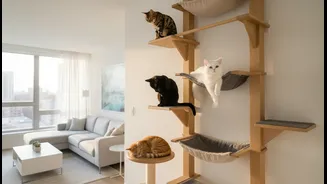
The single most important design principle for minimizing aggression is to avoid dead ends. A perch with only one way up and down can become a trap where one cat can corner another, escalating tension. The goal is to create a 'cat highway' with multiple entry and exit points. This allows a subordinate cat to easily move away if a more assertive cat approaches. Design looped pathways or zigzag patterns across walls. A vertical highway could connect a cat tree to a series of wall shelves, then lead to the top of a bookshelf, and finally offer a ramp back down. This gives cats choices and prevents any single cat from monopolizing the entire vertical space. Every high-value location, like a sunny window perch, should be accessible from at least two different directions.
Strategic Placement for a Harmonious Home
Where you place your perches is as important as their design. Cats want to be where the action is, but from a safe distance. Placing perches in socially significant areas, like the living room or home office, allows your cats to feel part of the family without being underfoot. Perches overlooking windows are prime real estate for 'cat TV,' providing mental stimulation. When planning the layout, think in terms of pathways. Shelves should be spaced to allow for easy hops—typically 12 to 18 inches apart vertically and horizontally. Use existing furniture like sturdy bookshelves or sofas as launch points for your cat highway. By creating an engaging network of high-up pathways, you redirect your cats' energy into healthy activity and exploration rather than conflict.