


Beyond One-Note Sweetness
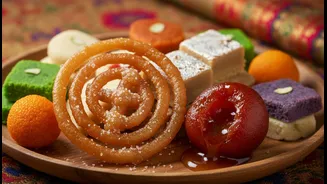
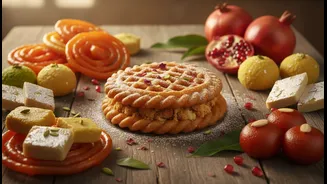
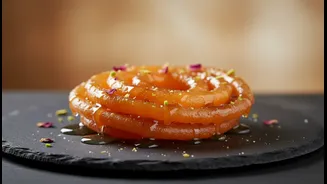
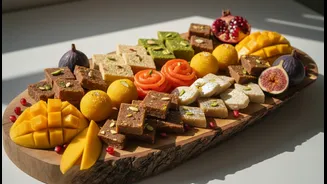
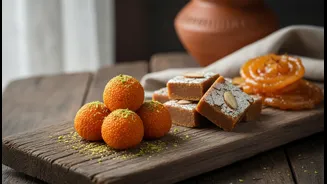
Traditional Indian mithai, from the melt-in-your-mouth barfi to the syrupy gulab jamun, has often prioritized a soft, dense, or spongy mouthfeel. While comforting and nostalgic, a new wave of chefs and sweet makers is challenging this norm. They argue
that balancing flavour and texture is key to modernizing mithai. The goal isn't to replace the classics but to build upon them, adding layers of complexity that appeal to a more globalized and adventurous Indian palate. This evolution is about creating a more dynamic eating experience, where every bite offers a contrast of sensations—soft giving way to crunchy, or smooth complemented by flaky.
A New Language of Texture
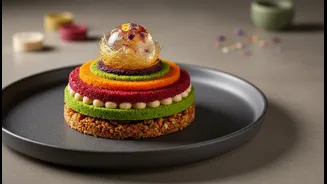
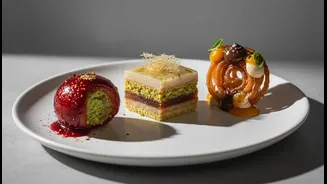
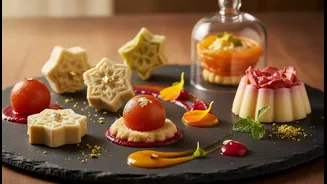
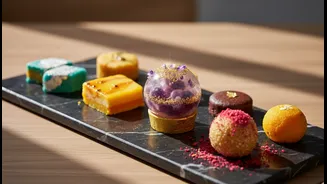
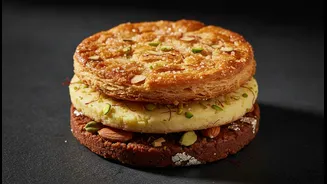
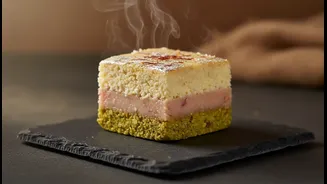
This focus on texture introduces a new vocabulary to the world of Indian sweets. Think of a classic kaju katli, now reimagined with a crunchy pistachio base or a flaky chiroti pastry served with almond praline. Chefs are deconstructing old favourites and reassembling them with modern techniques. You might find a deconstructed motichoor laddoo layered in a glass like a parfait, with crumbled boondi, whipped cream, and nuts creating distinct textural layers. Other innovations include incorporating things like pepper caramel, coconut fluff, and even crispy soan papdi into chocolate bars, creating a fusion of familiar and new sensations. These creations are less about a single flavour and more about the interplay of different components.
The Creative Minds Behind the Change
This trend is driven by a new generation of culinary professionals who see Indian sweets not as relics, but as a launchpad for creativity. Many pastry chefs, trained in both Indian and Western techniques, are bringing a new precision to the halwai’s art. They are experimenting with global dessert forms, creating hybrids like gulab jamun cheesecakes or rasmalai tres leches, where the texture is as important as the taste. Brands like Bombay Sweet Shop and Khoya are leading the charge, proving that mithai can be both artisanal and innovative. Their success demonstrates a growing consumer appetite for sweets that are thoughtfully crafted and offer a multi-sensory experience.
An Evolution for Modern Tastes
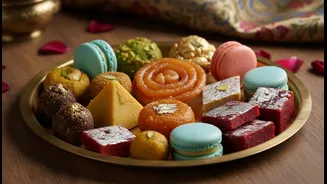
So, why is this happening now? Several factors are at play. An increasing health consciousness means that a pure sugar-hit is less appealing; complex textures can make a less sweet dessert feel more satisfying. Furthermore, in the age of social media, visually appealing, 'Instagram-worthy' food reigns supreme, and varied textures often create more visually interesting desserts. The rise of a well-travelled, discerning Indian consumer also plays a huge role. Palates exposed to global cuisines, from Japanese mochi to French macarons, have come to appreciate and expect textural complexity in their desserts. This shift is not a rejection of tradition, but a confident reinterpretation of it for a new era.