



Gaganyaan: India's Giant Leap into Human Spaceflight
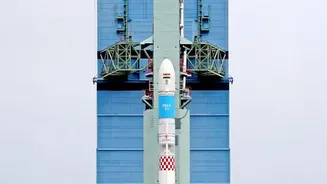
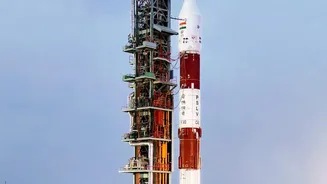
The most anticipated mission is undoubtedly Gaganyaan, India's inaugural human spaceflight program. The goal is to launch a crew of two to three astronauts into a Low Earth Orbit of 400 km for a mission lasting up to seven days. This will make India the
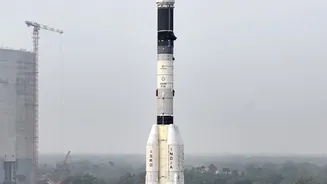
fourth country in the world to independently send humans to space. The program is proceeding with multiple uncrewed test flights to ensure the highest safety standards before the first crewed launch, which is anticipated no earlier than 2027. The development involves perfecting the human-rated LVM3 rocket, crew escape systems, and life support. The first uncrewed test flight, G1, is a critical step and is slated for 2026. This mission is not just a technological demonstration but a monumental step towards a future Indian space station and crewed interplanetary exploration.
Chandrayaan-4: Bringing a Piece of the Moon to Earth
Building on the spectacular success of Chandrayaan-3's soft landing, ISRO is planning Chandrayaan-4, an even more complex lunar sample-return mission. The objective is to land on the Moon, collect soil and rock samples, and return them to Earth for detailed scientific analysis. This ambitious project, projected for a 2027-2028 timeframe, would be the first to bring back samples from the Moon's polar region. The mission is incredibly complex, involving five different modules to handle landing, ascent from the Moon, docking in lunar orbit, and a safe re-entry to Earth. Success would not only yield invaluable scientific data but also prove crucial technologies for future human lunar missions, a goal India has set for 2040.
Mangalyaan-2: A Bold Return to Mars with a Lander
After the historic Mars Orbiter Mission (Mangalyaan), which made India the first nation to succeed on its first attempt, ISRO is planning a far more ambitious sequel. Mangalyaan-2 will not just orbit the Red Planet; it aims to be India's first attempt at a soft landing on Mars. The mission plans to include a lander, a rover, and even a helicopter to study the Martian surface and atmosphere. This would place India in an elite club of nations that have successfully operated rovers on Mars, alongside the US and China. Tentatively scheduled for launch no earlier than 2026, the mission will study Mars' surface composition, its thin atmosphere, and environmental conditions to better understand its history.
Shukrayaan-1: Unveiling the Secrets of Venus
ISRO is setting its sights on Earth's mysterious twin, Venus, with the Shukrayaan-1 orbiter mission. Venus is a challenging target with its crushing pressure and extreme surface temperatures. The mission's primary goals are to study the Venusian surface and its toxic, cloudy atmosphere in detail. It will carry a suite of instruments, including a high-resolution synthetic aperture radar to map the surface and a ground-penetrating radar to explore the subsurface geology. The mission was formally approved in September 2024 and is scheduled for launch on March 29, 2028. Shukrayaan-1 will investigate why Venus evolved so differently from Earth, despite its similar size and composition.
NISAR: A Landmark Earth Science Collaboration
In a major partnership, ISRO has joined hands with NASA for the NISAR (NASA-ISRO Synthetic Aperture Radar) mission. This advanced Earth-observing satellite is designed to monitor our planet's complex processes like never before. Using two different radar frequencies (L-band and S-band), NISAR will measure changes in Earth’s land and ice surfaces with incredible precision, detecting movements as small as a centimeter. It will provide crucial data on ecosystem disturbances, ice-sheet collapse, natural hazards like earthquakes and volcanoes, and groundwater supply. The satellite will map the entire globe every 12 days, making it an invaluable tool for understanding climate change and managing disasters.
SPADEX: Mastering the Art of Space Docking
The Space Docking Experiment (SPADEX) is a critical technology demonstration mission for ISRO's future plans. The mission, which launched in late 2024 and achieved successful docking in January 2025, involved two small satellites autonomously rendezvousing and docking in orbit. Mastering this technology is essential for building a future space station (the Bharatiya Antariksh Station), conducting in-space satellite servicing, and assembling larger spacecraft for interplanetary journeys. SPADEX has made India the fourth country in the world with proven space docking capability, a foundational skill for expanding the scope and complexity of future missions.