


The Monsoon's March Across India
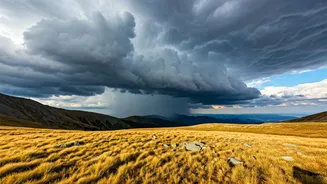
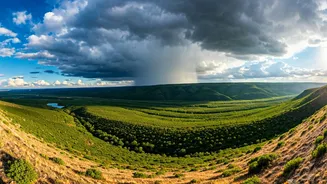
To understand Spiti’s unique climate, we first need to appreciate the sheer power of the Indian monsoon. From June to September, moisture-laden winds from the Indian Ocean sweep across the country. As these winds travel over the warm land, they rise,
cool, and release torrential rain. This seasonal downpour rejuvenates landscapes and is vital for agriculture, defining life for millions. The journey of these clouds is relentless, covering nearly the entire subcontinent—except for a few pockets shielded by immense natural barriers.
A Mighty Himalayan Barrier
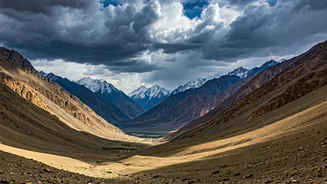
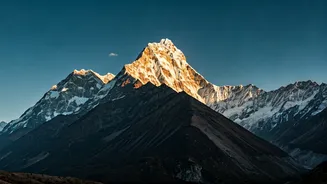
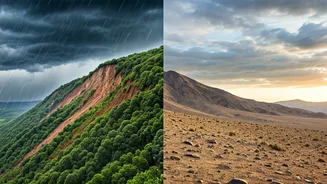
The primary reason Spiti stays dry is a phenomenon known as the "rain shadow effect." The main actors in this drama are the colossal Himalayan mountain ranges. When the moisture-filled monsoon clouds travel north, they encounter the formidable Pir Panjal and Great Himalayan ranges. These towering peaks, rising thousands of meters into the sky, act as a massive wall, forcing the moist air to ascend rapidly. As the air rises, it cools and condenses, dumping all its rain on the southern, windward slopes. This is why regions like Kullu and Manali receive heavy rainfall. By the time the air mass crests over these peaks, it has lost almost all of its moisture.
Life in the Rain Shadow
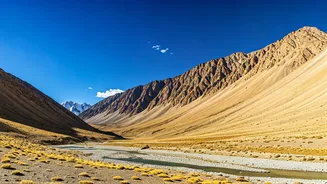
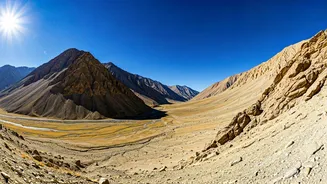
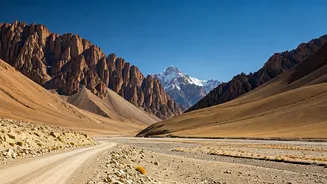
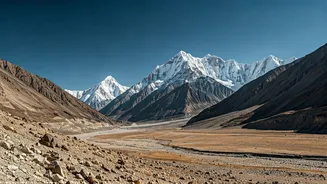
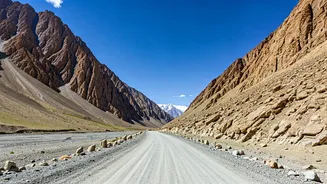
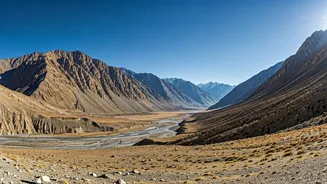
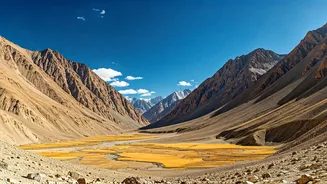
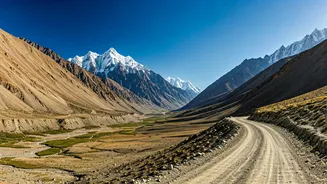
Spiti Valley is strategically located on the leeward side—or the sheltered side—of this great mountain wall. The dry air that descends into the valley is not only devoid of rain but also warms as it sinks, further reducing humidity. This process creates a high-altitude cold desert. As a result, Spiti receives negligible rainfall, often less than 50 mm annually. Its precipitation comes primarily in the form of heavy winter snowfall, which feeds the glaciers and rivers that are the lifeline for its sparse population. This stark, arid landscape, with its barren mountains and deep gorges, is a direct consequence of being shielded from the monsoon.
A Perfect Monsoon Getaway?
For travellers, this unique geography makes Spiti a prime destination during the monsoon months. While other mountain destinations grapple with downpours and fog, Spiti typically offers clear blue skies, brilliant sunshine, and pleasant daytime temperatures ranging from 15°C to 25°C. This makes July and August an ideal time to explore its ancient monasteries, high-altitude villages like Komic and Hikkim, and stunningly blue lakes like Chandratal. The valley's internal roads are generally open and accessible, allowing for trekking, camping, and road-tripping in a landscape that seems worlds away from the Indian monsoon.
A Word of Caution for the Journey
While Spiti itself is a dry sanctuary, getting there is another story. The approach roads, whether from Shimla via Kinnaur or from Manali via the Atal Tunnel and Kunzum Pass, are very much in the monsoon-affected zone. These routes are susceptible to landslides, roadblocks, and treacherous water crossings caused by the same rains that Spiti avoids. Therefore, anyone planning a trip during this period must build extra buffer days into their itinerary, stay updated on road conditions, and be prepared for potential delays. The journey to this rain shadow paradise is an adventure in itself, reminding you that you have to pass through the storm to reach the calm.