

A Planet for All Seasons
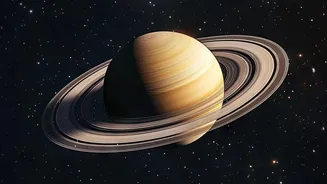
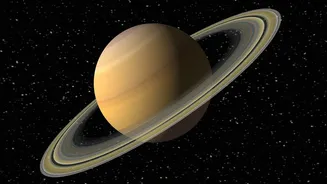
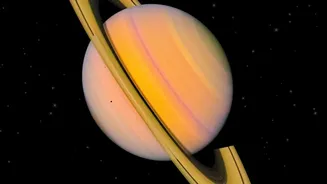
Much like Earth, Saturn experiences four distinct seasons, but on a much grander scale. The planet is tilted on its axis by about 27 degrees, similar to Earth's 23-degree tilt. This tilt means that as Saturn orbits the sun, different parts of the planet receive
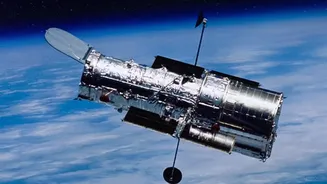
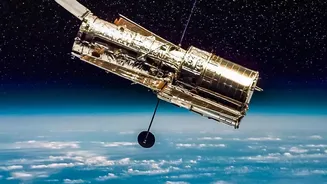
varying amounts of sunlight. However, because Saturn takes about 29 Earth years to complete one orbit, each season lasts for more than seven years. The latest data from the Hubble telescope, collected as part of the Outer Planet Atmospheres Legacy (OPAL) program, have been tracking the slow transition of Saturn's northern hemisphere from summer into autumn. This long-term monitoring allows scientists to see subtle, year-to-year changes that provide a deeper understanding of this distant world.
What the Telescope Actually Saw
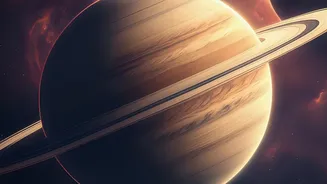
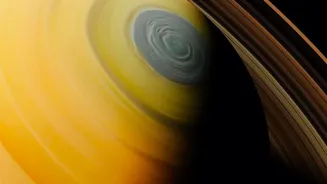
The updated Hubble observations reveal several key changes in Saturn’s atmosphere. Between 2018 and 2020, for example, the planet’s equator brightened by 5 to 10 percent. Scientists also noted shifts in wind speeds. In 2018, winds near the equator were measured at approximately 1,600 kilometers per hour, which was significantly faster than the 1,300 km/h speeds recorded by the Cassini spacecraft years earlier. By 2019 and 2020, these winds had slowed back down to their previous levels, showing just how dynamic the planet’s atmosphere can be. There have also been noticeable color changes in the atmospheric bands in the northern hemisphere, which scientists attribute to the changing seasons. Even the famous hexagonal storm at Saturn's north pole has shown changes in its visibility over the past few years.
Seeing in a New Light
The headline's mention of infrared observations is key. While visible light shows the surface of the cloud tops, infrared allows scientists to peer deeper into the atmosphere and see different layers. By observing in infrared, astronomers can map changes in temperature and chemical composition that are invisible to the naked eye. These observations help create a three-dimensional picture of how the atmosphere works. For instance, infrared can reveal hazes and clouds at different altitudes, showing how heat is distributed and how atmospheric layers interact. When combined with observations from other powerful instruments like the James Webb Space Telescope, which also has advanced infrared capabilities, scientists can effectively peel back the layers of Saturn's atmosphere like an onion.
The Ring Shadow's Surprising Role
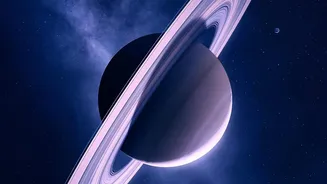
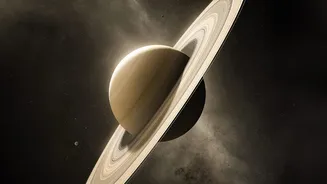
One of the most fascinating factors in Saturn’s seasons is the shadow cast by its enormous rings. For nearly 15 years at a time, the rings can block sunlight from reaching an entire hemisphere, causing significant cooling. As the seasons change and sunlight returns to a previously shaded area, the atmosphere reacts swiftly. Data from the earlier Cassini mission showed that the stratosphere can warm rapidly—by as much as 11 to 14 degrees Fahrenheit—once it emerges from the rings' shadow. This creates interesting atmospheric dynamics as warmer air rushes in to fill the cool patches left by the shadow, driving winds and influencing weather patterns across the globe. The constant interplay of sunlight and shadow adds another layer of complexity to Saturn’s already turbulent climate.
Why It Matters for Us
Studying the seasonal shifts on a gas giant like Saturn provides a unique natural laboratory for understanding planetary atmospheres under extreme conditions. It helps scientists test and refine their models of weather and climate, not just for Saturn but for other planets in our solar system and beyond. Tracking how storms form, how winds change, and how a planet responds to shifts in solar energy gives us fundamental insights into the forces that shape all planets, including our own. Long-term observation programs like Hubble's OPAL project are crucial because they build a continuous record of change, allowing us to see patterns that would be missed in a single snapshot. These comprehensive views help us piece together the history of how planets form and evolve over billions of years.