



What is Spinal Decompression?
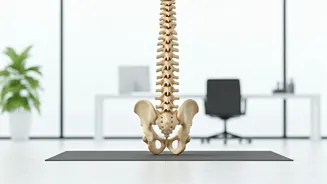
Before we get into the exercise itself, let’s quickly talk about what we’re trying to achieve. Spinal decompression is the process of relieving pressure on the vertebrae and discs in your spine. Sitting for long periods, poor posture, and even gravity
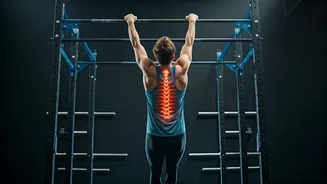
itself can compress these discs, leading to stiffness, pain, and a greater risk of injury. By creating space between the vertebrae, you allow fluid and nutrients to flow back into the discs, which can promote healing, reduce pain, and improve your overall spinal health.
The Dead Hang Explained
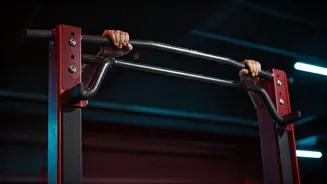
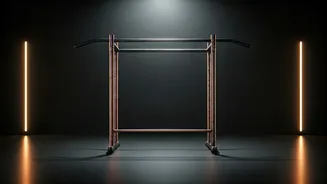
The dead hang is a straightforward bodyweight exercise where you hang from an overhead bar with your arms fully extended. While it sounds simple—and it is—its effects are powerful. As you hang, gravity gently pulls your body downwards, creating traction that elongates your spine and decompresses the joints from your neck down to your lower back. It's an excellent way to counteract the compressive forces of daily life. The exercise primarily targets your forearms, grip, shoulders, and back muscles, making it a multi-beneficial movement.
The Simple Trick: A Passive Hang
The “trick” to getting the most spinal decompression from a dead hang is to perform a truly passive hang. This means letting your body hang completely relaxed, with the only real effort coming from your grip. Unlike an 'active hang' where you pull your shoulder blades down and back, a passive hang requires you to let your shoulders rise up towards your ears. This complete relaxation of the shoulder and back muscles is what allows gravity to do its work, maximizing the stretching and decompression of the entire spinal column. It's about letting go of tension, not creating it.
Your Step-by-Step Guide
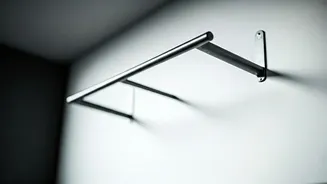
Ready to try it? Follow these steps for proper and safe form. First, find a secure, stable overhead bar, like a pull-up bar or sturdy playground equipment. Use a box or bench to easily reach it without jumping. Grip the bar with your palms facing forward (an overhand grip), placing your hands slightly wider than your shoulders. Wrap your thumbs around the bar for a secure grip. Carefully step off the box, allowing your body to hang with your arms straight. Let your shoulders relax and rise toward your ears. Keep your core lightly engaged to prevent swinging, but let the rest of your body hang limp. Hold for 10-20 seconds to start, focusing on deep, steady breathing. As you get stronger, work your way up to 45-60 seconds. To finish, step back onto the box before letting go.
Beyond Decompression: More Benefits
While spinal decompression is a major plus, it's not the only benefit. Regular dead hangs are fantastic for building serious grip strength, which is a key indicator of overall health and longevity. This exercise also improves shoulder mobility and stability by stretching the surrounding muscles and ligaments, which can help relieve pain from issues like rotator cuff injuries. Furthermore, by stretching your lat muscles and strengthening your upper back, dead hangs can lead to significant posture correction over time.
Common Mistakes and Who Should Be Cautious
To get the benefits without the risks, avoid common errors like bending your elbows, holding your breath, or swinging your body. Jumping up to the bar can also put undue stress on your shoulders. While dead hangs are beneficial for many, they may not be suitable for everyone. Individuals with pre-existing shoulder instability, hypermobility, or a history of dislocations should be cautious, as the passive hang position can stretch the joint's tissues. It can be risky for those who lack a baseline of upper-body strength. If you have a history of shoulder, elbow, or wrist injuries, it's wise to start with very short holds or an 'active hang' where muscles are more engaged.