


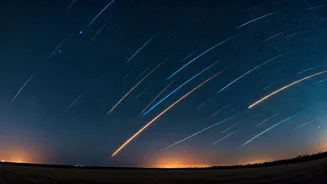
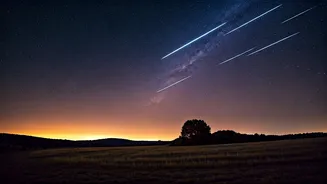


What Exactly Is a Meteor Shower?
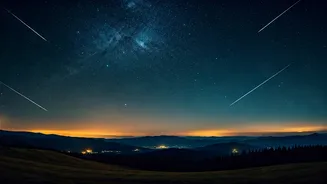
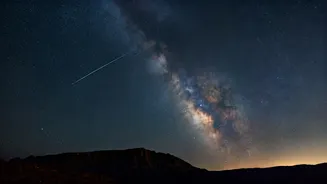
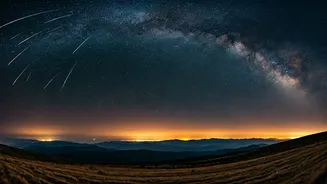
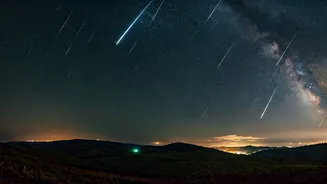
Before you set your alarm for 2 a.m., it helps to know what you're looking for. A meteor shower happens when Earth, in its orbit around the Sun, passes through a trail of cosmic dust and debris left behind by a comet or, in some cases, an asteroid. These
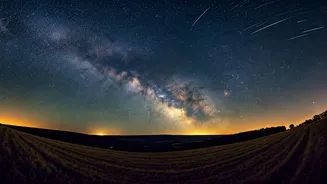
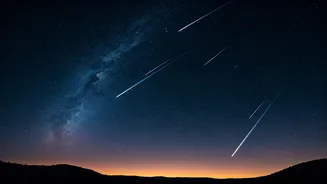
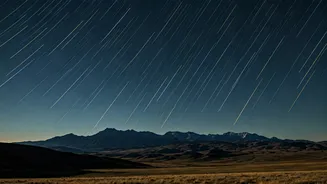
tiny particles, often no bigger than a grain of sand, enter our atmosphere at incredibly high speeds. The friction causes them to burn up, creating the brilliant streaks of light we call meteors or, more popularly, shooting stars. They appear to radiate from a single point in the sky, called the radiant, which is why many showers are named after the constellation where their radiant lies, like the Perseids in Perseus or the Geminids in Gemini.
Your 2026 Meteor Shower Calendar
Mark your calendars, because 2026 has some fantastic viewing opportunities. The key to a great show is not just the shower's activity, but also the phase of the Moon; a bright full moon can wash out all but the brightest meteors. Luckily, this year features some prime events with dark, moonless skies.
Perseids (Peak: August 12-13): This is the main event of the summer and one of the most popular showers of the year. In 2026, viewing conditions are perfect. The peak coincides with a new moon, meaning the sky will be completely dark, allowing for an incredible show. Under ideal conditions, you could see over 50 meteors per hour. The only challenge for viewers in India is the monsoon season, which can mean cloudy skies. For the best chance of a clear view, consider heading to drier regions like Ladakh, Spiti Valley, or parts of Rajasthan.
Orionids (Peak: October 21-22): These meteors are fragments from the famous Halley's Comet. The Orionids are known for their speed and brightness, sometimes leaving glowing trails that last for a few seconds. In 2026, the shower faces some competition from a waxing gibbous moon, which will obscure fainter meteors in the evening. However, the moon will set after midnight, opening up a window for good viewing in the pre-dawn hours.
Geminids (Peak: December 13-14): Arguably the best and most reliable meteor shower of the year for observers in India. The Geminids are known for producing a high number of bright, multi-coloured meteors—up to 120 per hour in a dark sky. Viewing conditions in 2026 are set to be fantastic. A thin crescent moon will set early in the evening, leaving the rest of the night dark for the celestial fireworks. With clear post-monsoon skies expected across much of the country, this is a can't-miss event.
How to Watch Like a Pro
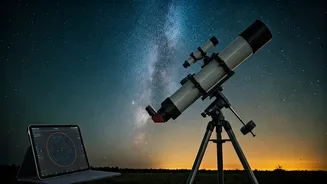
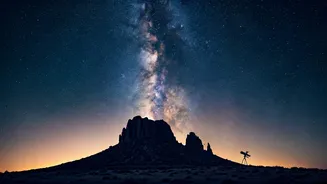
You don't need any expensive equipment to enjoy a meteor shower. In fact, your own eyes are the best tools for the job, as they allow you to take in the widest possible view of the sky. The key is preparation and patience. First, find a location away from city lights. Light pollution is the biggest enemy of a stargazing session. Rural areas, parks, or even a dark spot on the outskirts of your town will be much better than your backyard. Give your eyes at least 20-30 minutes to adapt to the darkness. Avoid looking at your bright phone screen during this time. Finally, get comfortable. Bring a reclining chair, a blanket, or simply lie on the ground. Meteor watching is a waiting game, so you might as well be cozy while you do it.
Finding a Truly Dark Sky
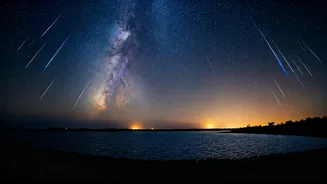
For a truly unforgettable experience, consider travelling to a certified dark sky location. India is home to some incredible spots for stargazing. Hanle in Ladakh is designated as India's first Dark Sky Reserve, offering some of the clearest and darkest skies in the world. Other high-altitude locations like Spiti Valley in Himachal Pradesh also provide breathtaking views of the cosmos. If the mountains are too far, the white desert of the Rann of Kutch in Gujarat or the sand dunes near Jaisalmer in Rajasthan offer vast, open horizons perfect for watching a meteor shower. Even wildlife reserves like Pench Tiger Reserve in Maharashtra are now recognised for their dark skies, blending astronomy with nature.