

A Sobering Look at Our Neighbours
For years, astronomers have been captivated by the TRAPPIST-1 system, a star just 40 light-years away hosting seven Earth-sized rocky planets. Hopes were high that some of these worlds, particularly those in the star's 'habitable zone,' might possess
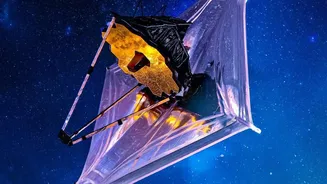
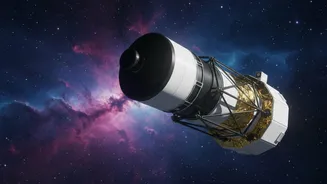
atmospheres—a key ingredient for life. However, a series of observations from the JWST have delivered sobering results. The telescope has systematically studied these planets, and the news has been discouraging for those hoping for a nearby Earth twin. Recent analyses of TRAPPIST-1c and TRAPPIST-1d, for example, have ruled out thick, carbon dioxide-rich atmospheres like Venus or even thinner ones like Mars. While it's still possible an extremely thin atmosphere exists, the data so far points towards them being barren, airless rocks.
The Problem with Red Dwarfs
The TRAPPIST-1 star is a red dwarf, the most common type of star in our galaxy. Their abundance and smaller size made them prime targets in the search for habitable exoplanets. The theory was that since these stars are cooler, a planet could orbit much closer and still maintain liquid water. However, this proximity comes at a cost. Red dwarfs are notoriously active and volatile, especially in their youth. They can unleash powerful stellar flares and winds that can effectively blast away the atmospheres of any nearby planets. The lack of substantial atmospheres around the inner TRAPPIST-1 planets seems to confirm this long-held fear. What was once seen as a promising place to look for life is now understood to be a potentially hazardous environment for fragile atmospheres to survive.
Rethinking the 'Habitable Zone'
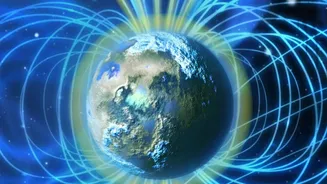
These findings force a major rethink of the 'habitable zone'—often called the 'Goldilocks zone'—the orbital region around a star where conditions are just right for liquid water to exist on a planet's surface. The concept has always relied on the assumption that the planet has a suitable atmosphere to maintain that water. But the JWST's observations suggest that for planets around red dwarfs, being in the habitable zone isn't enough. A planet like TRAPPIST-1e, which sits squarely in the zone, may not have an atmosphere at all, making the presence of surface water impossible regardless of temperature. This challenges scientists to refine their models, incorporating the star's activity and the planet's ability to magnetically shield itself as critical factors for true habitability.
An Unexpected Twist
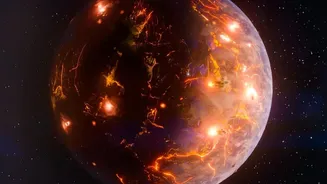
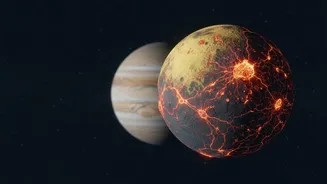
Just as the outlook for planets around red dwarfs seemed to dim, the JWST delivered a surprising counterpoint. Observations of TOI-561 b, an ultra-hot 'super-Earth' orbiting its star in a blistering 11 hours, have shown the strongest evidence yet of an atmosphere on a rocky world. This discovery challenges the prevailing theory that planets orbiting so close to their star cannot hold onto their atmospheres. The surface is likely a molten magma ocean, yet it appears to be shrouded in a blanket of gases. This finding suggests that some planets, perhaps due to their formation history or composition, are far more resilient than previously believed. It complicates the narrative, showing that atmospheric retention is not a simple story and depends on more than just distance from the star.
The Search Refined, Not Abandoned
While the news from systems like TRAPPIST-1 may seem like a setback, it is a crucial part of the scientific process. Null results are still results. Knowing that many rocky planets around red dwarfs are likely airless helps astronomers refine their search. Instead of giving up, the focus is shifting. Scientists are now looking for worlds around different types of stars or for larger, more massive rocky planets that might have a stronger gravitational pull to hold onto their air. Recent detections around the star LHS 1140, for instance, have ignited new hope, identifying a promising super-Earth with signs of an atmosphere that the JWST is slated to investigate. Every observation, whether it finds an atmosphere or not, sharpens our understanding of what makes a planet truly habitable.