





Download Your Digital Telescope
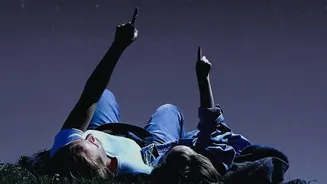
The first step is to equip your smartphone with a stargazing app. These apps use your phone's GPS and internal compass to create a real-time map of the sky. When you point your phone at a celestial object, the app identifies it for you. For beginners,
apps like Star Walk 2, SkyView Lite, and Stellarium Mobile offer free, user-friendly interfaces that are perfect for getting started. They use augmented reality (AR) to overlay information directly onto your view of the night sky, making identification a seamless experience. Many of these apps are available on both iOS and Android and provide a wealth of information right at your fingertips.
Finding the Ringed Planet: Saturn
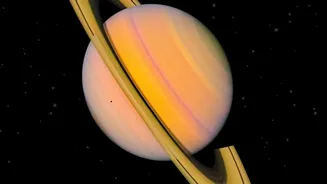
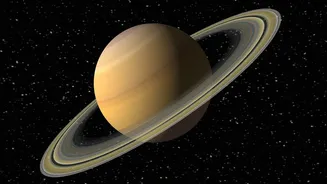
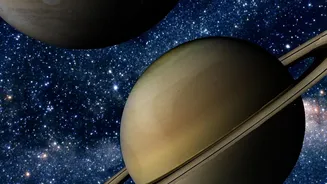
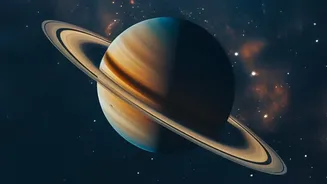
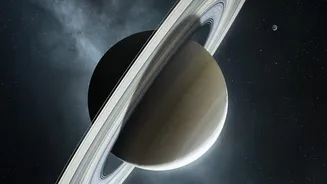
Saturn is a highlight of the night sky in September 2026. Throughout the month, it rises in the eastern sky shortly after sunset and remains visible for most of the night. To the naked eye, it will appear as a steady, bright, yellowish-white point of light. Using your chosen app is simple: type "Saturn" into the search bar, and an arrow will guide you to its location. As you move your phone, the on-screen map will shift until you have it centered. On September 26, you'll have an easy guidepost, as the planet will appear near the full Harvest Moon. While you won't see its famous rings without a telescope, just identifying this distant gas giant is a thrill in itself.
Connecting the Dots: Bright Constellations
Once you've found Saturn, you can start hunting for larger patterns. On September evenings, one of the most prominent asterisms (a pattern of stars) is the Summer Triangle. It’s formed by three very bright stars: Vega, Deneb, and Altair. These stars are the anchors for three different constellations: Lyra (the Harp), Cygnus (the Swan), and Aquila (the Eagle). Cygnus is particularly easy to spot as its main stars form a large cross shape known as the Northern Cross. Another easily recognizable pattern for observers in the Northern Hemisphere is Cassiopeia, which looks like a large 'W' or 'M' in the sky. Your app can help you trace these shapes and learn the myths and stories behind them.
Essential Tips for the Best View
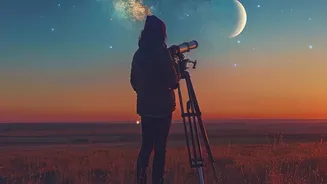
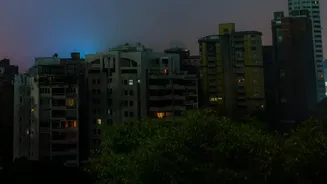
To make your stargazing session successful, a little preparation goes a long way. The most important factor is to get away from city light pollution. Even a short drive to a darker park or rural area can dramatically increase the number of stars you can see. Once you're there, give your eyes at least 15-20 minutes to fully adapt to the darkness; avoid looking at your bright phone screen during this time. Many astronomy apps have a 'red light mode' which helps preserve your night vision. Finally, check the weather forecast. A clear, cloudless night is essential. For the best possible view, try to plan your session for a night when the Moon is in a crescent phase or not visible, as a full moon's brightness can wash out fainter stars.