






What is a Semicryogenic Engine Anyway?
Think of it as a hybrid engine that gets the best of both worlds. Unlike fully cryogenic engines that use super-chilled liquid hydrogen and liquid oxygen, a semicryogenic engine uses liquid oxygen (the 'cryogenic' part) and a refined, rocket-grade kerosene
called RP-1 or 'Isrosene' (the 'semi' part). The big advantage? Kerosene doesn't need to be stored at incredibly low temperatures like liquid hydrogen does. This makes it easier to handle, safer, and cheaper. It’s also denser, meaning you can pack more fuel into the same amount of space, which ultimately provides more thrust and power.
A Milestone, Not the Finish Line
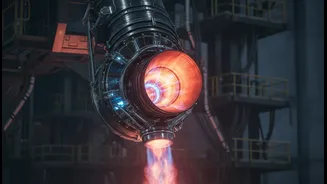
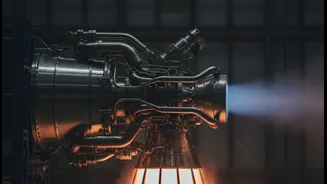
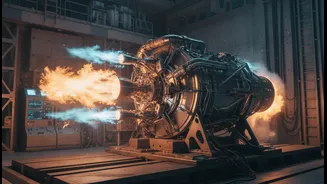
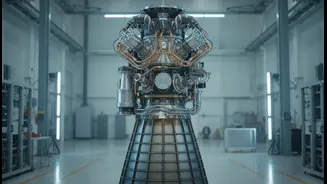
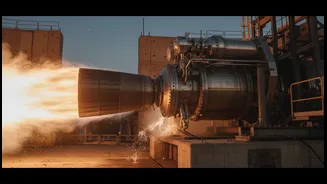
Recent tests in late June 2026 marked a significant achievement for the SE-2000 engine, as it's officially known. At its facility in Mahendragiri, ISRO successfully tested the engine's 'Power Head Test Article' (PHTA), which includes all major components except the final nozzle. The test ran at a 175-tonne thrust level, which is about 88% of its full power. This was the eighth in a series of tests and the first at such a high thrust level, giving ISRO confidence that the engine can perform at its full 200-tonne (2000 kN) capacity. It's a crucial step in validating the engine's design, but it’s one of many needed before it's ready to fly.
The Real Prize: Heavier Satellites, Cheaper Launches
So, why all the effort? The SE-2000 engine is a game-changer for India's launch capabilities. It's designed to replace the current L110 core stage of the LVM3 rocket, India's workhorse for heavy launches. A single SE-2000 engine will replace the two Vikas engines currently used, providing more power. This upgrade will boost the LVM3's payload capacity to Geostationary Transfer Orbit (GTO) from four tonnes to five tonnes. This means India can launch heavier, more complex communication satellites and deep space missions. Furthermore, the lower cost and easier handling of kerosene aim to make launches more frequent and commercially competitive, helping ISRO increase its small 2% share of the global launch market.
Powering India's 'Falcon 9' Moment
The SE-2000 is not just about upgrading existing rockets; it's the heart of India's future. This engine is slated to power the booster stages of the Next Generation Launch Vehicle (NGLV). Approved in 2024, the NGLV is ISRO's answer to modern, reusable rockets like SpaceX's Falcon 9. It is being designed as a three-stage, partially reusable rocket that will eventually replace most of ISRO's current fleet, including the PSLV and GSLV. The NGLV is essential for India's ambitious plans, including building the Bharatiya Antariksh Station by 2035 and sending an Indian astronaut to the Moon by 2040. The semicryogenic engine is the foundational technology that makes this futuristic, cost-effective vision possible.
Hype Check: When Will It Actually Fly?
While the recent tests are a huge success, it's important to temper expectations. Rocket engine development is a long and painstaking process. A successful ground test of a key component is a massive leap, but it's not the final step. ISRO still needs to conduct more tests, including a full-duration firing at 100% thrust, and then integrate the entire engine and stage for qualification. The development of the NGLV itself is an eight-year project that began in late 2024. Therefore, while the progress is rapid, we are still several years away from seeing the SE-2000 engine power an actual launch. The excitement is justified, but the real payoff is a reward for patience.