
A New Space Race Begins at Home
India’s triumphant landing near the Moon's south pole in 2023 was more than a scientific achievement; it was a starting gun for the private sector. For decades, the Indian Space Research Organisation (ISRO) was the sole custodian of the country's space
ambitions. But a major policy shift in 2020, aimed at encouraging private participation, has unlocked a new wave of innovation. The government established the Indian National Space Promotion and Authorisation Centre (IN-SPACe) to act as a single-window agency, helping private companies access ISRO's facilities and expertise. This state-enabled commercialization is designed to let ISRO focus on deep-space exploration and research, while private firms drive the development of launch vehicles, satellites, and now, lunar hardware. The goal is to grow India's share of the global space market from its current sub-three percent to ten percent in the coming years.
The Contenders and Their Lunar Dreams
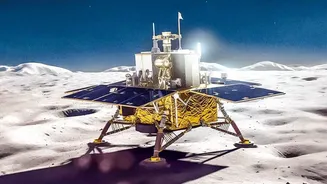
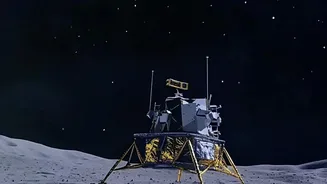
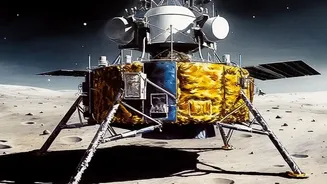
While the Indian lunar startup scene is still nascent, several companies are positioning themselves as serious players. One notable firm is ORBITBeyond, which is establishing a global space systems centre in Bhubaneswar, Odisha. The company is actively designing and manufacturing lunar landers and rovers, drawing on engineering talent from the teams behind India's Chandrayaan and Israel's Beresheet missions. Its manufacturing partner, CTTC Bhubaneswar, has a two-decade history of supplying ISRO, having produced over 70,000 precision parts for Chandrayaan-3. Another Bengaluru-based startup, Kepler Aerospace, founded by ex-ISRO talent, recently raised significant seed funding. While its current focus is on defence satellites, one of its founders was previously involved in developing a lunar nano-rover, highlighting the transferable skills and ambitions within the ecosystem. These companies follow in the footsteps of pioneers like TeamIndus, which competed for the Google Lunar XPRIZE, demonstrating that private Indian missions were possible.
The 'Low-Cost' Indian Advantage
The phrase "low-cost" is central to the strategy. This isn't about cutting corners but building on ISRO’s world-renowned philosophy of frugal engineering. Indian startups are leveraging several key advantages. First is the principle of using proven, reliable technologies rather than reinventing the wheel for every mission. Second is the extensive use of simulation to test thousands of scenarios digitally, reducing the need for expensive physical prototypes. Third is a focus on lightweight, compact designs that save crucial fuel and launch costs. Finally, India's large pool of highly skilled technical graduates provides a formidable human resource advantage. This combination of inherited expertise, a culture of cost-conscious engineering, and a robust talent pipeline enables these startups to develop sophisticated payloads at a fraction of the cost seen in other space-faring nations.
What's the Business Model?
These startups aren't going to the Moon just for the glory; they're building a business case. The primary model involves selling payload space on their rovers to a variety of customers. This includes universities wanting to run experiments, international space agencies seeking cost-effective research platforms, and private companies aiming to test new technologies in the lunar environment. The rovers can be tasked with scouting for resources like water ice, which is critical for future long-term habitation. They can also provide high-resolution imagery and surface data, creating a valuable revenue stream. For some, like US-based Lunar Outpost, the model is 'rovers as a service,' where they generate and sell data to customers rather than just selling a ride. Indian startups are aiming to tap into this emerging market for lunar logistics and data, positioning India as a hub for affordable access to the Moon's surface.
Challenges and the Path Forward
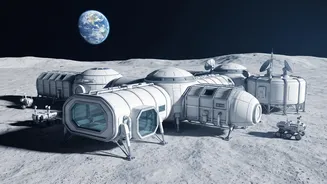
The path to a commercial lunar mission is filled with obstacles. Securing consistent funding, navigating a complex regulatory environment, and overcoming immense technical challenges are just the beginning. The failure of several private lunar landing attempts globally in recent years underscores how difficult these missions are. However, the Indian ecosystem has a unique advantage: the collaborative support of ISRO and the clear backing of government policy through IN-SPACe. As private companies like Skyroot Aerospace achieve orbital launch success, it builds global confidence in India’s private space capabilities. This success, combined with international partnerships like NASA inviting ISRO to join its Moon Base programme, creates a fertile ground for these ambitious lunar startups to grow. Their journey will be tough, but it represents a crucial step in transforming India from a space-faring nation into a true space-faring economy.