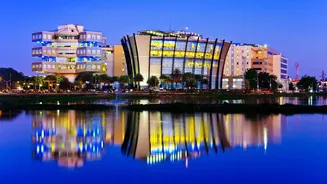








Bengaluru: The Crowded Throne
Bengaluru’s status as India’s primary tech capital remains secure, for now. It boasts the highest concentration of tech jobs, the deepest talent pool for specialised skills like AI and Machine Learning, and a vibrant startup ecosystem that is second to
none. Global Capability Centers (GCCs) and product companies flock here to tap into a dense network of experienced engineers and product leaders. However, this dominance comes at a cost. Professionals face some of the highest living expenses in the country, with exorbitant rents and strained public infrastructure leading to notoriously difficult commutes. For companies, the challenges include intense competition for talent, high salary expectations, and the country's highest attrition rates, which can climb above 20% for in-demand roles. While it's still the epicentre of innovation, the high-burn environment is prompting both professionals and employers to look for more sustainable alternatives.
Hyderabad: The Master-Planned Challenger
Hyderabad has emerged as the most formidable challenger to Bengaluru’s crown, built on a foundation of strategic government support, robust infrastructure, and a booming enterprise tech scene. Proactive policies like the Telangana ICT Policy have created a business-friendly environment, attracting massive campuses from giants like Microsoft, Google, Amazon, and Salesforce. The city's calling card is scalability. Well-planned IT corridors like HITEC City and Gachibowli are connected by an efficient Outer Ring Road, making commutes more manageable than in other metros. Beyond general IT, Hyderabad has carved out powerful niches in pharmaceuticals, life sciences, and the gaming and animation industry. For professionals, the city offers a compelling proposition: salaries at major multinational corporations are often on par with Bengaluru, but lower living costs mean significantly higher savings. With a large and growing talent pool, it has become the go-to destination for companies focused on large-scale operations and enterprise engineering.
Pune: The Stable and Sustainable Hub
While Hyderabad competes on scale, Pune offers a different, yet equally attractive, value proposition: stability and a better quality of life. Long known as the “Oxford of the East” for its strong educational base, Pune has leveraged its rich engineering legacy to build a diverse tech ecosystem. The city is a powerhouse in automotive and manufacturing tech, embedded systems, and is rapidly becoming a preferred hub for BFSI (Banking, Financial Services, and Insurance) technology and product engineering firms. It is home to sprawling, well-established IT parks like Rajiv Gandhi Infotech Park in Hinjewadi and Magarpatta City, a unique township model that integrates work and living spaces. Pune’s key advantages are its lower operational costs and superior talent retention; its attrition rates are consistently the lowest among India’s major tech hubs. For employees, this translates into a more balanced lifestyle, a pleasant climate, and proximity to Mumbai, India’s financial capital.
A New Map for Tech Careers
The choice is no longer just about which city has the most jobs, but what kind of career and life one wants to build. Bengaluru remains the destination for those seeking the highest career ceiling in deep tech and startups, provided they can navigate the high costs. Hyderabad presents the best risk-adjusted option for many, offering competitive salaries and a better lifestyle, making it the smart engineer's choice for scaling a career in a large enterprise. Pune excels for those who prioritize work-life balance, stability, and savings, especially in the early stages of a career or within its specialised engineering domains. The rise of these two cities doesn't signal Bengaluru's decline. Instead, it points to the maturation of India’s tech industry. The ecosystem is decentralizing, creating a more resilient and diverse landscape of opportunity. This shift offers professionals and companies something they haven't had before: a genuine choice.