





The Fairytale Lanes of Old Tbilisi
Your architectural journey begins in the heart of the city: the Abanotubani (bath district) and the surrounding Old Town. This is the Tbilisi you’ve seen in pictures. The defining features are the ornate, colourful wooden balconies that cling precariously
to the sides of old buildings. These are not just decorative; they are a way of life, an extension of the living room into the open air. Each balcony tells a story with its intricate carvings and vibrant paint. The best way to experience this is to simply get lost. Wander through the cobblestone alleys, peek into hidden courtyards, and admire the beautiful decay and loving restoration. It’s a photographer’s paradise, offering endless texture and character. **Backpacker Tip:** This area is best explored on foot. Wear comfortable shoes and let curiosity be your guide. Many of the most charming spots are found by chance, far from the main tourist thoroughfares.
Ancient Fortresses and Sacred Peaks
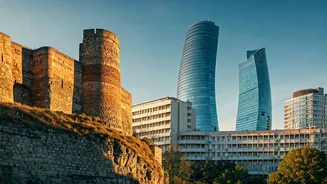
Looming over the city is the Narikala Fortress, a sentinel that has watched over Tbilisi since the 4th century. A walk up to its walls offers not just a lesson in ancient military architecture but also the most breathtaking panoramic views of the entire city. You can see the Mtkvari River snaking below and the patchwork of old and new buildings stretching to the horizon. Not far from here, you’ll find the Holy Trinity Cathedral of Tbilisi, also known as Sameba. Completed in 2004, it’s one of the tallest Eastern Orthodox cathedrals in the world. While modern, its design is a grand synthesis of traditional Georgian church architecture, creating a powerful silhouette against the skyline. **Backpacker Tip:** Take the cable car from Rike Park up to Narikala Fortress for a scenic and effortless ascent. The ride itself is an experience, costing only a few Lari.
The Whimsical Gabriadze Clock Tower
Tucked away next to a puppet theatre in the Old Town is one of Tbilisi’s most delightful and eccentric landmarks: the leaning clock tower of the Gabriadze Theater. Created in 2010 by famed Georgian artist and puppeteer Rezo Gabriadze, this quirky structure looks like it was plucked straight from a fairytale. It’s a haphazard assembly of found objects and handmade tiles, intentionally crooked and utterly charming. Every hour, a window at the top opens and an angel strikes a bell. At noon and 7 p.m., a small puppet show called “The Circle of Life” emerges, making it a magical stop. It’s a testament to the city's artistic soul and a refreshing break from grand, imposing structures. **Backpacker Tip:** The area around the tower is full of quaint cafes. Grab a coffee and wait for the hourly show – it’s a free and uniquely Tbilisi experience.
Soviet Ghosts: The Brutalist Legacy
No architectural tour of Tbilisi is complete without confronting its Soviet past. The city is home to some of the most striking examples of Brutalist architecture in the world. The most famous is the former Bank of Georgia headquarters (now its head office), a mind-bending structure of interlocking concrete blocks that looks like a giant, geometric puzzle. It was designed to use minimal ground space, a core tenet of its ‘Space City’ design. Another must-see is the Chronicle of Georgia, a colossal monument perched on a hill overlooking the Tbilisi Sea. It’s a bit of a trek to get to, but the sheer scale of the 16 massive pillars, covered in carvings depicting Georgian history and biblical scenes, is awe-inspiring and feels like discovering a lost city. **Backpacker Tip:** Use a ride-sharing app like Bolt to get to these sites, as they are outside the main city centre. The Chronicle of Georgia is free to enter.
The Modern Wave of Glass and Steel
After the Rose Revolution in 2003, Tbilisi embarked on a mission to modernize its image, resulting in a wave of futuristic, ambitious public projects. The most prominent example is the Bridge of Peace, a sleek, bow-shaped pedestrian bridge made of glass and steel that illuminates with thousands of LEDs at night. It controversially sits right in front of the Old Town, creating a stark but fascinating contrast. Nearby are the two giant metallic tubes of the Music Theatre and Exhibition Hall in Rike Park, and the undulating, mushroom-like roof of the Public Service Hall. These structures represent a new Georgia, looking boldly towards the future, and they create a dynamic dialogue with the city’s older layers. **Backpacker Tip:** Visit the Bridge of Peace just after sunset. The light show, which begins at dusk and runs for 90 minutes, is spectacular and free.