


The Monsoon's Secret Harvest
Across India, the monsoon is more than just a weather pattern; it's a cultural phenomenon that dictates the rhythm of life, agriculture, and cuisine. As lightning streaks across grey skies and rivers swell, another kind of magic happens quietly in forests,
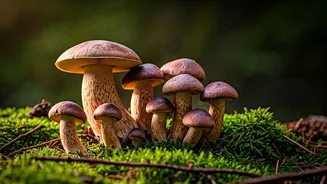
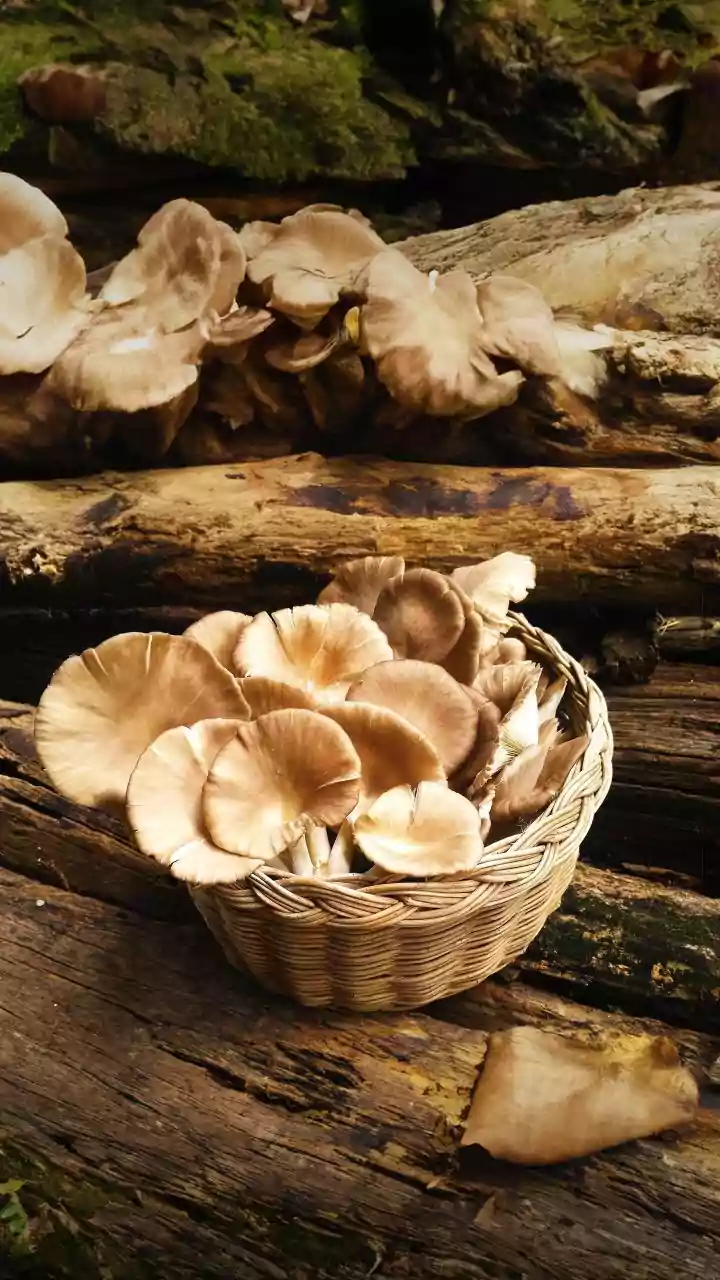
on hillsides, and even on unassuming termite mounds. This is the secret harvest of wild, edible fungi, a delicacy that cannot be cultivated and appears for only a few precious weeks a year. Their arrival is a celebrated event, a signal that the season of abundance has truly begun. For communities that have foraged them for centuries, these mushrooms are a direct gift from the land, a taste of the wild that is both deeply familiar and eagerly anticipated.
A Taste of Tradition
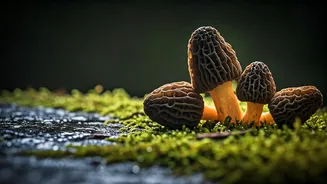
These seasonal mushrooms are far more than a simple ingredient; they are woven into the fabric of regional identity and tradition. In states like Goa, the arrival of 'Almi' or termite hill mushrooms sets off a culinary frenzy. In the Himalayan foothills, the prized Gucchi (Morel) is a status symbol, its smoky, earthy flavour commanding astronomical prices. In Jharkhand and parts of Odisha, 'Rugda,' a round, truffle-like mushroom, becomes the star of local markets. Each variety tells a story of its unique terroir. Their preparation is often kept simple—a light stir-fry with minimal spices, a gentle coconut-based curry, or simply roasted over a flame—to honour the mushroom’s own distinct flavour profile. This isn't food meant for heavy sauces; it’s an ingredient that demands to be the hero.
The Thrill and Peril of the Forage
Part of the allure of wild mushrooms is the mystique of their origin. They are not farmed but found. Foraging is an art form passed down through generations, often a closely guarded secret within families and communities. Elders teach the young which termite mounds are 'active', which patches of forest floor are most promising after a night of rain, and how to distinguish the edible from the poisonous. This ancestral knowledge is crucial, as misidentification can be dangerous, even fatal. For this reason, the tradition of foraging is as much about community trust as it is about individual skill. When you buy wild mushrooms from a local vendor, you are not just buying a product; you are trusting their lineage of expertise.
Spotlight on the Stars
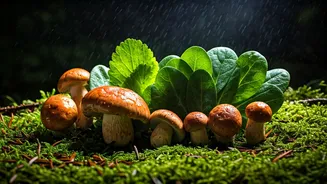
While countless varieties exist, a few stand out. The Termitomyces mushroom, known locally as 'Olm' or 'Almi', is a Goan icon. It grows on termite mounds and has a firm, meaty texture and a subtly sweet taste. These mushrooms are believed to have a symbiotic relationship with the termites, which cultivate them as a food source. Then there is the legendary Gucchi of the Himalayas. These morels are notoriously difficult to find, growing in the wild after thunderstorms. Their honeycomb-like structure and intense, smoky flavour make them one of the most expensive mushrooms in the world. Further east, the 'Rugda' of Jharkhand looks like a small, dirty potato but reveals a chewy, flavour-absorbing interior that makes it a perfect addition to robust curries.
A Fleeting Pleasure
Perhaps the ultimate reason for the obsession with seasonal mushrooms is their ephemeral nature. Their season is short, sometimes lasting just a few weeks. This scarcity transforms them from a mere food item into a cherished experience. To eat monsoon mushrooms is to participate in a cycle that is ancient and unalterable. It’s a connection to the soil, the rain, and the specific moment in time. You cannot have them whenever you want; you must wait for the season to grant its permission. This fleeting window makes every bite more flavourful, every meal more memorable. They are the monsoon on a plate, a brief and beautiful reminder of nature's generosity.