






Ahmedabad: The Historic Procession
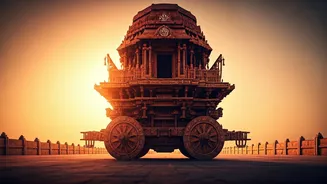
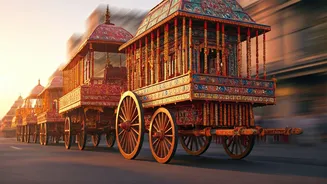
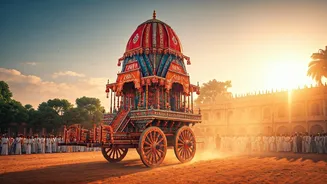
Considered second or third largest after Puri, the Ahmedabad Rath Yatra is a spectacle of devotion and cultural harmony. [8, 9, 12] Started in 1878 by Mahant Narsinhdasji Maharaj, this procession sees Lord Jagannath, Balabhadra, and Subhadra journey through
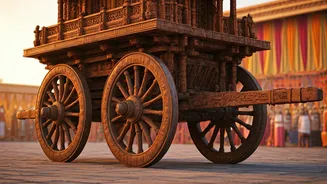
the city on magnificent chariots. [8, 12] The event is a massive affair, featuring decorated elephants, akhadas performing martial arts, and singing troupes. [9, 26] A unique tradition is the 'Pahind Vidhi', where the Gujarat Chief Minister symbolically cleans the path for the chariots with a golden broom before the procession begins. [8] The Yatra traverses a 14-15 km route, passing through communally sensitive areas, and is often hailed as a symbol of harmony, with Muslim leaders traditionally presenting a silver chariot replica to the temple mahant. [24, 26, 31]
Kolkata: A Tale of Two Yatras
The City of Joy hosts not one, but two major Rath Yatras. The most widely known today is the ISKCON Rath Yatra, which began in 1972. [28, 29] It has grown into a massive city-wide event, attracting thousands who pull the chariot from the temple on Albert Road through the city to a large ground where the deities reside for a week. [7, 29] However, Bengal's oldest and India's second-oldest Rath Yatra takes place in Mahesh, Serampore, a town near Kolkata. [9, 10] This ancient festival dates back to 1396 AD. [10, 22] Legend says its founder, Drubananda Brahmachari, was instructed by Lord Jagannath in a dream to establish the temple. [21, 25] The current iron chariot, standing 50 feet tall, was built in 1885 and draws hundreds of thousands of devotees annually. [10, 22]
Baripada: A Yatra for Women's Empowerment
In Baripada, Odisha, known as 'Dwitiya Sreekhetra' (the second Puri), the Rath Yatra has a unique and empowering tradition. [13] Here, the chariot of Goddess Subhadra is pulled exclusively by women. [14, 16] This practice was introduced in 1975 to mark the International Women's Year and has become a powerful symbol of female empowerment and participation in religious life. [18, 19] The festival itself is older, with the Haribaldev Jew temple dating back to the 16th century. [19, 28] While the rituals mirror Puri's, this special distinction makes the Baripada Yatra a deeply significant event, drawing thousands of women who throng to pull the 'Darpadalana', Subhadra's chariot. [13, 18]
Delhi: The Capital's Devotion
India's capital also celebrates the chariot festival with immense fervour. Several Rath Yatras are organised across Delhi, with the ones at Hauz Khas and Thyagraj Nagar being particularly notable. [15, 17, 33] The temple in Thyagraj Nagar, established in 1968, hosts one of Delhi's oldest Yatras. [23, 32] These processions bring a slice of Odia culture and Jagannath tradition to the heart of the nation, drawing thousands of devotees from across the NCR. [17, 23] Political dignitaries often participate in the 'Chhera Pahanra' ritual, mirroring the traditions of Puri and Ahmedabad. [17] For 2026, the Thyagraj Nagar temple is even planning a historic celebration with three separate chariots for the first time. [23]