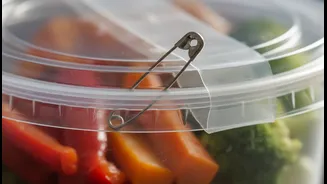










The Overlooked Danger in Your Delivery
For years, stapler pins have been the quick and cheap method for many restaurants and food vendors to secure takeaway parcels. From biryani containers to snack boxes, that small metal pin was a sign of a sealed package. However, this convenience comes
at a price. The Food Safety and Standards Authority of India (FSSAI) has highlighted the serious risks involved. In June 2026, the FSSAI issued a directive instructing all food businesses to immediately stop using metallic pins and wires in packaging, citing numerous consumer safety complaints. The dangers are significant. A loose pin can easily fall into food, creating a choking hazard or causing painful cuts to the mouth and throat if swallowed. Medical experts warn that ingested pins can lead to internal injuries, infections from rust, and in rare, life-threatening cases, can obstruct the windpipe. Children are particularly vulnerable to these accidental ingestions. The FSSAI's ban underscores how a seemingly minor packaging detail can become a major public health concern.
Enter Pin-Free and Tamper-Evident Solutions
The good news is that viable and effective alternatives are readily available. The industry is moving towards 'pin-free closures,' a broad term for packaging that securely seals food without any sharp metal objects. These solutions are often designed to be tamper-evident, meaning it is obvious if a package has been opened before it reaches the customer. Common alternatives include food-grade adhesive tapes and stickers, which can seal a container securely without any risk of foreign objects mixing with the food. Many packaging manufacturers are now producing boxes and containers with clever interlocking tabs or flaps that create a strong seal. Another popular method is heat sealing, where parts of the package are fused together using heat to create a solid, impenetrable closure. These designs not only eliminate the physical hazard of pins but also enhance overall food safety by preventing contamination and spillage during transit.
A Win for Consumers, A Smart Move for Businesses
For consumers, the shift away from stapler pins offers immediate peace of mind. The fear of a hidden metal object in one's meal is eliminated, making the takeaway experience safer and more enjoyable. Surveys have shown that an overwhelming majority of customers prefer and trust restaurants that use tamper-evident packaging. This brings us to the business side of the equation. While some restaurant owners might worry about increased costs or slower packaging processes, modern pin-free solutions are designed to be efficient and cost-effective. Tamper-evident labels, for example, can be applied quickly. Investing in safer packaging is not just a regulatory requirement; it is a powerful marketing tool. It demonstrates a commitment to customer well-being, which can build brand loyalty and a positive reputation. In a competitive market, a restaurant that prioritizes safety can stand out and attract more customers who value that assurance. The minimal extra cost, if any, is a small price to pay for enhanced consumer trust and reduced risk of liability.
The Path to a Staple-Free Future
The FSSAI's directive is a critical step, but widespread adoption will depend on both industry compliance and consumer awareness. Food businesses, from large restaurant chains to small local eateries, must now actively seek out and implement these safer packaging alternatives. Packaging suppliers in India are already offering a wide range of eco-friendly and secure options, including containers made from materials like sugarcane bagasse that feature built-in locking mechanisms. As consumers become more aware of the FSSAI ban and the risks of staples, their expectations will change. They will likely start favouring establishments that use secure, pin-free packaging. This shift in demand will further accelerate the transition. For businesses that have not yet made the switch, the time is now. The FSSAI has warned that non-compliance can lead to fines and even license confiscation, making the adoption of pin-free closures a matter of operational urgency.