



The UAE's Grand Tour
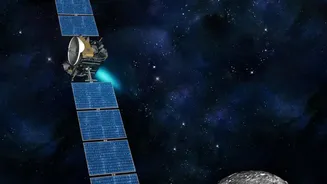
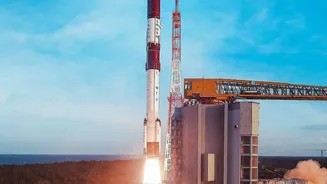
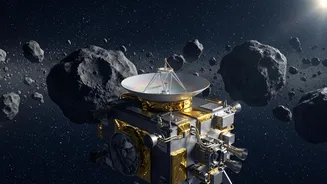
Scheduled for launch in March 2028, the Emirates Mission to the Asteroid Belt (EMA) is one of the most ambitious space exploration projects ever conceived. The main spacecraft, named the MBR Explorer, will travel for years, using gravity assists from
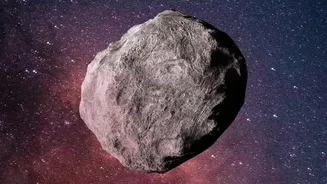
Venus, Earth, and Mars to navigate the main asteroid belt. Its goal is to perform high-speed flybys of six different asteroids before arriving at its final and most captivating destination: the uniquely reddish asteroid 269 Justitia. This mission will provide invaluable data on the origins of our solar system and the distribution of water and organic materials in space. The entire project highlights the immense technical challenges of interplanetary travel.
India’s Deep-Space Pioneer: HEX20
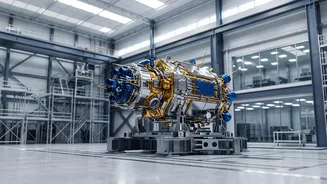
Enter HEX20, a space-tech startup with engineering operations in Thiruvananthapuram's Technopark. The company has become the first private Indian firm to be selected by the UAE Space Agency for a deep-space mission, marking a major milestone for India's burgeoning private space sector. In November 2024, HEX20 was chosen by the UAE's Technology Innovation Institute (TII) to contribute its expertise to the EMA. Specifically, HEX20 developed the sophisticated spacecraft bus—the core structure that houses the mission's payload—as well as the mission-critical software, onboard computer, and power systems for the lander probe that will ultimately descend to the surface of 269 Justitia.
Challenge 1: The High-Speed Flybys
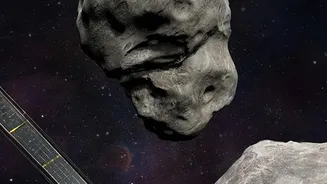
The MBR Explorer will not be stopping for a casual look at its first six targets. It will fly past asteroids like 10253 Westerwald, 623 Chimaera, and 13294 Rockox at an average speed of 33,000 km/h. At such velocities, the spacecraft has only minutes to perform its scientific observations. This requires highly autonomous systems—the kind of technology HEX20 specializes in. The probe's onboard software and computers must manage navigation, imaging, and data processing without real-time commands from Earth, due to the immense communication delays. This work on autonomous control is crucial for any multi-target mission where efficiency and precision are paramount.
Challenge 2: Surviving Deep Space
An eight-year, 5-billion-kilometre journey through deep space is incredibly harsh. The spacecraft's components must endure extreme temperatures, radiation, and the vacuum of space for nearly a decade. HEX20 was responsible for developing the power systems and the spacecraft bus for the lander, engineered to withstand these very conditions. The reliability of these systems is non-negotiable. A failure in the power distribution or the structural integrity of the bus would mean mission failure. HEX20's ability to deliver these robust systems in just 15 months demonstrates the growing capability of Indian firms to meet demanding international space standards.
Challenge 3: The Final Encounter with 269 Justitia
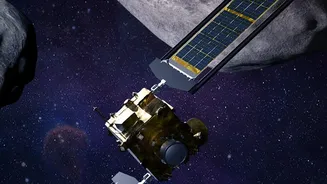
The ultimate goal is 269 Justitia, a mysterious red-hued asteroid that scientists believe may have originated in the outer solar system. After orbiting Justitia for seven months, the MBR Explorer will deploy the lander probe. This probe, built around the core systems developed by HEX20, will descend autonomously to the surface. This phase is the ultimate test of the hardware and software. The lander must manage its descent, capture images, and transmit data, all on its own. Though not designed to survive the final impact, the probe's journey to the surface will provide unprecedented close-up data, making HEX20's contribution fundamental to the mission's climax.