



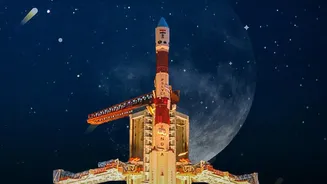
A Fiery, Flawless Escape
In the high-stakes world of rocketry, the most dangerous moments occur during the launch and ascent. To protect its future 'Vyomanauts', ISRO conducted a critical test of the Gaganyaan mission's Crew Escape System (CES). The test, which took place on August
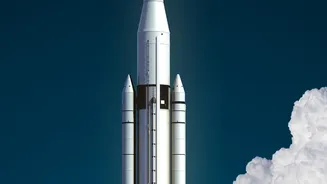
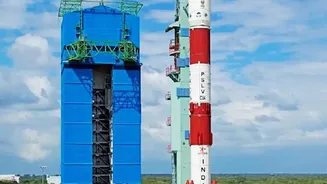
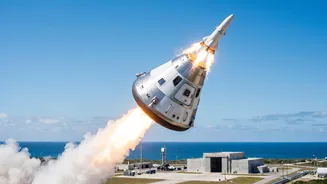
30, 2026, simulated a worst-case scenario: an emergency during the most aerodynamically stressful part of the flight. A specially designed test rocket carried a prototype of the crew module to a specific altitude, travelling at around 1.2 times the speed of sound. At that moment, the abort was triggered. With incredible speed, powerful solid-fuel thrusters on the escape system fired, pulling the crew capsule away from the rocket and to a safe distance. The sequence then unfolded perfectly, with parachutes deploying to guide the module to a soft splashdown in the Bay of Bengal. This successful trial proves the system can rescue astronauts even when the launch vehicle is under maximum stress.
The Anatomy of an Abort
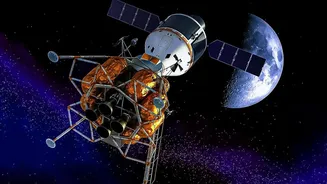
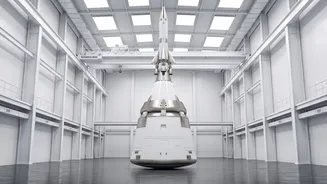
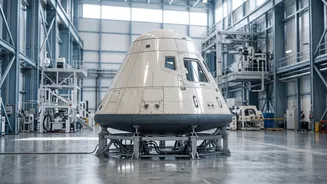
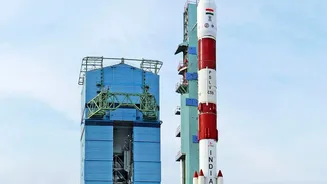
The Crew Escape System is more than just an emergency button; it is a highly sophisticated, automated sequence designed to work in fractions of a second. It is a small, powerful rocket mounted on top of the main launch vehicle, the HLVM3. Its sole purpose is to detect a catastrophic failure on the launchpad or during ascent, and immediately pull the crew module—the capsule where the astronauts sit—clear of the malfunctioning rocket. The system uses a set of quick-acting, high-burn-rate solid motors to generate immense thrust almost instantly. This is essential to outpace any potential explosion and get the crew to a safe altitude where parachutes can be deployed. This technology is a hallmark of all human spaceflight programs globally, and mastering it is a non-negotiable step before putting human lives on the line.
A Comprehensive Safety Net
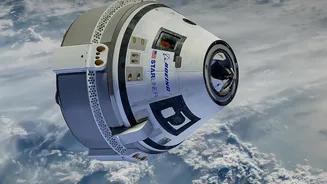
This latest abort test is the capstone on a series of rigorous trials all aimed at ensuring astronaut safety from launch to landing. In July 2026, ISRO completed three other crucial qualification tests for the crew module. One test validated the Crew Module Up-righting System (CMUS), an ingenious mechanism using gas-inflated flotation bags to ensure the capsule stays upright after splashing down in the ocean, a critical feature for recovery. Another test confirmed that the umbilical connections to the service module, which provides power and supplies, would disconnect cleanly before atmospheric re-entry. The third trial ensured the module's structure could withstand the force of the apex cover being jettisoned to release the parachutes. Together with earlier parachute drop tests, these milestones demonstrate a meticulous, layer-by-layer approach to building one of the world's most advanced human spaceflight safety systems.
The Road to Orbit
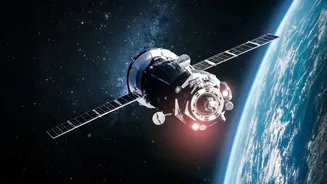
With the successful validation of these critical safety systems, the path forward for Gaganyaan is becoming clearer. The program is advancing across all fronts, from the development of the Environmental Control and Life Support System (ECLSS) to the establishment of the Gaganyaan Control Centre. These successful tests boost confidence as ISRO prepares for the next major phase: the first of several uncrewed flight missions. The first uncrewed launch, G1, is targeted for the last quarter of 2026. This mission will test the entire vehicle, re-entry procedures, and recovery operations in a real-world space environment. Following a series of such flights, ISRO is targeting 2027 for the first historic crewed mission that will carry Indian astronauts into low-Earth orbit. If successful, India will become only the fourth country in the world to possess independent human spaceflight capability.