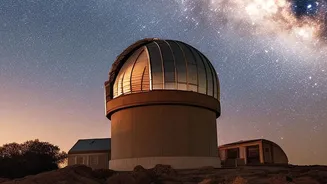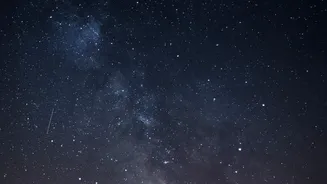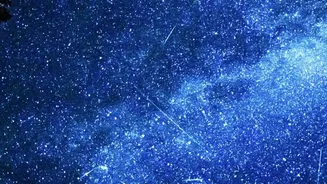


Look up! This October, the night sky is putting on a spectacular show. From a brilliant planetary performance to two meteor showers and a famous full moon, there are plenty of reasons to step outside after dark.
Saturn Takes Centre Stage
October kicks off with one of the year's
best opportunities to see the ringed planet. On October 4, Saturn reaches opposition, an event where Earth passes directly between the Sun and Saturn. This alignment means Saturn will rise around sunset, remain visible for most of the night, and be at its closest and brightest for the year. While you'll be able to spot its steady, yellowish light with the naked eye, even a small telescope will reveal its magnificent rings. For viewers in India, look towards the eastern sky after sunset to see the planet climb higher through the evening.
An Evening With the Draconids
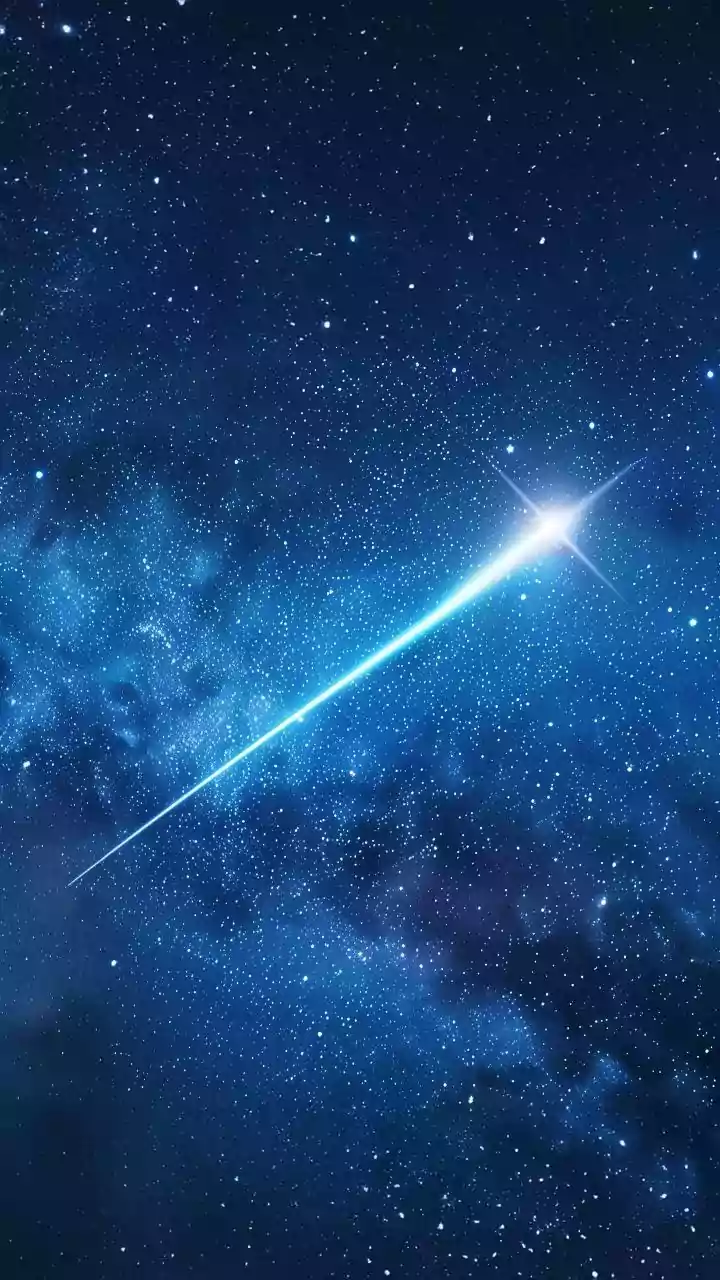
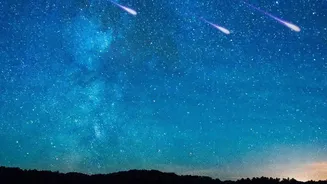
The first of the month's two meteor showers is the Draconids, which will peak on the evening of October 8 and into the early hours of October 9. Unlike many meteor showers that are best viewed after midnight, the Draconids are best seen in the early evening, shortly after nightfall. The shower is produced by dust left behind by the comet 21P/Giacobini-Zinner. While typically a modest shower producing around 10 meteors per hour, viewing conditions in 2026 are excellent, with an almost moonless sky during the peak. The Draconids have also been known to produce surprising bursts of activity, so it's worth keeping an eye out.
The Swift Orionid Meteors
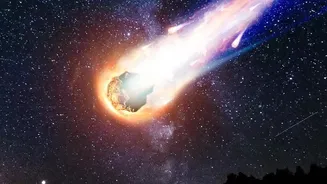
Get ready for a second celestial light show as the Orionid meteor shower peaks on the night of October 21-22. These meteors are fragments of the famous Halley's Comet, and they are known for being particularly fast and bright, sometimes leaving persistent trails that linger for a few seconds. At its peak, the shower can produce up to 20 meteors per hour under ideal dark-sky conditions. This year, a bright waxing gibbous Moon will interfere with viewing during the evening. However, the Moon is expected to set a few hours before dawn, creating a dark window perfect for spotting these swift meteors in the early morning hours before sunrise.
The Full Hunter's Moon Rises
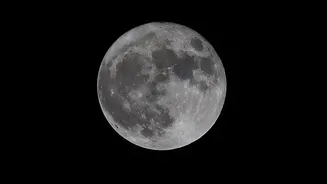
October's full moon, known as the Hunter's Moon, will reach its peak illumination on October 26. The best time to watch it, however, will be the evening before, on Sunday, October 25, as it rises above the eastern horizon around sunset. This is when it will appear largest and take on a beautiful golden-orange hue due to the "Moon Illusion" and its light filtering through more of Earth's atmosphere. The name dates back centuries and is tied to the season when hunters would use the bright moonlight to track game in freshly cleared fields, stocking up for the winter ahead. The event coincides with the Hindu festival of Kojagiri Purnima, a celebration honoring the goddess Lakshmi.
A Dance of Planets and Stars
Beyond the main events, keep an eye out for other beautiful pairings. On October 5, a slim crescent Moon will appear near Mars in the early morning sky. The next morning, October 6, will feature a lunar occultation of Jupiter for viewers in some parts of the world, while others will see a very close pairing of the Moon and the giant planet before sunrise. To close out the month's major events, the Moon will pass close to the famous Pleiades star cluster, also known as the Seven Sisters, on the night of October 27-28. This fuzzy-looking group of stars is a beautiful sight in binoculars.