


Why You Can't Just Divide by Two
Scaling a recipe is more than just a calculation; it’s a matter of chemistry and physics. The relationship between volume and surface area is a major factor. A smaller amount of food in a pan has a different surface-area-to-volume ratio, which affects
everything from moisture evaporation to how quickly something browns. A half-sized stew in the same large pot will reduce much faster, potentially concentrating flavours too intensely or boiling off too much liquid. Ingredients themselves also behave differently. Some, like flour or vegetables, scale linearly. But others, particularly potent ones like spices and leavening agents, have an outsized impact in smaller quantities and need a more careful approach.
Go Easy on Salt and Spices
This is the number one rule of downsizing a recipe. Spices and salt do not scale in a linear fashion. Their flavour becomes more concentrated in smaller dishes. If you simply halve the salt, you might end up with an overwhelmingly salty meal. A good starting point is to use about 60-70% of the scaled amount. For a recipe you're halving, instead of adding half a teaspoon of cayenne, start with a little over a quarter teaspoon. You can always add more later, but you can’t take it out. Remember to taste frequently throughout the cooking process and adjust as you go. This is your most reliable tool.
Adjust Your Cookware
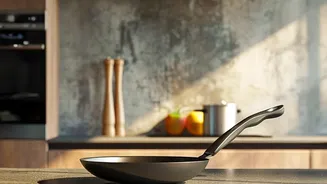
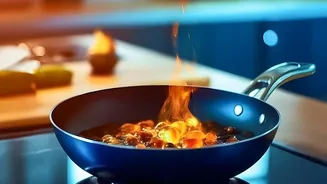
Using the right-sized pot or pan is crucial. Cooking a small portion in a large pan can lead to disaster. The food spreads out too thin, causing it to cook too quickly, burn, or lose too much moisture. For example, if you're halving a casserole recipe that calls for a 9x13-inch dish, you should switch to a smaller vessel like an 8x8-inch or 9-inch round pan to maintain a similar depth. This ensures the food cooks through evenly without drying out. The material of the pan matters, too. If you switch from a glass dish to a metal one, be aware that metal heats up faster and might shorten your cooking time further.
Recalibrate Cooking Times and Temperature
A smaller volume of food cooks faster. There's no universal formula, but a good rule of thumb is to start checking for doneness significantly earlier. For many baked goods or roasts, begin checking at about half to two-thirds of the original recipe's recommended time. If a cake recipe for a large pan says 50 minutes, start checking your smaller version at around 25 or 30 minutes. Instead of relying purely on the clock, use sensory cues: look for golden-brown colour, listen for the sizzle to die down, or use a thermometer to check the internal temperature. In most cases, the oven temperature should remain the same, but the time will almost always need to be reduced.
Handle Tricky Ingredients with Care
Some ingredients are particularly troublesome. Eggs, for instance, don't divide easily. For a recipe that calls for one egg, halving it requires you to whisk the egg in a separate bowl and then use approximately half (about two tablespoons). Leavening agents like baking soda and baking powder also don't scale perfectly. Using exactly half might result in a flat cake, as the chemical reaction they produce is sensitive to batch size. It's often safer to find a dedicated small-batch recipe for baked goods. If you must scale, know that it may take some trial and error to get the rise just right.