


The Allure and Flaw of Size
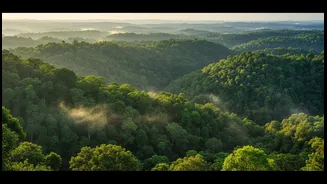
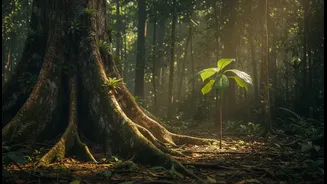
It’s easy to see why we equate size with importance. In many aspects of life, bigger seems better. In a forest, a large tree is a tangible, impressive symbol of carbon storage, a habitat for countless creatures, and a victory of longevity. Studies have
shown that the largest 1% of trees in a forest can account for up to 50% of its total biomass, making them critical carbon sinks. Policies have even been created, like the '21-inch rule' in parts of the U.S., to protect trees above a certain diameter, recognising their outsized role. However, this size-centric view has a critical flaw: it can be a weak and even misleading predictor of a tree's true ecological value or age. Research shows that tree diameter explains very little about a tree’s actual age, meaning conservation efforts focused solely on large trees can completely miss ancient, slow-growing smaller trees that thrive in harsh environments.
Beyond the Measuring Tape: What Are Species Traits?
Instead of just asking 'how big?', ecologists now argue we should ask 'how does it live?'. This is where species traits, also known as functional traits, come in. These are the specific characteristics that govern how a plant responds to its environment and contributes to the ecosystem. Think of them as a tree's life strategy. Key traits include wood density, which relates to growth speed and carbon storage; specific leaf area (the area of a leaf per unit of its dry mass), which indicates its photosynthetic strategy; and rooting depth, which determines its access to water and resilience to drought. Other crucial traits are seed size, which affects how it reproduces and disperses, and its ability to resprout after a fire or other disturbance. Together, these traits paint a much richer picture of a tree’s role than its dimensions alone.
How Traits Tell a Deeper Story
Comparing two trees of the same size but with different traits illustrates the concept perfectly. A tree with low-density wood may grow quickly, rapidly sequestering carbon in its early years, but it might be vulnerable to storms and decay quickly upon death, releasing that carbon back into the atmosphere. In contrast, a tree with dense wood might grow slowly, but it locks away carbon for centuries and provides durable habitat. Similarly, a tree with deep roots can survive a drought that kills its shallow-rooted neighbours, helping to stabilise the entire ecosystem. By focusing on these traits, we move from a simple snapshot (size) to a full narrative of a tree’s function. This trait-based approach helps us understand not just how much carbon is stored, but how resiliently and for how long.
An Indian Context for Smarter Choices
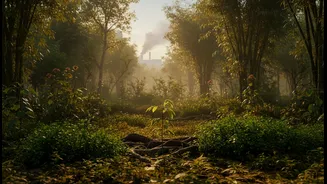
This shift in thinking has profound implications for India. In our ambitious afforestation and ecosystem restoration projects, from the coasts to the Himalayas, choosing the right species is everything. If we prioritise species only because they grow fast and large, we risk creating ecologically fragile, monoculture plantations that are vulnerable to pests, droughts, and climate change. Instead, by using a functional trait framework, we can select a diverse mix of native species. We can choose trees with traits suited for water conservation in arid regions, species with high wood density for long-term carbon storage, and those with specific flowering and fruiting cycles to support local wildlife. This ensures that a restored forest is not just a collection of trees, but a resilient, self-sustaining ecosystem that provides a full suite of services for generations to come.
A New Toolkit for Climate Action
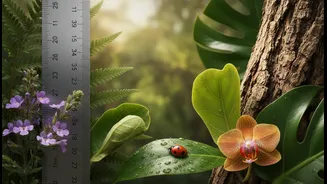
For students, ecologists, and policymakers, embracing species traits is like upgrading from a simple ruler to a sophisticated diagnostic toolkit. It allows for more accurate climate models, better-informed conservation strategies, and more successful restoration projects. By understanding the 'why' behind a forest's function—the intricate interplay of different species' strategies—we can make smarter decisions. This means recognising the value of the gnarled, slow-growing tree in a dry landscape as much as the towering giant in a lush forest. It enables us to build forests that are not only rich in biomass but also rich in functions, resilience, and biodiversity, preparing them for the uncertainties of a changing world.