




The Sun's Hidden Danger
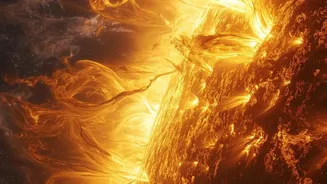
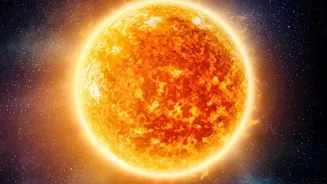
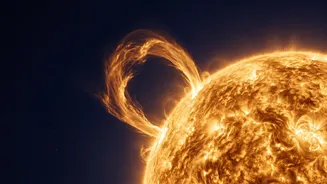
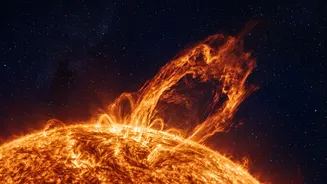
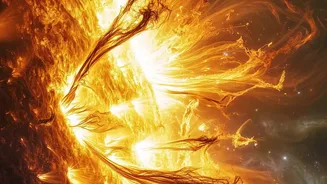
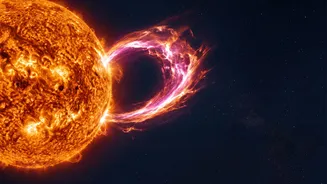
We often think of the Sun as a steady source of light and heat. But it’s also a volatile star that can unleash massive eruptions of energy and matter. These events, called coronal mass ejections (CMEs) or solar flares, send charged particles hurtling
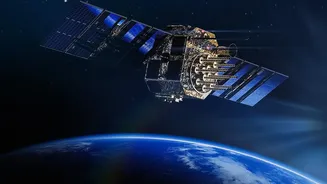
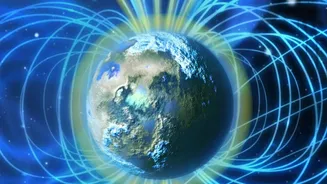
through space. When one of these storms hits Earth, it can create what's known as a geomagnetic storm. While beautiful auroras are one effect, the consequences for our technology can be devastating. These storms can induce powerful electrical currents in the ground, potentially overloading power grids and causing widespread blackouts that could last for weeks or months. They can also disable satellites, disrupting GPS, mobile phone service, and crucial communication systems for industries like aviation.
The Challenge of Space Weather Forecasting
Predicting when a solar storm will hit Earth and how severe it will be is incredibly difficult. A CME can take one to three days to travel from the Sun to our planet, and its speed and direction can change along the way. For years, space weather forecasters have relied on satellite observations and complex physical models to make predictions. However, these methods often came with large windows of uncertainty, sometimes as wide as 12 hours or more, making it difficult for power grid operators and satellite controllers to take specific, timely action. The need for a faster, more precise warning system has become a critical priority as our reliance on vulnerable technology grows.
Enter DAGGER: NASA's AI Solution
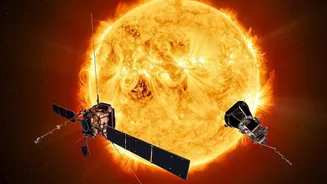
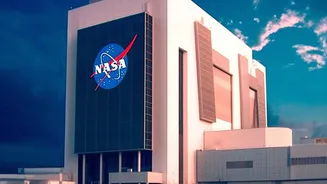
This is where NASA's new research comes in. Scientists have developed an AI-powered computer model named DAGGER, which stands for Deep Learning Geomagnetic Perturbation. Developed through a public-private partnership, DAGGER uses artificial intelligence to analyze real-time data from spacecraft that measure the solar wind—the constant stream of particles flowing from the Sun. By training the AI on vast amounts of historical data from past solar storms, the model has learned to recognize the subtle patterns and connections between changes in the solar wind and the resulting geomagnetic disturbances on Earth.
A 30-Minute Warning to Save the Grid
The key breakthrough of the DAGGER model is its speed and precision. It can predict where a solar storm will strike anywhere on Earth with 30 minutes of advance warning. While half an hour may not sound like much, it's a game-changer for protecting critical infrastructure. This lead time is enough for utility companies to reroute power, take sensitive transformers offline, and prepare for potential surges. Satellite operators can put their spacecraft into a safe mode to protect delicate electronics. According to NASA, DAGGER can generate a specific, worldwide forecast in less than a second and updates its predictions every single minute, creating a system that functions like a global tornado siren for space weather.
What This Means For Our Connected World
The ability to accurately predict the impact of a solar storm is a massive step forward in planetary defense. For the average person, the benefits are clear, even if indirect. It means a more stable power grid, less risk of long-term outages, and more reliable GPS navigation and communications. Recent research from July 2026 even suggests that the effects of solar storms on Earth may be stronger than previously thought, with no clear upper limit, making predictive tools like DAGGER more important than ever. This AI-driven approach helps secure the backbone of our modern economy and daily life against a powerful and unpredictable cosmic threat.
The Future of Solar Storm Prediction
While DAGGER represents a significant leap, it's part of a broader push by NASA to use AI for forecasting. Other new AI models are being developed to predict the formation of sunspots—the active regions that produce flares—up to 12 hours before they even become visible. Researchers are also using new missions like PUNCH to track CMEs across the solar system with unprecedented accuracy, further refining arrival time predictions. The answer to the headline's question is a resounding yes: AI can, and now does, predict the next solar storm with more accuracy than ever before. It's a crucial tool in our ongoing effort to live safely with a dynamic and powerful star.