






The CEO of major AI company Anthropic has made a bold claim: artificial intelligence could render cancer and other major diseases 'relics of the past' in less than a decade. The prediction is igniting debate on what AI can realistically achieve.
A Bold Proclamation
Dario
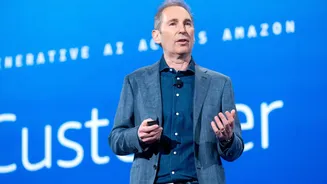
Amodei, the CEO of AI safety and research company Anthropic, is no stranger to the transformative potential of artificial intelligence. His company, the creator of the Claude series of AI models, has recently stepped up its efforts in the medical space, partnering with biotech firms and research institutes to accelerate drug discovery. Amodei's prediction that AI could compress 50 to 100 years of medical progress into the next five to 10 years has turned heads. He envisions an 'age of miracles' where diseases that have long plagued humanity are finally solved. This isn't just a fleeting comment; it's a vision Amodei has been building for years, rooted in personal experience and a firm belief in AI's exponential progress.
How AI Could Fight Cancer
The optimism from tech leaders like Amodei stems from AI's ability to process and find patterns in colossal amounts of data, a task far beyond human capability. In oncology, this could revolutionise everything from early detection to treatment. AI models can be trained to spot subtle signs of cancer in medical scans that might be missed by the human eye. They can analyse the genetic makeup of a tumour to predict which drugs will be most effective for a specific patient, a cornerstone of personalized medicine. Furthermore, AI is dramatically speeding up the drug discovery process itself by identifying promising molecular targets and designing new therapies, a process that traditionally takes over a decade. Anthropic's own work has shown AI can help design more effective components for immune cells to fight tumours.
AI's Current Role in Medicine
Beyond future promises, AI is already an increasingly serious tool in oncology. Hospitals and research centres are using AI to make radiologists more efficient, for example, by pre-screening mammograms and other scans. This allows doctors to focus their expertise on the most concerning cases. The technology is also being used to match patients to clinical trials, optimize radiation doses, and even assist in surgery. AI models like Google DeepMind's AlphaFold, which has predicted the structure of over 200 million proteins, represent a fundamental leap in understanding the building blocks of life, which is critical for designing new drugs. These current applications show that AI is not just a theoretical concept but a practical tool that is already improving patient care.
A Dose of Sobering Reality
However, many in the medical and pharmaceutical fields urge caution. They argue that while AI can accelerate discovery, it cannot bypass the biggest hurdles in medicine: the lengthy and expensive process of clinical trials and regulatory approval. A drug that looks promising in a computer model or even in lab tests must still be proven safe and effective in humans, a process that can take years. Physician-researcher Emilia Javorsky points out that after more than a decade of effort, no AI-designed drug has yet reached full clinical adoption. Critics note that intelligence isn't the only bottleneck; the complexity and diversity of cancer itself, along with gaps in biological data, present immense challenges that pure computational power can't simply solve. Even Amodei himself has acknowledged that saying 'AI will cure cancer' can sound more like a cliché than an inspiring promise.
A Partner, Not a Panacea
Ultimately, the consensus among many medical experts is that AI will be a powerful partner to human researchers, not a replacement for them. AI can generate a million hypotheses, but it still requires human scientists to design the right experiments, interpret the results, and apply clinical judgment. Issues like data privacy, algorithmic bias, and the 'black box' nature of some AI models — where it's not clear how a decision was reached — must be carefully managed. The future of cancer treatment will likely involve a deep collaboration between human expertise and artificial intelligence. While a definitive 'cure' for all cancers within ten years remains a highly ambitious long shot, the powerful tools being developed are undeniably set to transform the fight against the disease, making treatments faster, smarter, and more personalized than ever before.