





The Anatomy of Desk-Induced Pain
Neck pain is one of the most common complaints among office workers, and it's largely a problem of physics and posture. Your head weighs roughly 5 kilograms, but for every inch you tilt it forward, the load on your cervical spine increases significantly.
This forward-head posture, often called 'tech neck', is a natural response to looking at a monitor that is too low or too far away. Over an eight-hour workday, your neck muscles are put under constant, prolonged strain just to hold your head up. This leads to muscle fatigue, tightness, and sometimes even tension headaches that originate from the neck.
Your Workstation Is Working Against You
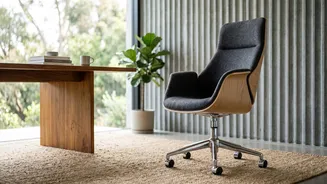
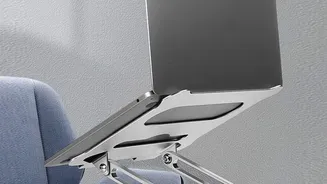
An improper ergonomic setup is a primary contributor to neck strain. When your monitor isn't at eye level, you're forced to bend your neck up or down. If your chair lacks proper lumbar support, you're more likely to slouch, pushing your head and shoulders forward. Even reaching for your mouse or holding a phone between your ear and shoulder can create imbalances and fatigue the muscles on one side of your neck. These small, repetitive stressors accumulate, leading to chronic discomfort, stiffness, and reduced mobility.
How a 5-Minute Reset Changes Everything
Taking short, frequent breaks to move is crucial for counteracting the effects of prolonged sitting. Just a few minutes of targeted stretching can do wonders. It increases blood flow to tense muscles, delivering oxygen and helping to clear out waste products that contribute to soreness. Movement also helps to rehydrate the discs in your spine and reset muscle imbalances caused by static postures. Chair yoga is a perfect tool for this, as it offers gentle, accessible movements that specifically target the neck and shoulders without you ever having to leave your workspace.
Your 5-Minute Chair Yoga Routine
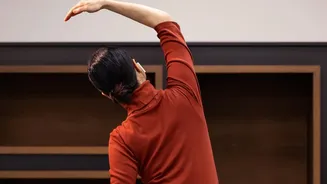
Perform these gentle stretches at your desk two to three times a day. Remember to breathe deeply and never force a movement. Sit tall in your chair with your feet flat on the floor before you begin. 1. Seated Cat-Cow: Place your hands on your knees. As you inhale, arch your back and look up, opening your chest toward the ceiling (Cow). As you exhale, round your spine and drop your chin to your chest (Cat). Repeat 5 times to warm up the spine. 2. Neck Tilts: Gently drop your right ear toward your right shoulder, feeling a stretch along the left side of your neck. Hold for 15-30 seconds. Slowly return to the center and repeat on the other side. Do not pull on your head; let its weight do the work. 3. Shoulder Rolls: Inhale and lift your shoulders up toward your ears. Exhale and roll them back and down. Repeat this 5 times, then reverse the direction for another 5 rolls. This helps release tension held in the upper trapezius muscles. 4. Seated Spinal Twist: Turn your torso to the right, placing your left hand on your right knee and your right hand on the back or arm of the chair for support. Hold for three deep breaths, lengthening your spine on the inhale and twisting a little deeper on the exhale. Return to center and repeat on the left side.
Make It a Lasting Habit
The key to lasting relief is consistency. Simply knowing the stretches isn't enough; you have to build them into your day. Try setting a recurring calendar reminder for mid-morning and mid-afternoon. Attach the habit to an existing one, like stretching for a few minutes after you finish a cup of coffee or right before you break for lunch. By making these small, mindful movements a non-negotiable part of your workday, you empower yourself to combat neck strain before it takes hold, improving not just your comfort but also your focus and productivity.