
What You're Looking For
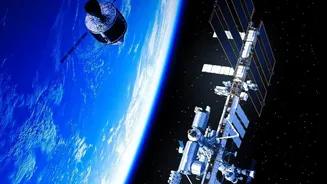
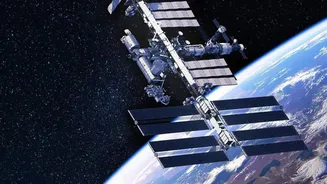
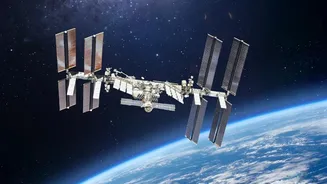
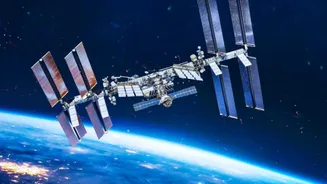
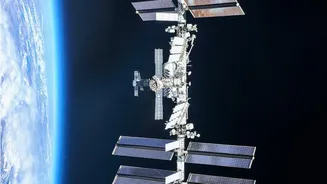
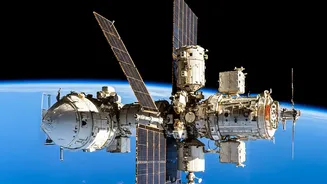
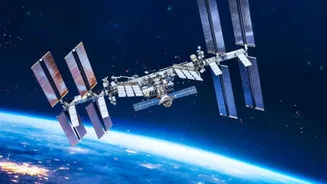
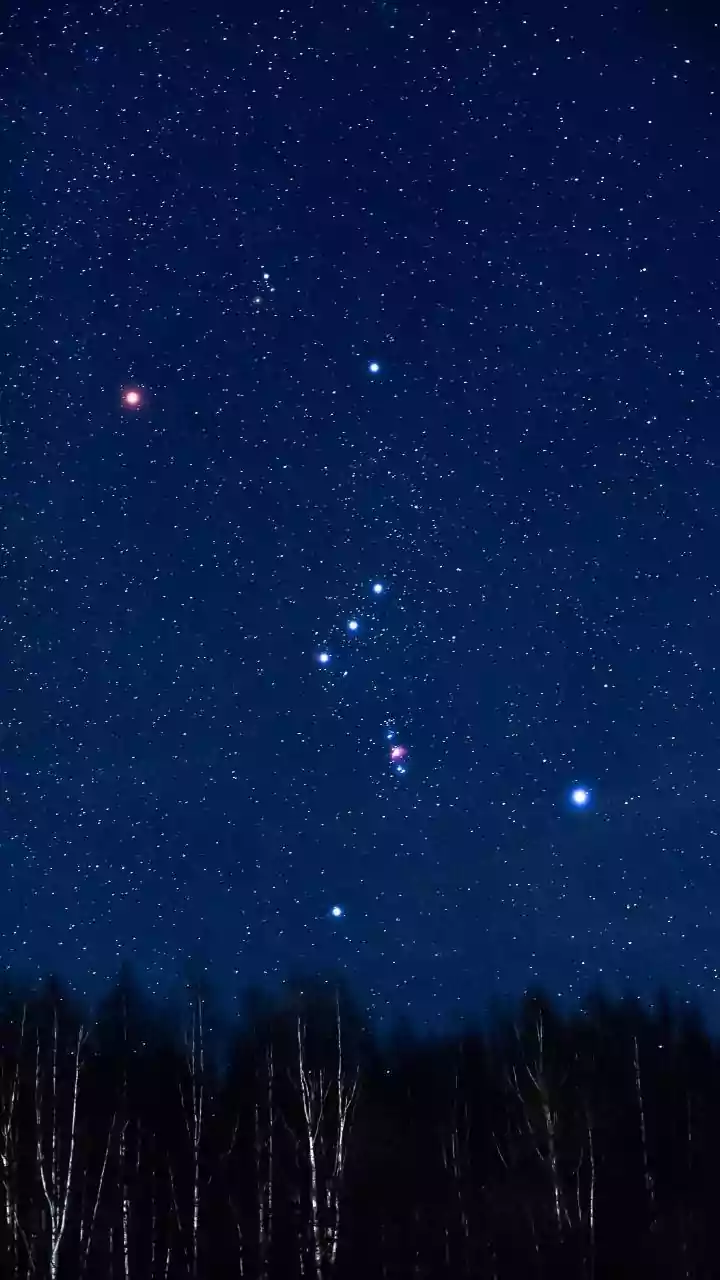
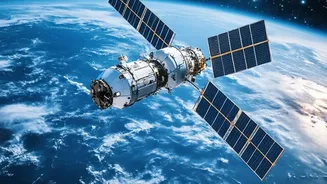
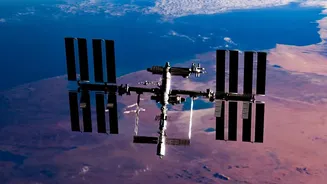
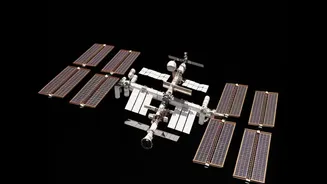
The International Space Station is the largest human-made structure in orbit, roughly the size of a football field. It's visible to the naked eye because its massive solar panels reflect sunlight, making it appear like a very bright, steady star moving
quickly across the sky. Unlike an airplane, it doesn't have blinking lights. The best times to see it are in the hours just after sunset or before sunrise. This is the magic window when your location is in darkness, but the ISS, at its high altitude, is still illuminated by the sun. During these passes, it can be one of the brightest objects in the sky, sometimes outshining every star and even rivaling the planet Venus in brilliance.
Your Location and Time Are Key
Whether you can see the station depends entirely on your specific location and the exact time. The ISS orbits the Earth about every 93 minutes, but it's only visible from your backyard when its orbital path takes it overhead during those dawn or dusk hours. These viewing opportunities can happen multiple times a week, or sometimes not for a few weeks at all. For tonight, Tuesday, August 18, 2026, there are early morning passes visible across India. For example, observers in Prayagraj can see a good pass starting around 3:41 AM, moving from southwest to northeast. Similarly, a pass is predicted for Meerut starting around 3:40 AM. Because timings are so specific, using a dedicated tool is essential.
Top Apps for Tracking the ISS
Several user-friendly mobile apps can do the hard work for you, providing precise timings and even sending you alerts. NASA's official Spot The Station app is a great choice, offering real-time tracking and push notifications for upcoming sightings. Another popular option is ISS Detector, which has an easy-to-understand interface that lists upcoming passes and uses an icon to show how good the viewing will be. For an even more interactive experience, apps with augmented reality (AR) like SkyView or Sky Guide are excellent. You can simply point your phone at the sky, and the app will use your camera to show you exactly where the ISS will appear and what path it will follow.
How to Read the Pass Information
When an app alerts you to a pass, it will provide a few key details. It will list the start time, the direction it will appear (azimuth, often starting in the west or southwest), and its maximum elevation. Elevation is measured in degrees, with 0 degrees being the horizon and 90 degrees being directly overhead. A higher elevation pass means the ISS will be brighter and visible for longer. You will also see a 'magnitude' (Mag) number. In astronomy, this scale is inverted: the lower or more negative the number, the brighter the object. A pass with a magnitude of -3.0 will be unmissably bright, while one with a magnitude of +2.0 will be fainter, like a typical star.
Tips for a Perfect Sighting
To make the most of the experience, head outside about five minutes before the pass is scheduled to begin. This allows your eyes to adjust to the darkness. If possible, find a spot away from bright city lights with a clear view of the sky. Face the direction where the app says the station will rise and wait. You won't need binoculars or a telescope, as the ISS is easily bright enough for the naked eye. Watch as the steady point of light travels across the sky over several minutes. It might fade from view before reaching the opposite horizon as it enters Earth's shadow, so be ready for a sudden disappearance.