




Decoding the SHAPE Acronym
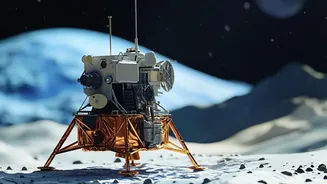
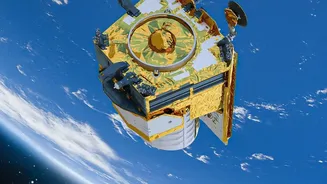
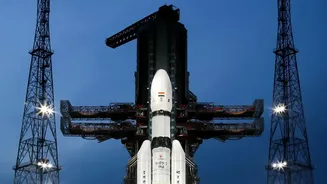
While the Vikram lander and Pragyan rover were the stars of the show, the Chandrayaan-3 mission had another crucial component: the Propulsion Module. This module’s primary job was to transport the lander to a 100 km lunar orbit. After separating from
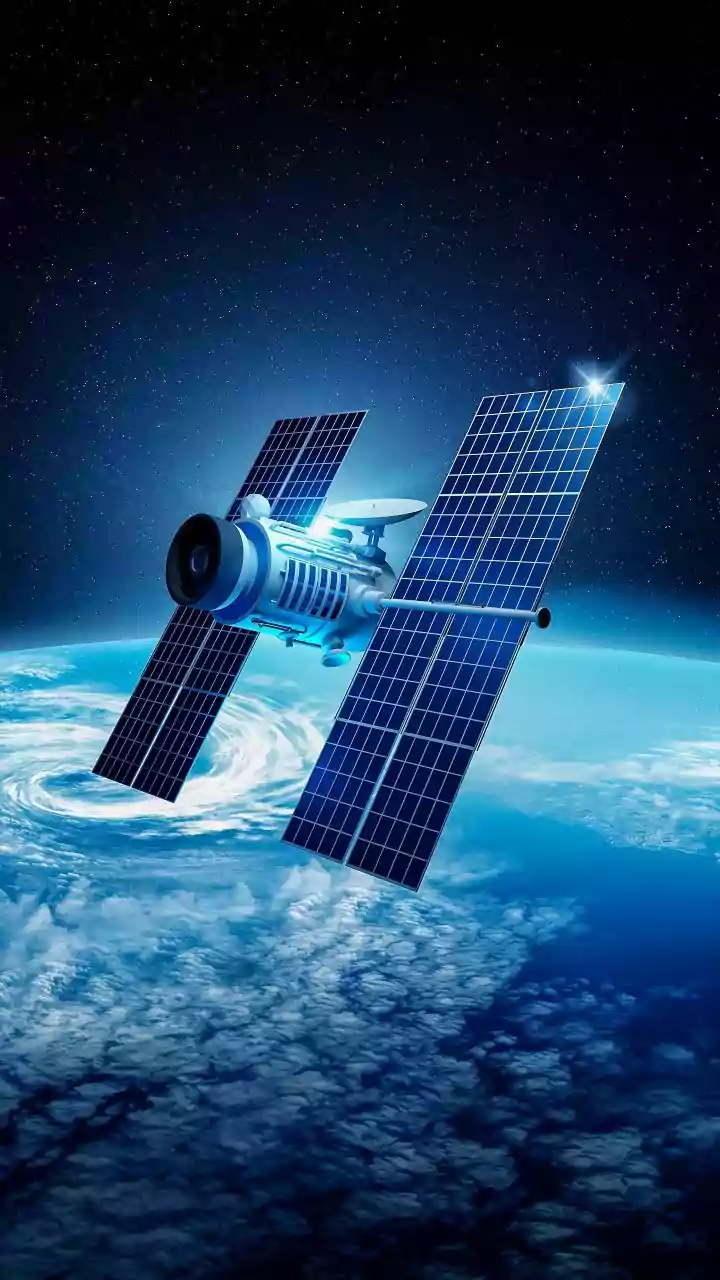
the lander, however, the module began a secondary mission thanks to its lone scientific payload: SHAPE. The acronym stands for Spectro-polarimetry of HAbitable Planet Earth. Unlike every other instrument on the mission, which was designed to study the Moon, SHAPE’s purpose was to turn its gaze back towards our own planet and study it from a unique vantage point.
Observing Earth as an Exoplanet
The core objective of SHAPE is to study Earth as if it were a distant exoplanet. When astronomers look for potentially habitable planets orbiting other stars, they can't see continents, oceans, or clouds directly. Instead, they receive a single, integrated point of light from the entire planet. SHAPE was designed to collect the same kind of data from our own world. From its orbit around the Moon, Earth appears as a small disc, allowing the instrument to capture its disc-integrated light. This data helps scientists create a benchmark or a 'template' of what a life-bearing planet's light signature looks like. It answers a key question: if we were aliens looking at Earth from far away, what signs of life could we detect?
The Science of Biosignatures
SHAPE uses a technique called spectro-polarimetry. It breaks down the light reflected from Earth into its spectrum of colours, specifically in the near-infrared range (1.0 to 1.7 micrometres). This light spectrum contains 'biosignatures' — chemical fingerprints of gases like oxygen and water vapour, and features related to clouds and vegetation. In addition to the spectrum, it measures the light's polarization, which is how the light waves are oriented. This polarization data can reveal information about clouds and aerosols in the atmosphere. By studying both the spectrum and polarization of Earth's light from various angles as it orbits the Moon, SHAPE provides a comprehensive dataset that will be invaluable for future telescopes designed to hunt for life on exoplanets.
A Bonus Mission for ISRO
The inclusion of SHAPE was a masterstroke of efficiency by the Indian Space Research Organisation (ISRO). The Propulsion Module's main job was over once it released the Vikram lander. Instead of becoming just another piece of orbital debris, the module was repurposed for this valuable extended mission. The SHAPE instrument was designed to operate for about three months, but thanks to a precise launch and efficient fuel management, ISRO was able to continue operating the payload for much longer. In a clever manoeuvre, ISRO even shifted the module from a lunar orbit back to a high Earth orbit in late 2023 to continue its Earth-observation mission. This not only extended the life of the SHAPE experiment but also provided crucial data for planning future interplanetary return missions.