


A Successful Splashdown
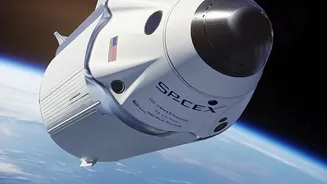
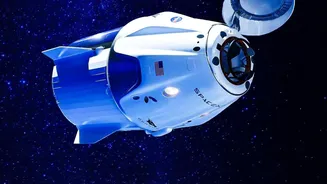
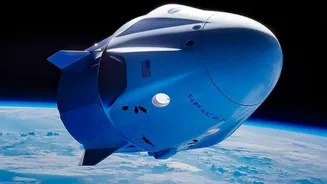
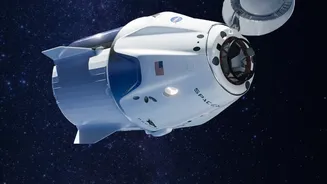
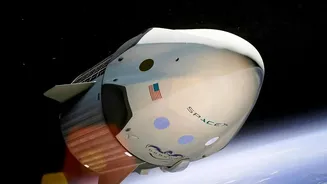
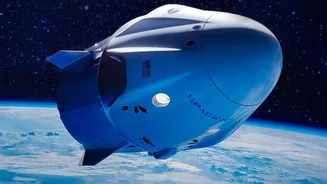
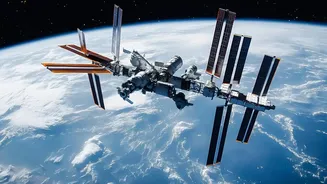
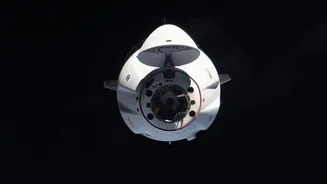
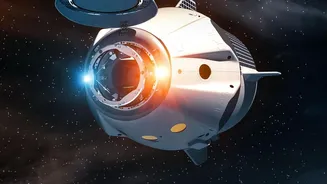
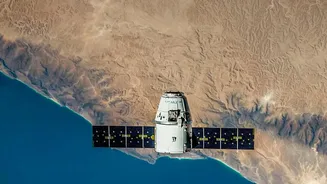
The uncrewed SpaceX Dragon spacecraft completed its journey home with a parachute-assisted splashdown in the Pacific Ocean off the coast of California on Saturday, November 21. The capsule undocked from the International Space Station (ISS) on Friday,
November 20, beginning a nearly 29-hour solo flight back to Earth. The successful recovery of the capsule by SpaceX's vessel is a crucial step, ensuring that thousands of pounds of scientific cargo are returned to researchers promptly and in pristine condition. This mission, the 35th under NASA's Commercial Resupply Services (CRS) program, underscores the reliability of the public-private partnership that keeps the ISS operational.
Delivering an Orbital Upgrade
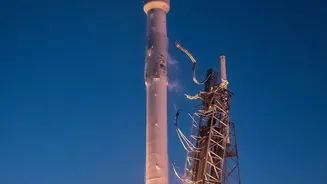
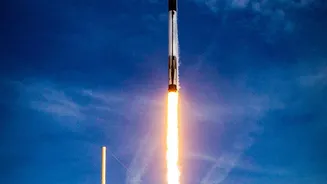
Launched on October 13 from Cape Canaveral, the CRS-35 mission carried over 6,300 pounds of supplies, hardware, and scientific gear to the orbiting outpost. A key part of its upward cargo was the final pair of International Space Station Roll-Out Solar Arrays (iROSAs). These arrays are part of a major power system upgrade for the aging station. Once installed by astronauts during spacewalks, they will boost the station's power generation capability by up to 30 percent, from 160 kilowatts to about 215 kilowatts. This extra power is essential for supporting more complex scientific experiments and ensuring the station's operational longevity.
The Priceless Return Cargo
While delivering supplies is vital, the Dragon's unique ability to return significant cargo intact to Earth is arguably its most valuable feature. Other cargo vehicles, like Northrop Grumman's Cygnus, burn up on reentry. On this mission, Dragon returned a treasure trove of scientific research. This includes a 3D-bioprinted blood vessel construct used to study cardiovascular disease and the effects of aging on the vascular system. Also aboard were frozen tumor organoids that could help scientists develop more effective cancer treatments, and microbial samples for studying how antibiotic-resistant bacteria evolve in space. A special lighting system, tested for three years to improve astronaut sleep and well-being, was also returned for analysis.
The Commercial Space Powerhouse
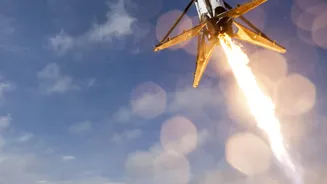
The CRS-35 mission is another successful entry in the logbook for NASA's commercial partnership strategy. Initiated in 2008, the Commercial Resupply Services program contracted with private companies like SpaceX to handle routine cargo runs, a job once performed by the expensive Space Shuttle. This approach has not only restored America's ability to supply the ISS from US soil but has also fostered a robust commercial space industry. Under the second phase of contracts (CRS-2), SpaceX, Northrop Grumman, and Sierra Nevada Corporation are contracted to provide cargo services through 2030, ensuring a steady pipeline of supplies and science to and from orbit. For this mission, both the Dragon capsule and the Falcon 9 booster were reusable, with the capsule on its fourth flight and the booster on its eighth, demonstrating the cost-effectiveness of the model.