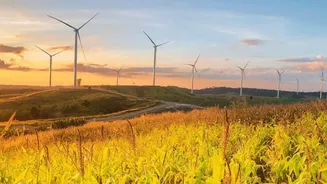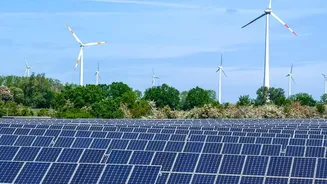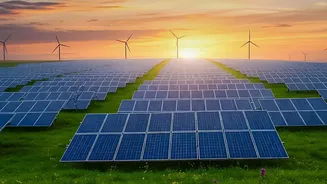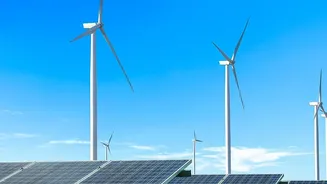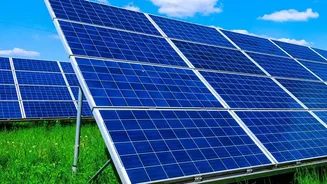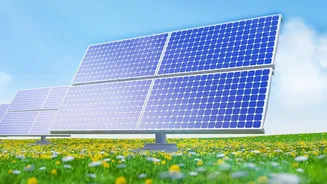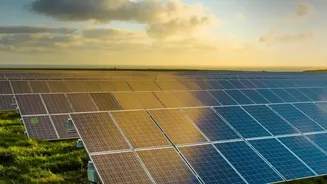






Across India's vast agricultural landscape, a new kind of crop is taking root: rows of gleaming solar panels. As farmers grapple with climate uncertainty and volatile incomes, many are choosing to lease their fields for solar power generation.
The Allure of a Guaranteed Harvest
For generations,
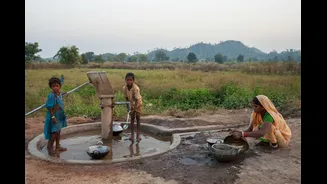
farming has been a gamble on the weather. Now, a different kind of harvest offers a predictable and steady income. Farmers in states like Punjab, Gujarat, and Rajasthan are leasing their land to solar developers for long-term contracts, typically spanning 25 years. This provides a stable revenue stream, with some landowners earning between ₹60,000 to ₹1,00,000 per acre annually. This financial security is a powerful incentive, especially when compared to the unpredictable profits from traditional agriculture, which are often at the mercy of erratic monsoons, fluctuating market prices, and rising cultivation costs. For many, converting a portion of their land into a solar site is a pragmatic business decision that insulates them from agricultural risks.
The Government's Green Energy Push
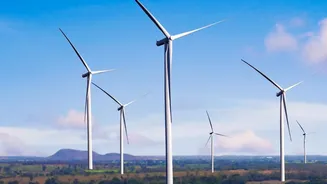
This trend is directly linked to India's ambitious climate goals, which include reaching 500 gigawatts (GW) of non-fossil fuel energy capacity by 2030. To achieve this, the government launched the Pradhan Mantri Kisan Urja Suraksha evam Utthaan Mahabhiyan (PM-KUSUM) scheme in 2019. This landmark program is designed to de-dieselise the farm sector and boost farmer incomes. It has three main components: helping farmers install standalone solar pumps, solarising existing grid-connected pumps, and encouraging the setup of small solar power plants (up to 2 MW) on barren or fallow land. Under the scheme, farmers can use the generated power for their own needs and sell any surplus directly to local electricity distribution companies (DISCOMs), creating a new source of revenue.
The Food vs. Fuel Dilemma
While solar farms provide economic benefits, their proliferation on cultivable land raises a critical question about food security. India needs to feed a growing population, and converting productive farmland to energy generation could threaten agricultural output. Some studies estimate that over 70% of solar development in India has occurred on land with agricultural or ecological value. In Punjab, India's 'breadbasket', the shift is particularly stark, with vast tracts of land that once produced wheat and rice now covered in solar modules. Critics worry that an unplanned expansion of solar parks could take thousands of hectares of food-producing land out of commission, creating a long-term challenge for the nation's food supply.
Agrivoltaics: A Potential Middle Ground?
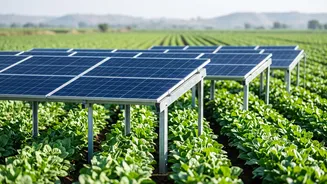
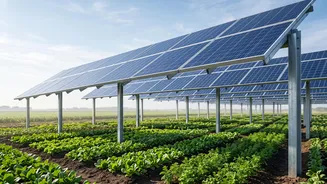
A potential solution to the land_use conflict is 'agrivoltaics' or Agri_PV. This innovative approach involves installing solar panels on elevated structures, allowing crops to be cultivated underneath. The panels can provide shade, which helps protect certain crops from extreme heat and reduces water evaporation—a significant benefit in drought_prone areas. Farmers can earn a dual income from selling both crops and electricity. However, this model is not without its challenges. Agrivoltaic projects are currently 25_30% more expensive than conventional ground_mounted solar farms. Furthermore, research shows that while the model works well for shade_tolerant fruits and vegetables, it may not be suitable for sunlight_intensive crops like rice and sugarcane. As most projects are still in the pilot phase, the government is working on a policy framework to scale this model responsibly.