
The Most Precious Resource in Space
Water is the single most valuable substance for space exploration. Transporting it from Earth is prohibitively expensive, so finding it locally is a game-changer. On the Moon, water ice can be melted for drinking and growing plants. More importantly,
electricity can split water molecules into hydrogen and oxygen. This provides breathable air for astronauts and, crucially, the two key components of rocket fuel. The ability to refuel on the Moon would transform it from a destination into a launchpad for missions deeper into the solar system, such as to Mars. This process, known as in-situ resource utilization (ISRU), is the cornerstone of making long-term space habitation sustainable and economically viable.
The Challenge of Permanent Shadows
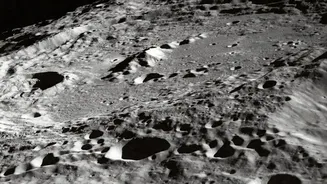
Scientists have long theorised that water ice could exist on the Moon in its permanently shadowed regions (PSRs). These are craters near the lunar poles where the crater floor is never exposed to direct sunlight. With temperatures plunging below -223°C, these areas act as cosmic cold traps, preserving ice for potentially billions of years. While previous missions, including India's Chandrayaan-1, confirmed the presence of ice, a major challenge remained: we couldn't see into these dark craters with high resolution. They were mysterious, shadowy zones, and while we knew they held treasure, we had no reliable map to guide us to it.
A Breakthrough in Seeing the Unseen
Recent advancements have finally pierced the darkness. Instead of relying on direct imaging, new techniques are being employed. One method involves using artificial intelligence to process faint light reflected from nearby sunlit hills into the craters, producing images with unprecedented detail. Another cutting-edge approach, detailed in a recent 'Science Advances' study, proposes using seismology. By analysing how seismic waves from 'moonquakes' or rover drills travel through the ground, scientists can differentiate between dry soil and stiff, ice-rich deposits. Vibrations travel two to three times faster through frozen, icy ground, creating a distinct signature that allows researchers to map ice buried deep beneath the surface, something orbital scans cannot do.
What 'Accessible' Really Means
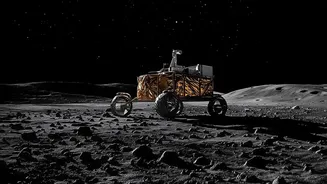
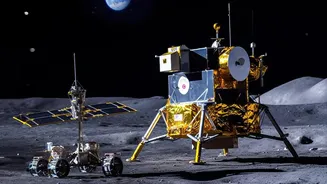
The key word in this discovery is 'accessible'. This doesn't mean future astronauts can simply walk over with a bucket and scoop up ice. Space exploration is never that simple. 'Accessible' in this context means the ice deposits are located in more manageable forms and locations than previously feared. Instead of being locked away deep under treacherous terrain, the new maps suggest the ice may exist in smaller patches or be mixed into the top layers of lunar soil (regolith) in areas with gentler slopes. This makes it feasible for robotic rovers, like NASA’s upcoming VIPER, to reach these locations, drill into the surface, and analyse the quantity and quality of the ice. This is a critical step from 'knowing ice is there' to 'knowing how to get it'.
The South Pole: A Strategic Hotspot
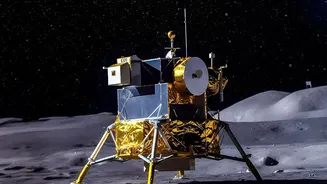
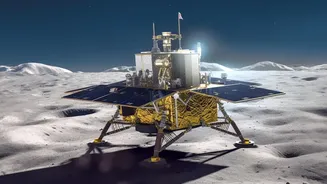
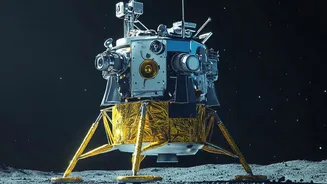
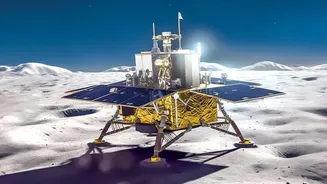
This is why the lunar south pole has become the most sought-after real estate in the solar system. It's the primary target for major space-faring nations and organisations. NASA's Artemis program plans to land astronauts there specifically to explore these ice resources. The new maps will be invaluable for selecting safe and resource-rich landing sites. For India, this new data builds upon the historic success of Chandrayaan-3's south pole landing. Future missions, like the joint LUPEX rover from ISRO and Japan's JAXA, are designed to further investigate lunar water. This detailed understanding of ice distribution will be crucial for planning the next phase of India's ambitious lunar program, potentially paving the way for a long-term scientific outpost.