



What is the Hunter's Moon?
The Hunter's Moon is the full moon that follows the Harvest Moon. Its name has roots in European and Native American traditions, marking a time when the season shifted from harvest to hunt. After farmers cleared their fields under the light of the previous
Harvest Moon, the bright glow of the Hunter's Moon would illuminate the bare fields, making it easier for hunters to spot game and prepare for the coming winter. While peak illumination for the 2026 Hunter's Moon occurs on Monday, October 26, the nights immediately before and after will also feature a bright, full-looking moon, offering several opportunities for viewing and photography.
The Photographer's Golden Opportunity
What makes the Hunter's Moon so special for photography is its behaviour. Around the time of the autumn equinox, the moon's path across the sky makes a narrow angle with the horizon. This means that for several evenings in a row, the moon rises only 30-35 minutes later each night, as opposed to the usual 50-plus minutes. This celestial quirk provides an extended period of bright moonlight right after sunset, which is a photographer's dream. You can capture a fully illuminated landscape and a brilliant moon in the same frame without drastically different exposures. The moon will appear low on the horizon, creating a dramatic, colourful presence.
Plan Your Perfect Shot
Timing and location are everything. To get the most dramatic photos, plan to shoot on the evening of October 25 or 26. The key is to find a location with an unobstructed view of the eastern horizon where the moon will rise. Getting away from city lights will reduce light pollution and result in a clearer, more detailed image. For a truly compelling photograph, think about your foreground. A rising moon framed by a dramatic tree, a distant mountain range, or a city skyline can elevate your shot from a simple picture of the moon to a stunning landscape composition. Use apps like PhotoPills or The Photographer's Ephemeris to pinpoint the exact rise time and direction of the moon from your chosen spot.
Essential Gear Checklist
While a smartphone can capture the scene, a DSLR or mirrorless camera will give you the control needed for a truly spectacular shot. The most crucial piece of gear is a telephoto lens—something 200mm or longer will help you make the moon a prominent feature in your photo. A sturdy tripod is non-negotiable; it's essential for keeping your camera steady and avoiding blur during longer exposures. Finally, use a remote shutter release or your camera's built-in timer. This prevents the small vibration caused by pressing the shutter button, ensuring your image is as sharp as possible.
Dialing in Your Camera Settings
Photographing the moon can be tricky because it's an incredibly bright subject in a very dark sky. A common mistake is using settings for night photography, which will result in an overexposed, featureless white circle. Instead, switch your camera to Manual (M) mode. A good starting point for your settings, often called the 'Looney 11' rule, is an aperture of f/11, a shutter speed of 1/125s, and an ISO of 100. From there, you can adjust. If the moon appears too bright, increase your shutter speed. If it's too dark, you can slowly increase your ISO, but try to keep it as low as possible (under 800) to avoid noise.
Capture the Moon Illusion
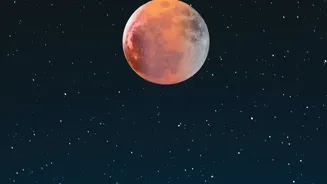
When the moon is low on the horizon, it often appears much larger than when it's high overhead. This is a fascinating trick of the mind known as the Moon Illusion. While the moon's actual size doesn't change, its proximity to terrestrial objects like trees and buildings gives our brain a sense of scale, making it appear enormous. This is the effect you want to capture. The low-rising moon may also appear a warm orange or red. This isn't an illusion; it's because its light is traveling through more of Earth's atmosphere, which scatters the blue and green lightwaves, leaving the reds and oranges to reach your eyes. Embrace these natural phenomena to create truly awe-inspiring photographs.