


The Hidden Danger in Your Pot
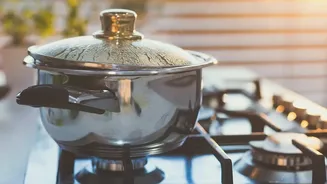
One of the most common causes of foodborne illness is the improper cooling of cooked foods. When a large, hot pot of food is left on the counter or put directly into the refrigerator, it cools too slowly. This creates the perfect environment for harmful
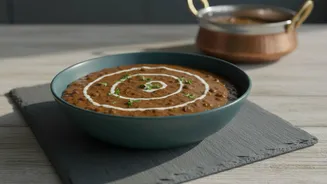
bacteria to multiply to dangerous levels. Bacteria such as Salmonella and E. coli thrive at specific temperatures, and a slow-cooling pot of curry can be an ideal breeding ground. Many might think that since the food is cooked, it's safe. However, bacteria can be reintroduced after cooking and can multiply rapidly if the conditions are right.
Understanding the Temperature Danger Zone
Food safety experts refer to a temperature range known as the "Danger Zone." According to the U.S. Department of Agriculture, this zone is between 40°F and 140°F (approximately 5°C to 60°C). Within this range, the number of bacteria can double in as little as 20 minutes. The goal is to move your food through this zone as quickly as possible. Food should not be left at room temperature for more than two hours. If food sits in the danger zone for too long, some bacteria can produce heat-resistant toxins that may not be destroyed by reheating.
The Two-Stage Cooling Method
Professional kitchens and food safety guidelines recommend a specific two-stage process to ensure food is cooled safely. While this might sound technical, the principle is simple and can be adapted for home use. The first, most critical stage is to cool the food from 135°F (57°C) down to 70°F (21°C) within two hours. This is the period of most rapid bacterial growth. The second stage is to cool it from 70°F (21°C) down to 41°F (5°C) or below within the next four hours. The entire process should take no more than six hours total.
Beyond Just Shallow Portions
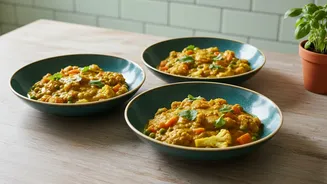
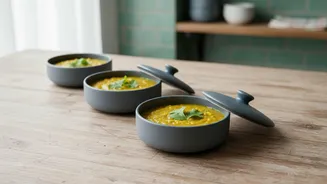
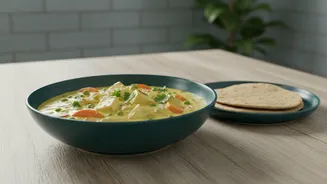
Dividing food into shallow containers is excellent advice because it increases the surface area, allowing heat to escape more quickly. For thick foods like refried beans, chili, or dense curries, the food depth should be no more than two inches. However, this is just one tool in your food safety arsenal. For very large batches, simply portioning might not be enough to meet the critical two-hour window for the first stage of cooling. Combining this method with other techniques is the key to guaranteeing safety.
Effective Cooling Techniques
To cool food rapidly and safely, you can actively help the process along. One of the most effective methods is an ice water bath. Place your smaller containers of hot food into a larger pot or a clean sink filled with ice and a little water. Stir the food frequently to help release heat. Using metal containers instead of plastic can also speed up the process, as metal conducts heat away from the food more efficiently. Another professional trick is to use an "ice paddle"—a frozen, sealed plastic bottle of water—to stir the food, cooling it from the inside out. For soups and stocks, you can even adapt the recipe by using less water initially and adding ice as part of the liquid content at the end to cool it down.
Common Cooling Mistakes to Avoid
There are several common habits that put food at risk. Never place a large, hot pot directly into the refrigerator. It will not cool fast enough, and the heat it releases can raise the temperature of the entire fridge, putting other foods into the danger zone. Don't stack cooling containers on top of each other; this prevents air from circulating and traps heat. Also, avoid covering the food tightly while it is still hot. You can cover it loosely or wait until it has cooled to 41°F (5°C) before sealing it. Leaving a pot on the stove to cool overnight is one of the riskiest practices and should always be avoided.